Hosts with only a kettle
An instant jar lets guests prepare cups individually. Coffee bags are another machine-free option if there is time to brew each cup; Sainsbury’s instructions for Taylors of Harrogate Rich Italian bags specify four minutes.


Choose an instant-coffee jar if guests need to make individual cups with just a kettle; it is not brewed filter coffee. Choose ground coffee when the venue has a compatible brewer and someone can prepare it, or coffee bags when guests want brewed coffee without a machine and can wait for each cup.
The equipment at the meeting place and the way guests arrive matter more than the word “jar” in a search result.
An instant jar lets guests prepare cups individually. Coffee bags are another machine-free option if there is time to brew each cup; Sainsbury’s instructions for Taylors of Harrogate Rich Italian bags specify four minutes.
Ground coffee is an option when someone can prepare it with the equipment on hand. Check the particular pack’s stated brewing methods: Tesco Groceries lists Lavazza Qualità Oro for filtered coffee machines and French presses.
A separate decaf choice may help guests identify the coffee they want. Check the current labels for ingredients and other product information, and keep the packs available while serving.
Choose it when: Guests need to make cups as they arrive, using a kettle rather than a brewer.
Bear in mind: Instant granules dissolve in water; they do not make brewed filter coffee.
Choose it when: The venue has a brewer named on the pack and someone can prepare the coffee.
Bear in mind: Brewing and clearing up take more involvement than making an individual instant cup.
Choose them when: Guests want individually brewed cups without a machine.
Bear in mind: Taylors of Harrogate Rich Italian bags have a four-minute brew instruction, according to Sainsbury’s.
| Priority | What to check | Your needs |
|---|---|---|
| Serving pace | Check whether cups will be made individually or in a batch. Tesco Gold instant coffee gives a direction of 1–2 teaspoons per cup; use the instructions on the pack you buy. | I want people arriving at different times to make a cup without waiting for a batch to brew. |
| Brewing equipment | For grounds, confirm that the pack names the venue’s filter machine or French press. For bags, check the preparation method and time; Sainsbury’s lists a kettle, mug, spoon and four-minute brew for Taylors Rich Italian bags. | We want brewed coffee, but I need to know whether our equipment—or just a kettle—can make it. |
| Pack quantity | Compare the pack size with the expected number of cups and meetings. Sainsbury’s lists 93 servings for the Douwe Egberts 150 g refill at its suggested 1.6 g serving; other products have their own directions. | A large pack makes sense only if our group is likely to use it. I also need to know whether a refill has a suitable jar. |
| Coffee description | Read the named product’s roast and strength description rather than assuming jars and grounds taste alike. Sainsbury’s describes Douwe Egberts Pure Gold as medium roast and strength 3; Marks & Spencer describes M&S Gold as medium roast and 100% Arabica. | I would rather choose a clearly described coffee for the group than guess its flavour from the format. |
| Decaf and labels | Check whether a separate decaf product is wanted, and read the physical packs for current ingredient and product information. Keep additions such as milk clearly identified. | Some guests may want decaf or need to inspect what is being served. |
| Between meetings | Check the chosen pack’s storage and after-opening directions. Keep its label available for the best-before date and product details. | If coffee remains after the meeting, I need a practical way to store it and identify it next time. |
Instant coffee dissolves in hot water. Ground coffee and coffee bags are brewed instead, so the formats cannot be prepared in the same way.
Decide whether the group needs quick individual cups or brewed coffee before choosing a pack.
A ground-coffee pack may specify particular preparation methods. Buying on the word “ground” alone does not establish that it suits the machine at the venue.
Check that the exact pack names your filter machine, French press or other intended method.
A refill does not provide the same storage container as a jar. The Douwe Egberts Pure Gold refill is intended for a suitable stopper jar.
Check the refill format and your available container before ordering.
Product details can change, while guests may need to see information on the pack actually being served.
Read and retain the current packaging, and keep decaf and any additions identifiable.
These examples illustrate different coffee formats; a brand name alone does not establish that a particular pack suits your equipment.
Tesco Gold is a 200 g freeze-dried instant-coffee jar for individual cups.
Pure Gold appears in instant-coffee formats including a 190 g jar and a 150 g refill.
M&S Gold is a 100 g instant-coffee option described by Marks & Spencer as medium roast and 100% Arabica.
Lavazza sells ground coffee for specified brewing methods.
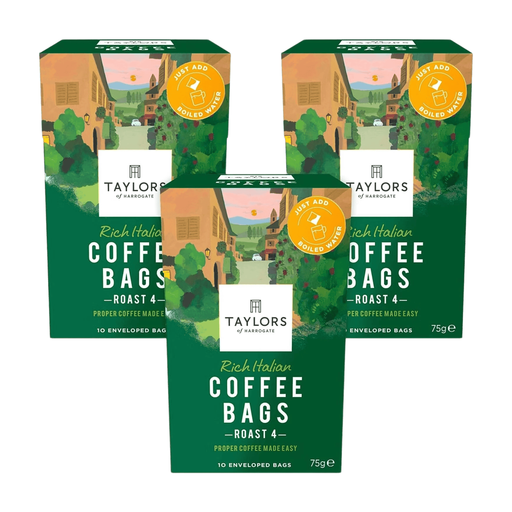
Rich Italian coffee bags are individually portioned roast-and-ground coffee.
Sainsbury’s listings provide examples of regular and decaffeinated instant coffee as well as coffee bags.
These options cover coffee bags, grounds for named brewers and instant jars, including a decaf jar. Choose the format before comparing pack sizes and preparation details.
 No image available
Individual coffee bags are an option for brewed cups without a coffee machine. This is a 75 g x 3 pack, not an instant jar; check its pack instructions and number of bags when planning servings.
 No image available
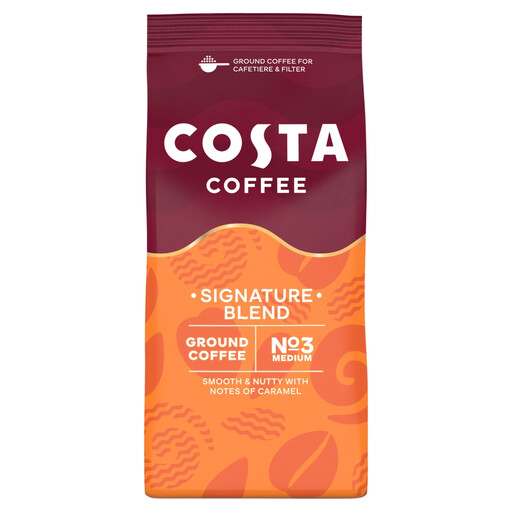
Ground coffee for a meeting with a cafetière or filter machine and someone to brew it. The pack is 200 g and identifies a No. 3 medium grind; check the physical pack’s storage directions after opening.
 No image available
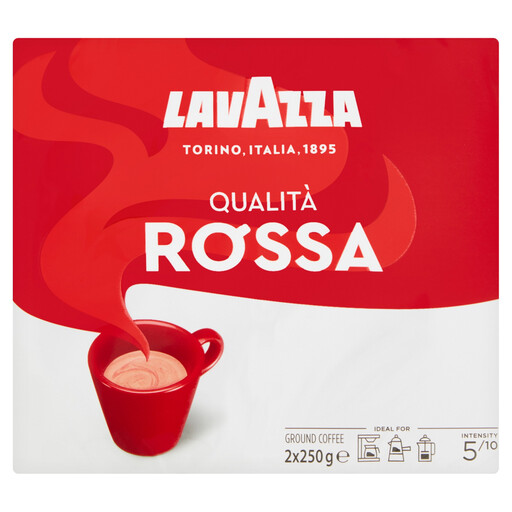
A ground-coffee option for a group using a filter machine or French press. The 500 g pack may suit repeated meetings, but it requires brewing equipment and preparation rather than dissolving in individual cups.
 No image available
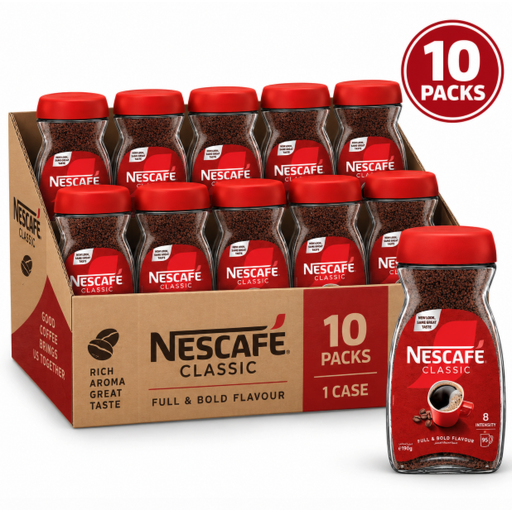
Instant coffee for individual cups made with hot water and no brewer. This pack contains ten 190 g jars, so check whether that quantity fits the group’s expected use and storage space; it is not brewed filter coffee.
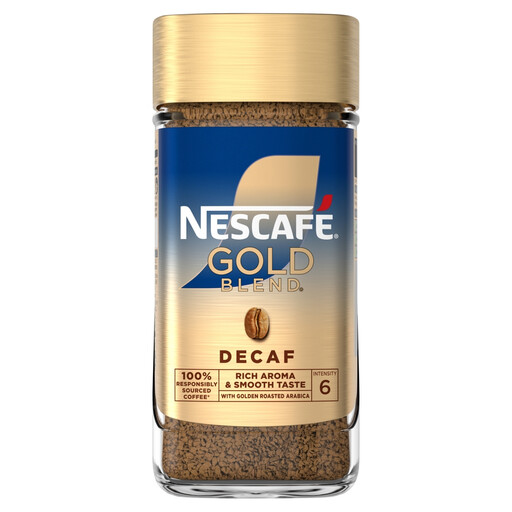 No image available
A separate decaffeinated instant-coffee choice for guests who prefer it. The 190 g jar is prepared with hot water and does not need a brewer; keep its label available so guests can identify what is being served.
No. Instant coffee dissolves in hot water; filter coffee is brewed from grounds using suitable equipment. If the book club wants brewed coffee without a machine, coffee bags are another option, but each cup needs time to brew.
Start with the expected coffee drinkers and cups per person, then use the directions for the exact product. Sainsbury’s lists 93 servings for the Douwe Egberts 150 g refill at a suggested 1.6 g per serving; Tesco Gold instead gives a direction of 1–2 teaspoons per cup. Those measures should not be treated as interchangeable serving counts.
Keep a decaf option clearly separate if you offer one, and let guests inspect the current packaging for the coffee and any additions. Product details can change, so retain the packs rather than relying on an online description while serving.
Follow the storage and after-opening directions on the product you buy. Keep the original pack or jar so its best-before date and ingredient information remain available at the next meeting.
A refill makes practical sense when you have a suitable jar to put it in and its pack size suits the group. Check the refill’s own serving directions and container requirements rather than assuming it is the same purchase as a new jar.