
24/7 Customer Support

Free returns

Same-day & Next-day Delivery

Quality Guaranteed

Unlock Your Welcome Offers: FREE Delivery | Up to 80% OFF | Free 30-day JoyPlus trial
Download the APP
A coffee burr grinder can improve control over your brew, but choosing one based only on burr size, motor power or a long list of grind settings can lead to wasted money. UK buyers should also consider noise, cleaning, power supply, capacity and whether the grinder is genuinely suitable for their brewing method.
The following guide explains the specifications that matter and matches several options to different coffee-making routines.
A grinder may advertise dozens of settings, but the useful range depends on how precisely the burrs move and whether the adjustment is easy to repeat. For espresso, small changes can noticeably affect extraction. For French press, a broad coarse setting and low retention may matter more than a high setting count.
Look for a clearly described adjustment system, such as stepless adjustment or numbered click settings, rather than relying on the number alone.
Motor wattage is only one part of performance. Burr alignment, burr geometry and heat management also influence the ground coffee. A high-powered electric coffee grinder may be unsuitable for a small kitchen if it creates excessive noise, retains a large amount of coffee powder or is difficult to clean.
A conical burr coffee grinder can be a practical option for home use because its design is commonly suited to a wide range of grind sizes, from espresso to filter coffee.
Coffee residue and oils build up inside the burr chamber. If the design is difficult to open, regular cleaning is likely to be neglected. Check whether removable parts can be brushed clean and whether the manual explains how to remove blockages.
For any electric coffee bean grinder, unplug the appliance before cleaning. Do not immerse the base, cable or plug in water. Sharp burrs should never be touched while the grinder is connected to power. UK shoppers should also check the supplied plug, product documentation, warranty details and relevant conformity markings before purchase.
Burrs made from stainless steel or titanium alloy are commonly used in domestic grinders. Material alone does not guarantee a particular cup result, so also consider the burr diameter and support structure.
For example, the Starseeker E55 Pro uses 55mm titanium alloy conical burrs and a 72W AC motor. Its listed stepless adjustment is relevant to espresso drinkers who want to make small changes between shots. The manufacturer’s safety information also advises allowing the motor to cool between extended grinding sessions.
Portable models usually use smaller burrs to reduce weight and battery demand. This can be suitable for one or two servings, but heavy users should check the stated capacity and operating guidance before buying.
A versatile adjustable coffee grinder should cover the settings required for your normal methods:
The Sage Smart Grinder Pro provides 60 grind settings, an LCD display and dosing time adjustments in 0.2-second increments. It can grind into a portafilter, filter basket or airtight container, making it suitable for households using more than one brewing method.
A home coffee grinder with a larger hopper can reduce refilling when several people are making coffee. However, storing beans in a hopper for long periods may reduce freshness compared with weighing each dose before grinding.
A rechargeable coffee grinder is more convenient for offices, camping and travel. The STARESSO D6E PLUS has a 1000mAh battery, Type-C charging and a stated charging time of approximately 2.5 hours. Its compact metal body measures approximately 150mm in height and 52mm in diameter.
Manual models avoid batteries, cables and motor noise. They are practical for travelling, although grinding espresso-fine coffee requires more physical effort than using an electric grinder.
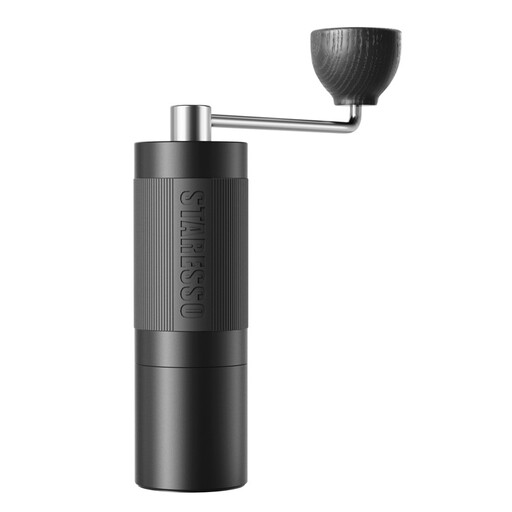
Why This Fits Their Persona: A 20g capacity and manual operation suit a single-cup routine, small kitchen or occasional camping trip without requiring a socket or battery charging.
It does not depend on motor wattage claims and uses a full-range, click-based adjustment system for espresso, pour-over and French press.
Stainless steel burr, dual ball-bearing structure, disassemblable body and no electricity required.
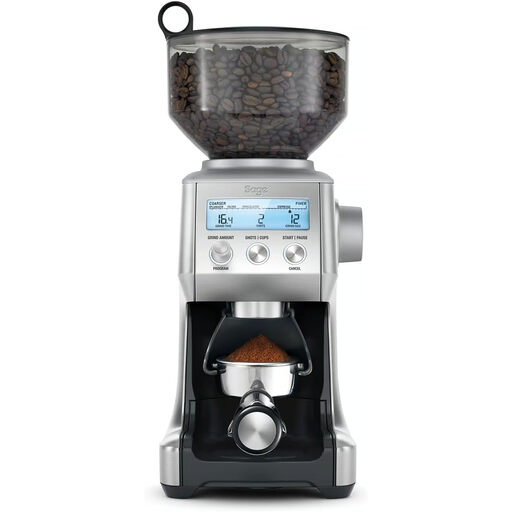
Why This Fits Their Persona: This suits home baristas who switch between espresso, filter coffee and French press and want programmable controls rather than manual timing.
Its LCD shows grind setting, grind time and selected shots or cups, making the controls easier to monitor than an unmarked dial.
60 grind settings, 0.2-second dosing adjustments and direct grinding into a portafilter or container.
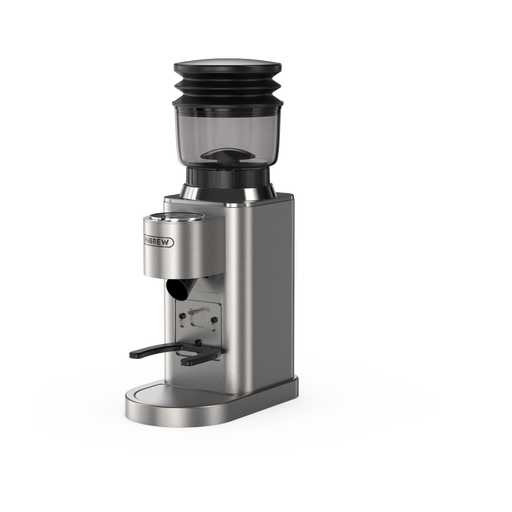
Why This Fits Their Persona: A suitable option for busy households, office coffee stations or users who need repeatable doses across different portafilter sizes.
The 48-level adjustment and timed grinding provide more measurable control than a basic one-speed coffee grinder.
48 settings, 0.1-second timed control, 210g bean container and support for 51mm, 54mm and 58mm portafilters.
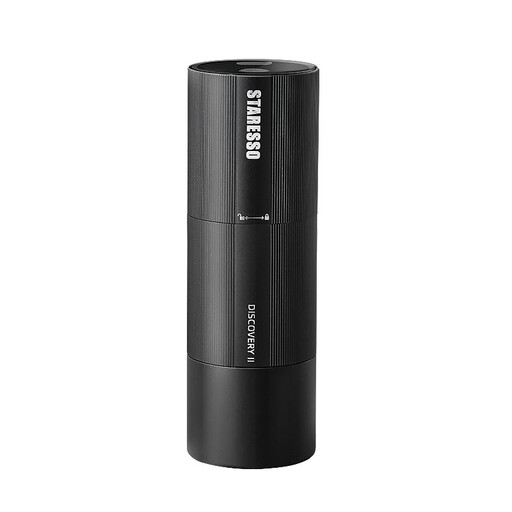
Why This Fits Their Persona: One-touch grinding and Type-C charging work for offices, caravans, camping trips and other places where a mains-powered grinder is inconvenient.
Its battery specification and charging method are stated clearly, while the removable parts support dry-brush cleaning without rinsing the burrs.
1000mAh rechargeable battery, stainless steel burr, metal body and settings for espresso, moka pot, pour-over and French press.
We have compiled a complete, real-time list of products that fully satisfy these strict selection criteria and UK safety regulations.
It can be worthwhile if you want more control than a blade grinder provides. Burrs crush and cut beans between two surfaces, while blade grinders chop unevenly. The practical benefit depends on your brewing method, dose consistency and willingness to adjust the grind.
Lifespan depends on burr material, frequency of use, bean hardness, cleaning and motor duty cycles. A grinder used several times daily needs more regular maintenance than one used occasionally. Check whether replacement burrs and service information are available before purchasing.
Most domestic models are used for short periods, so their direct running time is limited. Actual consumption depends on motor wattage and how long the grinder runs. A manual coffee grinder uses no electricity, while a rechargeable model shifts energy use to battery charging rather than mains operation.