
24/7 Customer Support

Free returns

Same-day & Next-day Delivery

Quality Guaranteed

Unlock Your Welcome Offers: FREE Delivery | Up to 80% OFF | Free 30-day JoyPlus trial
Download the APP
Buying coffee online should be simple, but product labels can make comparisons difficult. Roast intensity, bean origin, grind size and serving format all affect the final cup, while phrases such as “Italian style” or “rich flavour” may not tell you much about how a product will suit your routine.
This guide explains the practical details to check before you buy coffee online in the UK, whether you want ground coffee for a cafetière, instant coffee for the office, coffee bags for travel or coffee capsules for quick espresso-style drinks.
A dark or intense roast may taste stronger, but roast description is not a reliable measure of caffeine. Caffeine levels can vary according to the bean blend, serving size and brewing method. If caffeine matters to you, check whether the product is labelled decaffeinated and follow the preparation guidance.
Decaffeinated coffee is also not necessarily completely caffeine-free. If you are sensitive to caffeine, read the packaging carefully and consider how many cups you usually drink.
Ground coffee is not interchangeable across every brewer. A fine espresso grind can restrict water flow in a cafetière, while a coarse grind may produce a weak result in some filter coffee machines. Buying a large pack without checking the grind can lead to waste if it does not suit your equipment.
For a moka pot, look for a fine-to-medium grind. Filter coffee generally suits a medium grind, while French press or cafetière brewing usually needs a coarser texture.
A 500g bag may offer a lower cost per gram, but it can lose aroma if it remains open for too long. Smaller packs, individually wrapped coffee bags or single-serve coffee capsules may cost more per portion but can be easier to store and use consistently.
Look for a clear best-before date, suitable storage instructions and packaging that can be resealed. Once opened, keep coffee away from moisture, heat, sunlight and strong odours.
Arabica coffee is often described through flavour notes such as fruit, chocolate, nuts or caramel. Robusta can contribute a heavier body and stronger bitterness. Blends combine different beans to create a particular balance, so “100% Arabica” is a useful specification but not a guarantee that every drinker will prefer the taste.
Italian coffee blends commonly use Arabica and Robusta together, particularly where a fuller espresso-style cup is intended. Check the ingredient list and country-of-origin information rather than relying only on front-of-pack imagery.
Roast descriptions such as light, medium or dark indicate how the beans have been roasted. Intensity scores are brand-specific, so a level 5 from one company may not taste identical to a level 5 from another.
Medium roasts can offer a balance between acidity, sweetness and body. Darker roasts may suit people who prefer a more pronounced, bitter or smoky flavour, especially with milk. If you prefer a gentler cup, look for mild or balanced wording and avoid choosing solely by a high intensity number.
Your equipment and schedule should guide your choice:
Use the stated serving guidance as a starting point, then adjust the amount of coffee and water to taste. Water that is hot but not freshly boiling is generally suitable for many filter and cafetière methods.

Why This Fits Their Persona: A 200g pack gives occasional brewers a manageable quantity for everyday filter or cafetière use without committing to a larger bag.
The product is listed as 100% Arabica ground coffee, with storage guidance to seal it after opening and use within two weeks.
100% Arabica ingredients; made in the United Kingdom; suitable for routine home brewing.
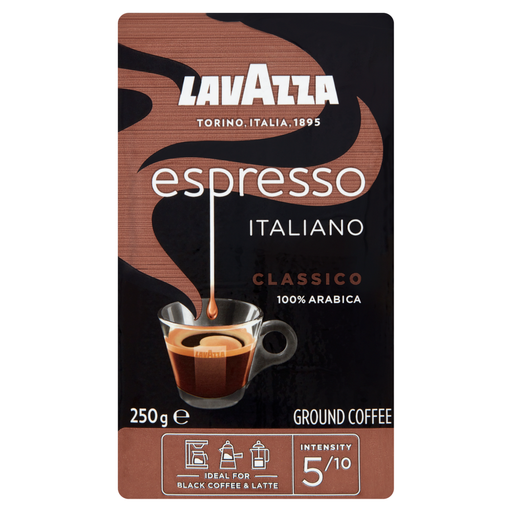
Why This Fits Their Persona: Suitable for shoppers who want an Italian-style blend that can work across several home brewing methods.
The listing states a medium roast, intensity level 5 and compatibility with moka pots, filter machines and French presses.
250g pack; 100% coffee beans; stated fruity notes and medium-roast profile.

Why This Fits Their Persona: A practical cupboard option for households or offices that want soluble coffee with a decaffeinated format.
Its ingredient description identifies decaffeinated soluble coffee, helping shoppers distinguish it from standard instant coffee.
300g quantity; soluble preparation; storage guidance is clearly provided on the product listing.
We have compiled a complete, real-time list of products that fully satisfy these strict selection criteria and UK safety regulations.
Before placing an order, check:
Ground coffee often has a lower cost per serving, particularly in larger packs, but the final cost depends on dosage, equipment and waste. Capsules provide portion control and convenience, while ground coffee offers more flexibility across brewing methods.
Follow the manufacturer’s storage instructions and the best-before information on the packaging. Many products advise sealing the pack tightly and keeping it away from moisture, heat and strong odours. Smaller packs or individually wrapped coffee bags can help households that use coffee less frequently.
Check the grind rather than the word “espresso”. Some espresso coffee is ground finely for pressure brewing and may leave a muddy or bitter result in a cafetière. A coarse or cafetière-suitable ground coffee is generally more appropriate for full immersion brewing.