Hosts with only a kettle
Single-cup coffee bags let guests brew in a mug without a filter machine or loose-ground dosing. Check the serving count on the particular pack when planning supplies for several stays.


Do not choose a holiday-cottage coffee order by the number 240 alone: confirm what each portion contains and how guests will brew it. For a kettle-only cottage, single-cup coffee bags are the simpler fit; for group breakfasts with a compatible 1.8-litre/three-pint filter brewer, consider matching machine sachets. Bulk ground coffee needs a compatible brewer, a dosing method and, where required, filter papers.
Single-cup coffee bags let guests brew in a mug without a filter machine or loose-ground dosing. Check the serving count on the particular pack when planning supplies for several stays.
With a compatible 1.8-litre/three-pint filter machine, pre-portioned sachets can make batch brewing easier to explain. Pennine Tea and Coffee describes sachets for that brew size and says its boxes include a filter paper for each sachet.
Bulk ground coffee is an option when someone can check the brewer, measure portions and restock any required papers between stays. Keep current packaging information available when supplying coffee to guests.
Choose when: Guests have a kettle and mug, but no filter machine.
Allow for: Replenishing multiple small packs if the cottage needs a large number of servings.
Choose when: A compatible machine is used to brew for several guests at once.
Allow for: These are machine-brew portions, not bags for individual mugs; sachet size and filter papers must suit the brewer.
Choose when: A host or caretaker can manage portions and brewing supplies.
Allow for: Guests need clear instructions if they will measure and brew the coffee themselves.
| Priority | What to check | Your needs |
|---|---|---|
| Brewing equipment | Check whether guests have a kettle and mug, a filter machine or another brewer. Match the product’s brewing directions to that equipment. | I want guests to be able to make the coffee with what is actually in the cottage. |
| Brew size | Check whether the portion makes one cup or a machine batch. Pennine Tea and Coffee specifies a 1.8-litre/three-pint brew for its pre-portioned sachets. | For group breakfasts, I need a portion that matches the machine rather than an individual-cup bag. |
| Pack count | Confirm the number of servings per pack, whether 240 describes individual portions or a combined order, and the best-before date. Tesco lists 10- and 20-count coffee-bag packs; Pennine Tea and Coffee lists 50-sachet machine formats. | If I am stocking several stays, I want to count actual servings rather than assume a carton description tells me how many cups it makes. |
| Filters and dosing | For ground coffee, confirm the brewer’s required paper size and give guests a measuring method. For sachets, check whether suitable papers come in the box. | I would rather leave straightforward brewing instructions than make guests work out portions or search for filter papers. |
| Guest information | Keep current product labels accessible. If the operation is a food business, check the applicable allergen-information requirements and ask the local authority about registration where its status is unclear. | When I leave coffee for guests, I need the information accompanying it to match the product supplied. |
A coffee bag intended for a mug is not interchangeable with a sachet portioned for a filter-machine batch. Pennine Tea and Coffee specifies a 1.8-litre/three-pint brew for its sachets.
Match the brewing directions to the equipment in the cottage, then put those directions where guests can find them.
Pack descriptions can refer to different things, including coffee portions and filter papers. Tesco lists coffee bags in 10- and 20-count packs and separately lists 80-count Melitta filter papers; Kingdom Coffee lists 50-sachet machine formats.
Check the supplier’s exact product, portion count, portion size, included papers and best-before date before placing a large order.
Ground coffee needs a compatible brewer and a way to measure each batch. A machine that uses paper filters also needs the correct papers on hand.
Check the brewer and paper size, then leave a simple dosing instruction. If nobody manages portions between stays, consider a compatible pre-portioned format.
Filter papers can be a separate consumable: Tesco lists Melitta 1x4 papers, while Pennine Tea and Coffee says its sachet boxes include one paper per sachet.
Decanting can make it harder to give guests information that matches the product. Food Standards Agency guidance says retail and catering food-business operators must provide allergen information under applicable rules.
Keep the original labelled packaging where practical, or retain the current label information with the coffee. If it is unclear whether the holiday-let operation is a food business, ask the relevant local authority.
Lavazza identifies Il Filtro Classico Intense as roast-and-ground coffee for filter brewing in its UK business range.
Taylors offers coffee bags for brewing without a cafetière. Tesco and Sainsbury's list Taylors coffee bags in 10-count retail packs.
Britsuperstore lists Douwe Egberts Real Coffee Medium Roast for Filters in a 1 kg catering-size format.
Tesco lists retail coffee bags in 10- and 20-count packs and Melitta 1x4 filter papers in an 80-count pack.
Sainsbury's lists Taylors of Harrogate Rich Italian Ground Coffee Bags x10 alongside ground-coffee products.
M&S offers House Blend and Jump Start coffee bags. Its Jump Start directions say to add hot water and brew for four minutes.
These options cover individual-cup coffee and ground coffee for cottages with a suitable brewer. Compare their pack details with the number of guests and the equipment you provide; a pack weight alone does not give a serving count.
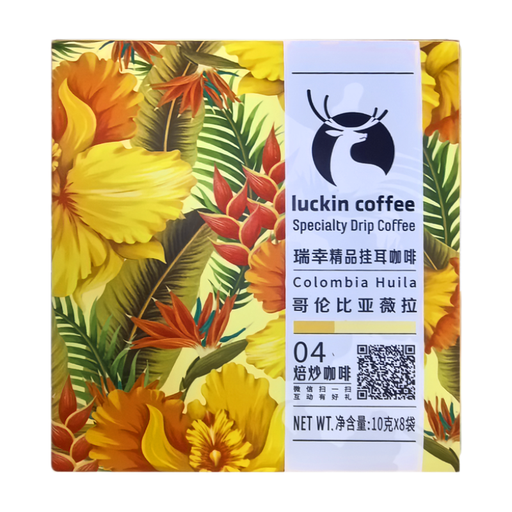 No image available
An individual-cup option to consider for guests using a kettle and mug. The stated pack contains eight 10 g bags; plan replenishment using that count, not a presumed 240-serving carton, and leave the preparation directions with the coffee.
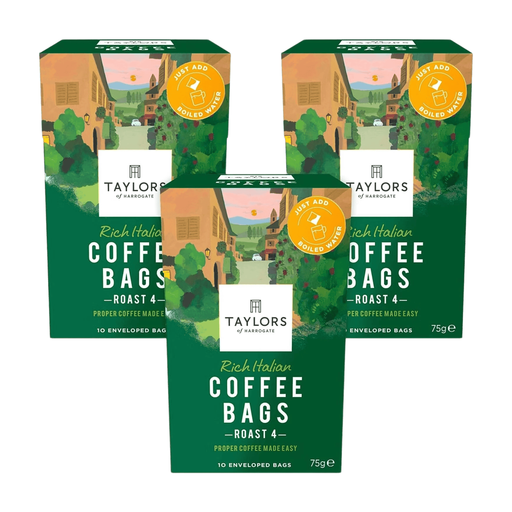 No image available
Coffee bags suit guests making a cup without measuring loose grounds. This is a three-pack bundle of 75 g packs; check the bag count in each pack before calculating how many guest servings the bundle provides.
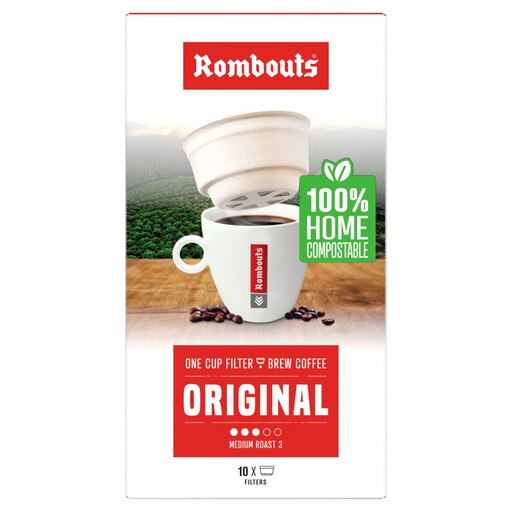 No image available
The one-cup filter format is relevant where guests brew separately rather than make a machine batch. Check how many filters the 70 g pack contains before planning stock, and follow the product’s directions for storage after opening.
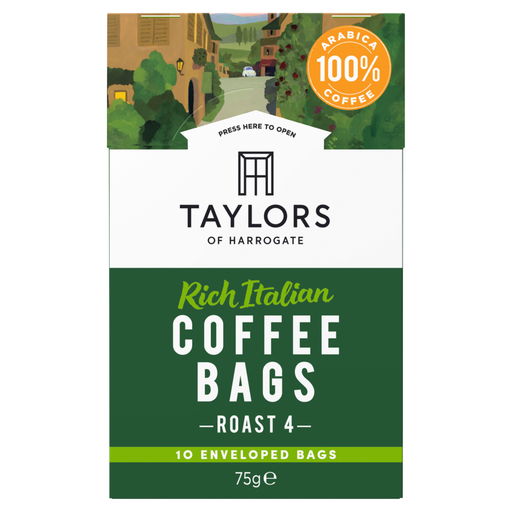 No image available
A single-pack coffee-bag option for guests brewing one cup at a time. The 75 g weight is not a serving count, so check the number of bags before deciding how many packs to leave for a stay.
 No image available
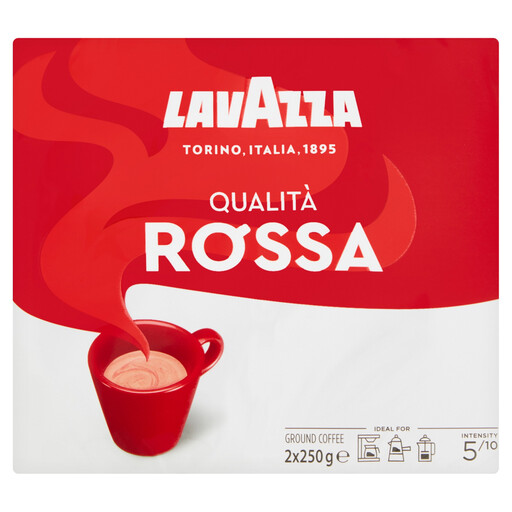
This 500 g ground-coffee pack is an option when the cottage has a suitable brewer and someone can manage portions. It is not a pack of individual coffee bags: confirm the brewer’s requirements, any filter papers needed and the dosing instructions before leaving it for guests.
Describe the packs and total number of bags separately unless the supplier identifies one carton with 240 coffee portions. Tesco lists 10- and 20-count retail coffee-bag formats, while Pennine Tea and Coffee and Kingdom Coffee list 50-sachet machine formats. Check the exact product and serving count before ordering.
Choose a coffee product whose directions call for brewing in a cup with hot water, such as a suitable single-cup coffee bag. M&S directs users of its Jump Start coffee bags to add hot water and brew for four minutes; follow the directions for the particular product you leave.
Look for a sachet portioned for the machine’s stated brew size. Pennine Tea and Coffee specifies a 1.8-litre/three-pint brew for its sachets and says it includes one filter paper per sachet. Check the machine manual and paper requirements before ordering.
If the holiday-let operation is a food business, Food Standards Agency guidance for retail and catering operators requires allergen information under applicable food rules. Keep the current product label available rather than assuming a coffee product has no allergens; ask the relevant local authority if the operation’s status is unclear.
Not every holiday-let arrangement can be classified from the fact that coffee is left for guests. GOV.UK food-business registration guidance says an operation that sells, stores, handles, prepares or distributes food may be considered a food business and need local-authority registration. Ask the local authority for the property’s area how the guidance applies to your operation.