Organisers with grinding and brewing equipment
Check the venue’s recipe and expected number of drinks before choosing a weight of whole beans. Confirm who will grind and prepare the coffee during the meeting.


Buy whole coffee beans if the venue can grind and brew them, and plan the order by weight using its recipe. Before ordering, establish whether ‘80’ means attendees, drinks, individual coffee bags or capsules: those formats require different equipment and cannot be treated as an 80-serving bean pack.
Check the venue’s recipe and expected number of drinks before choosing a weight of whole beans. Confirm who will grind and prepare the coffee during the meeting.
Clarify whether the request means individual coffee bags, drinks, capsules or attendees. Whole beans are sold by weight, while coffee bags and capsules are separate formats.
Consider whether attendees want a decaffeinated option alongside the main coffee. The equipment and serving arrangements need to keep the choices distinguishable.
Settle the meaning of ‘80’ and the venue’s equipment first; then use the intended brewing recipe to work out how much coffee to order.
Choose when: Someone can grind and brew coffee at the venue.
Allow for: A weight-based order, preparation time and care of opened packs; a pack weight is not a fixed drink count.
Choose when: ‘80 bags’ means individually portioned ground coffee rather than whole beans.
Allow for: Checking the actual pack count and brewing instructions instead of substituting a bag of beans.
Choose when: The workplace has the matching capsule machine and wants individual drinks.
Allow for: System-specific capsules and a pack count that may not match the requested number exactly. Lavazza UK lists BLUE workplace capsules in 50- and 100-count packs.
| Priority | What to check | Your needs |
|---|---|---|
| Format and equipment | Confirm whether the order calls for whole beans, coffee bags or capsules. Check for a grinder, brewing equipment and, for capsules, the matching system. | I need a format the venue can actually prepare, with someone available to serve it. |
| Quantity | Define what ‘80’ counts. For beans, use the venue’s coffee dose and planned drink sizes to calculate the required weight; check portioned products by pack count. | Whether I am serving 80 people or making 80 drinks changes the order, especially if some attendees may have more than one. |
| Coffee choices | Compare stated roast and flavour descriptions, then check whether a separate decaffeinated format works with the serving setup. | I want to offer attendees a clear choice rather than assume everyone wants the same coffee or caffeine option. |
| Storage | Check each pack’s instructions after opening and plan when it will be used. Waitrose & Partners advises grinding only the beans needed and using them straight away. | If coffee will be served across several sessions, I need a plan for the beans left after the first one. |
Bean packs are measured by weight; individual coffee bags and capsules are counted products. Confusing those units can produce the wrong format or quantity.
Ask what ‘80’ refers to, then calculate a bean order from the venue’s recipe or check the count on the appropriate portioned pack.
Whole beans need grinding before brewing, while capsules need their matching machine. The venue’s setup determines which order can be served.
Confirm the grinder, brewer and person preparing drinks. If that arrangement is impractical, consider coffee bags or capsules compatible with equipment already on site.
Grinding, brewing and cleaning also take staff time during the meeting.
Instructions for opened coffee differ by product, so a storage direction for one pack should not be applied to every brand.
Plan when each pack will be opened, grind only what is needed and follow its own label for the remainder.
Attendees may request decaf, which needs its own supply and a way to distinguish it from regular coffee.
Confirm likely demand before ordering and arrange clearly identified decaf service if it is needed.
These brand examples help distinguish pack and serving routes; the named products should still be checked against the venue’s equipment and order quantity.
A brand with both whole-bean coffee and a separate workplace capsule system.
A whole-bean range with Classico, Intenso and decaffeinated choices.
An example of a smaller whole-bean pack in UK grocery retail.
A whole-bean option for organisers considering a larger weight-based pack.
A retailer listing both whole beans and coffee bags as distinct products.
A retailer category useful for comparing whole-bean pack weights.
These 1 kg whole-bean packs are options for a meeting that has grinding and brewing equipment. Choose a quantity from the venue’s recipe rather than assuming one pack makes 80 drinks.
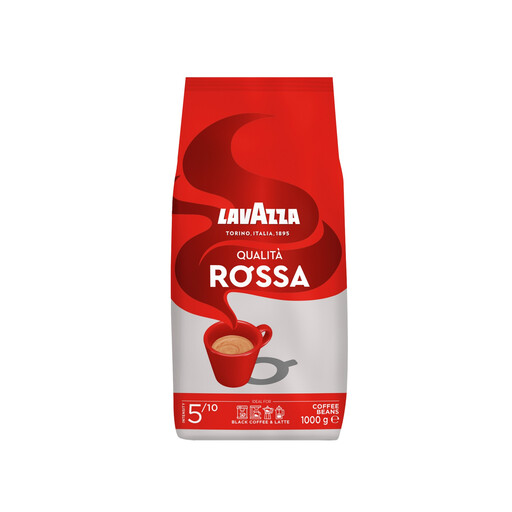 No image available
For a whole-bean meeting service, compare this 1000g pack with the venue’s coffee dose per drink. Confirm the grinding setup and arrange a separate decaf choice if attendees need one.
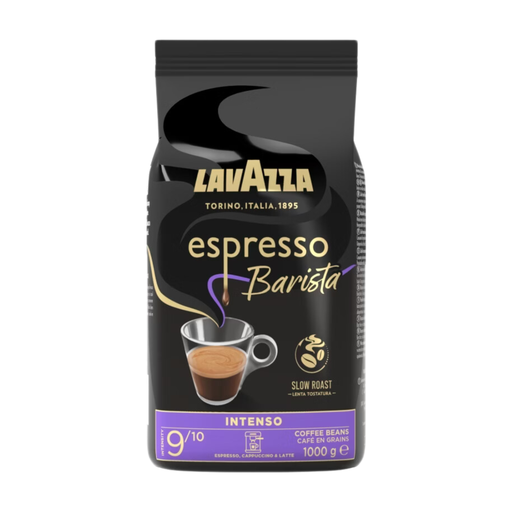 No image available
This 1kg whole-bean pack belongs on a weight-based order for a venue that can grind and brew coffee. Check whether the named variant suits the group’s preferences, then calculate the required number of packs from the venue’s recipe.
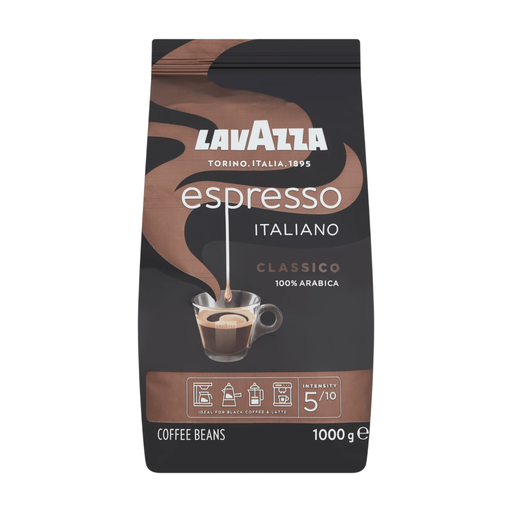 No image available
Consider this 1kg whole-bean pack if the venue’s setup can prepare beans for the meeting. Check the intended brew method and pack details, and work out the order weight using the drinks actually planned.
No. Marks & Spencer describes its coffee bags as containing ground coffee; whole beans need grinding before brewing. If an order says ‘80 bags’, confirm that it means individual coffee bags before buying beans.
Start with the venue’s recipe and planned volume of coffee. Waitrose & Partners gives cafetière guidance of 60 g of coffee per litre of water, or 20 g for a three-cup cafetière; do not apply that dose automatically to espresso or bean-to-cup drinks.
Follow the instructions on the particular pack. Waitrose & Partners says to keep opened Lavazza Qualità Oro in a cool, dry place, while Marks & Spencer gives different, product-specific refrigerated or frozen storage directions for its Espresso Blend beans.
If the workplace is operating as a retail or catering food business, the Food Standards Agency says it must provide allergen information and follow applicable labelling rules. Keep current product packaging available and check its label rather than relying solely on an online description.