Small-kitchen frappe makers
You want iced coffee in a holiday cottage but need to fit the blender into limited worktop or cupboard space. Check both its storage dimensions and whether the exact model is intended to crush ice.


Choose a blender whose manufacturer explicitly states that the exact model can crush ice if crushed ice is central to your coffee frappe. A compact jug suits a cottage kitchen with limited storage when you also want to make several servings; a personal blender is worth considering for smaller individual drinks, while a food processor with a blender attachment makes more sense if you will use its other preparation functions. Check usable capacity and storage space before choosing, because extra attachments and larger jugs also mean more to put away and wash.
You want iced coffee in a holiday cottage but need to fit the blender into limited worktop or cupboard space. Check both its storage dimensions and whether the exact model is intended to crush ice.
You plan to make drinks for more than one person, so usable batch capacity and straightforward cleaning matter more than choosing a blender solely for portability.
You want the appliance to help with meals as well as frappes. Weigh the preparation functions you would use against the space, assembly and washing-up required by the attachments.
For cottage frappes, check ice-crushing suitability first, then decide how much storage space, usable batch capacity and food-preparation versatility you need.
| Concern | What to check | Who this matters to |
|---|---|---|
| Crushing ice | Look for an ice-crush or crushed-ice statement for the exact model; do not rely on motor wattage alone. | If ice is central to my frappe, I want a blender intended for that task rather than guessing from its power rating. Around 36% of consumers put stated ice-crushing capability first. |
| Storage and setup | Check the assembled dimensions and where the jug, cups or attachments will go between uses. | With little room in the cottage kitchen, I need to be able to put every part away without making setup a chore. Around 29% of consumers make compact storage their primary concern. |
| Usable batch size | Compare working liquid capacity, not just total jug size, and leave room for ice. | When several of us want a drink, I would rather judge how much the blender can process than repeat small batches. For around 21% of consumers, shared-batch capacity comes first. |
| Other cooking tasks | Check which food-preparation tools you would actually use and how they are cleaned and stored. | If I am also preparing meals, chopping or slicing functions could justify keeping more attachments in the kitchen. Around 14% of consumers prioritise that wider use. |
A smoothie or personal-blender format does not, by itself, establish that the model is intended for crushed-ice drinks.
Check the exact model’s product information or instructions for ice-crushing suitability, then follow its operating limits.
Total volume and working liquid capacity can differ. Ice and blending movement also need headroom in a frappe recipe.
Compare stated working capacity with your intended servings rather than planning to fill a jug to the brim.
A food processor with a blender attachment brings more parts to assemble, store and clean than a straightforward jug blender.
Choose those additional tools when you expect to use them for meal preparation as well as drinks.
A test label does not replace attention to the appliance’s condition during use. The Health and Safety Executive says electrical maintenance should prevent danger and does not prescribe annual testing for every appliance.
Before leaving a blender for guests, check for visible damage to the plug, cable and appliance, remove unsafe equipment from use and arrange appropriate maintenance for the property.
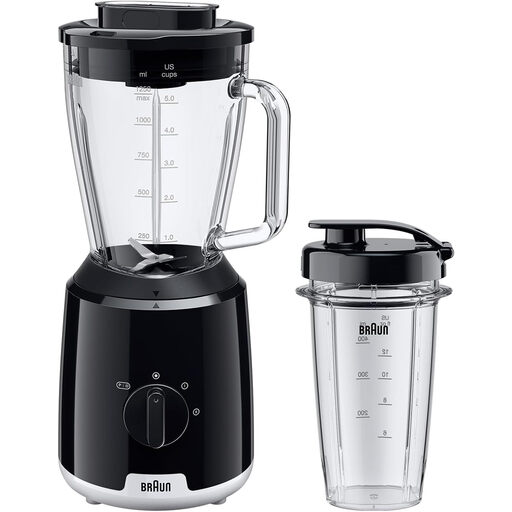
Braun’s PowerBlend 1 JB1051BK is a compact jug-blender option for a small kitchen.
Kenwood’s MultiPro Go Blend FDP23.380GY is relevant when drinks are only one part of self-catering meal preparation.
Tefal’s Blendforce II BL420840 is a jug-blender option for buyers comparing shared drink batches.
These choices cover jug, personal and food-processor formats that may fit different cottage-kitchen routines. For each exact model, check ice instructions, usable drink capacity and where all its parts will be stored.
 No image available
A compact jug option for cottage frappes when you want stated ice crushing and room for more than an individual drink. Braun Household GB specifies a 1.25L working liquid capacity for this model; its listed 1.5L jug size is a different measure, so leave headroom for ice.
The product title lists a 600W motor, two speeds and a smoothie-to-go bottle. Check the appliance dimensions against your available storage space.
 No image available
Consider this format if the cottage appliance will also be used for meal preparation, but check the exact model’s ice-crushing instructions and usable blender-jug capacity before planning frappe batches.
The listed configuration has integrated weighing, a 1000W motor, variable speed and pulse control, and 13 accessories. Make room to store those accessories and check the instructions for cleaning each part.
 No image available
A personal-blender format to consider for individual frappes. Its product title states that it is suitable for crushing ice, but check the instructions for the permitted ice quantity and usable drink volume.
The title lists a 1200W motor and a 900ml cup; cup size is not the same as usable frappe capacity.
 No image available
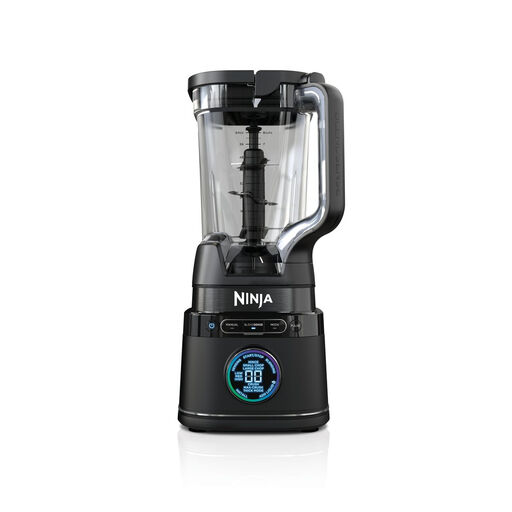
Consider the jug and single-serve formats if your cottage routine alternates between shared and individual drinks. Before choosing it for frappes, check the TB301UK instructions for ice use and the working capacity of the container you intend to use.
Check that the assembled blender and its containers fit the available worktop and cupboard space.
 No image available
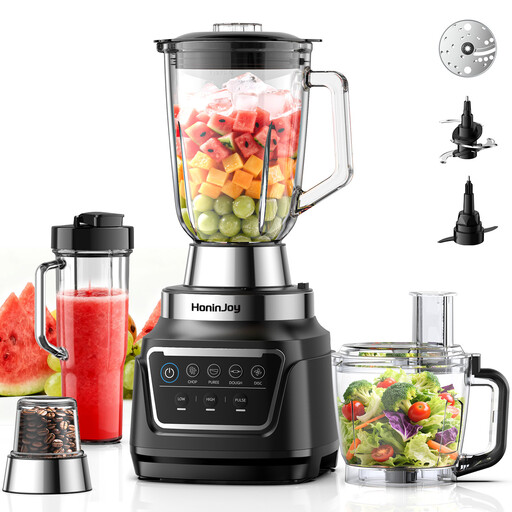
A multi-function option if you intend to prepare meals as well as ice-based drinks. Check the pitcher’s working capacity for your frappe servings and allow storage space for the detachable parts.
The product title lists ice crushing, dough making, chopping, grinding, slicing and shredding, as well as dishwasher-safe parts. Follow the instructions for which components can be washed that way.
If you plan to blend ice in the appliance, choose an exact model whose manufacturer says it can crush ice; the wording need not be the name of a dedicated setting. Braun Household GB, Kenwood GB and Tefal UK each list ice-crushing capability for the particular models discussed above, but motor wattage alone is not a substitute for checking the model instructions.
Compare working liquid capacity with the servings you intend to make, and leave headroom for ice and blending movement. Braun Household GB states 1.25L for the PowerBlend 1 JB1051BK and Tefal UK states 1.25L for the Blendforce II BL420840; Kenwood GB lists 0.75L working liquid capacity in the bowl of its MultiPro Go Blend FDP23.380GY. Those figures apply to the named models and containers, not every blender from those brands.
The Health and Safety Executive says the Electricity at Work Regulations do not prescribe annual portable-appliance testing or a single testing interval. Electrical equipment covered by those duties must be maintained to prevent danger; arrange checks appropriate to the appliance, its use and the property rather than relying on an annual label alone.
Make sure the appliance is suitable for its intended use, free from visible damage and included in the property’s maintenance arrangements. Devon and Somerset Fire and Rescue Service advises regular servicing and periodic inspections or testing of electrical appliances in the small paying-guest accommodation it discusses; confirm the requirements that apply to your particular property and jurisdiction.