
24/7 Customer Support

Free returns

Same-day & Next-day Delivery

Quality Guaranteed

Unlock Your Welcome Offers: FREE Delivery | Up to 80% OFF | Free 30-day JoyPlus trial
Download the APP
By Joybuy Product Recommendation Officer
Freshly ground beans can improve the control and aroma of a brew, but choosing a coffee grinder is not simply a matter of selecting the model with the largest motor or most grind settings. A suitable grinder should match your brewing method, daily volume, available space and willingness to clean it.
This guide explains the specifications that matter, highlights common purchasing traps and matches several coffee grinders with different UK lifestyles.
A high number of settings can be useful, but the number alone does not confirm that the grinder produces a suitable range for espresso, moka pot, pour-over or French press. Some models use broad steps, while others provide fine control between settings.
Look for the adjustment mechanism as well as the number. Stepless adjustment allows continuous changes, while click-based adjustment provides repeatable positions that may be easier for beginners to record.
A powerful motor may support quicker grinding, but consistency also depends on burr alignment, burr diameter, bearing support and heat management. A coffee grinder with a high wattage rating is not automatically an espresso grinder.
For electric models, also check the recommended duty cycle. Continuous operation can cause heat build-up, particularly when preparing several doses. Some products require cooling breaks between grinding sessions.
Coffee residue can collect in the burr chamber, outlet and grounds container. Static may cause powder to cling to the machine or scatter across the worktop, especially in dry indoor conditions.
Features such as removable parts, an air blower or anti-static design can reduce mess, but they do not remove the need for regular brushing. Electrical grinders should be unplugged before cleaning, and the base, plug and power cord should never be immersed in water.
A burr coffee grinder crushes beans between two burrs rather than chopping them with a blade. This design allows more control over grind size.
A conical burr grinder typically uses a cone-shaped inner burr and an outer ring. Check the listed material, such as stainless steel or titanium alloy and whether the product specifies bearing support or burr alignment. These details are more useful than vague phrases such as “café quality”.
For espresso, look for a grinder with a fine adjustment range and a design intended for espresso dosing. For French press, the grinder must also produce a sufficiently coarse setting without excessive fine particles.
Your brewing method determines the required grind:
A grinder for home and café use should also suit the number of doses you prepare. A small manual coffee grinder may be practical for one or two cups, while a larger electric coffee grinder is more convenient for several people.
A mains-powered model is suitable for a permanent kitchen or café station. A rechargeable coffee grinder can be more convenient in an office, campervan or campsite, but battery capacity, charging time and grinding speed should be checked.
Capacity is not the same as recommended dose. A large hopper may reduce refilling, but storing beans in the hopper for long periods can expose them to air. Consider whether you prefer single-dosing fresh beans or preparing several portions at once.
Before buying, measure the space beneath your kitchen cupboards. Also check the plug type, voltage information, warranty terms and seller support for UK use.
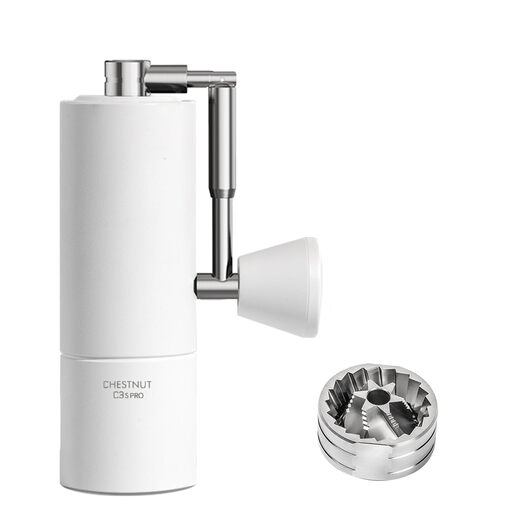
Why This Fits Their Persona: A manual format suits a flat or shared kitchen where low noise and no power cable are priorities. It can cover espresso to French press use without adding another electrical appliance.
Its listed adjustable grind setting helps avoid being locked into one brewing method, while manual operation avoids motor overheating and electricity costs.
Stainless steel S2C conical burr and foldable handle; suitable for espresso through to French press.

Why This Fits Their Persona: This is suited to home coffee drinkers who switch between espresso, filter and French press and want dose and grind-time controls in one worktop unit.
The LCD display shows grind setting, time and selected shots or cups, making adjustments more trackable than relying on vague dial markings.
60 listed grind settings and grind-time adjustment in 0.2-second increments; can dose into a portafilter or container.
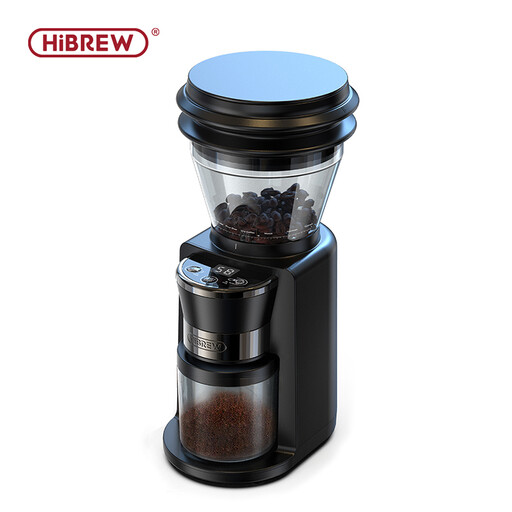
Why This Fits Their Persona: Its larger listed hopper and powder container are practical for busy households, shared offices or light café-style preparation where refilling every dose is inconvenient.
The manufacturer lists a maximum of 10 grinding cycles before a cooling period, giving a clearer operating limit than an unspecified “heavy duty” label.
34 grind positions, a 210g bean container, 100g powder tank and listed anti-static function.

Why This Fits Their Persona: A compact rechargeable coffee grinder suits commuters, campers and office users who may not have access to a plug socket when preparing coffee.
The 1000mAh battery and Type-C charging address cable-free use, while removable parts and dry-brush cleaning help with maintenance away from home.
One-touch operation, metal body, stainless steel burr and listed suitability for espresso, moka pot, pour-over and French press.
We have compiled a complete, real-time list of products that fully satisfy these strict selection criteria and UK safety regulations.
It can be, provided it offers a sufficiently broad adjustment range. Espresso requires fine control, while French press requires a coarse grind. Check the product specification rather than assuming every burr grinder supports both methods equally well.
Lifespan depends on burr wear, cleaning, bean type, usage volume and whether the motor is operated within its stated duty cycle. Regular dry cleaning and avoiding foreign objects can reduce unnecessary strain. Replaceable burr availability and warranty support are also worth checking before purchase.
Its electricity use is generally modest, but running cost depends on battery charging frequency and energy prices. The more important consideration is convenience: a rechargeable model is useful where a socket is unavailable, while a mains-powered grinder is more suitable for regular kitchen or café use.