
24/7 Customer Support

Free returns

Same-day & Next-day Delivery

Quality Guaranteed

Unlock Your Welcome Offers: FREE Delivery | Up to 80% OFF | Free 30-day JoyPlus trial
Download the APP
By Joybuy Product Recommendation Officer
Freshly ground beans can make a noticeable difference to your morning brew, but choosing the right coffee grinder is not simply a matter of selecting the machine with the most settings. UK shoppers often compare burr size, motor power and capacity without checking whether the grinder suits their brewing method, kitchen routine or cleaning habits.
This guide filters the practical details from the marketing language, helping you compare an electric coffee grinder, manual coffee grinder, portable model or larger home coffee grinder with greater confidence.
A high number of settings sounds useful, but the spacing between settings matters. Espresso generally requires fine and precise adjustment, while French press needs a much coarser grind. A grinder with many poorly spaced steps may offer less useful control than one with fewer, well-calibrated positions.
For espresso, look for stepless adjustment or closely spaced settings. For pour-over and French press, a clearly marked stepped dial can be easier to use consistently.
A larger burr can support faster grinding and may be suitable for repeated use, but it does not by itself guarantee uniform grounds. Burr material, alignment, motor design and heat management also affect day-to-day performance.
A conical burr grinder is common for home use because it can offer efficient grinding in a relatively compact housing. However, check the manufacturer’s stated use and duty cycle rather than assuming a domestic model is suitable for continuous café work.
Coffee dust collects around the burr chamber, chute and grounds container. Static can cause powder to scatter across the worktop, while oily beans may contribute to clogging. A grinder that is difficult to open and brush clean can become inconvenient within weeks.
Electrical models should be used on a dry, stable surface and unplugged before cleaning. Do not immerse the base, cable or plug in water. Burrs are sharp, so never put fingers or utensils into the grinding chamber.
A burr coffee grinder crushes beans between two burrs rather than chopping them with a blade. This generally provides more control over particle size. Stainless steel and titanium-alloy burrs are common options in the products considered here.
Look for details such as bearing support or alignment systems, particularly when buying a hand coffee grinder. These features are intended to reduce burr wobble, although actual results also depend on construction and adjustment design.
Your brewing method should determine the adjustment range:
A timer or dose control can also be useful for an electric model. For example, a programmable grinder may allow repeatable grinding time, but you should still weigh the beans when dialling in a new coffee.
A manual model with a 20g capacity can suit a single cup, office use or travel. A larger electric grinder is more convenient for several people, but a bigger hopper may expose beans to air for longer if it is left full.
Check whether the product is designed for occasional home use, repeated household batches or light commercial use. Some appliances require cooling breaks. The HiBREW G3, for example, specifies a limit of no more than 10 continuous grinding cycles, followed by a cooling period if an error occurs. This type of information is more useful than a general claim about motor strength.
For travel, compare dimensions, weight, charging method and battery capacity. A rechargeable coffee grinder removes the need for a socket, but it still needs charging and may grind more slowly than a mains-powered model.
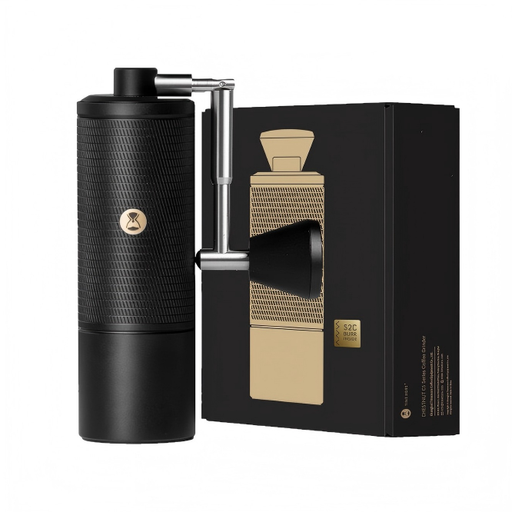
Why This Fits Their Persona: A manual format avoids motor noise and mains electricity, making it suitable for one or two cups at home, in an office or during occasional trips.
It avoids paying for a large motor and hopper when a compact hand coffee grinder is enough for a single daily brew.
Manual operation requires no charging or cable, and its compact format is easy to store.

Why This Fits Their Persona: It suits home baristas who switch between espresso, filter and French press and want digital controls rather than manual timing.
Its stated 60 grind settings and 0.2-second dosing-time adjustments provide specific control points instead of relying on vague precision claims.
The LCD shows grind setting, time and selected cups or shots; grounds can be directed into a portafilter or container.
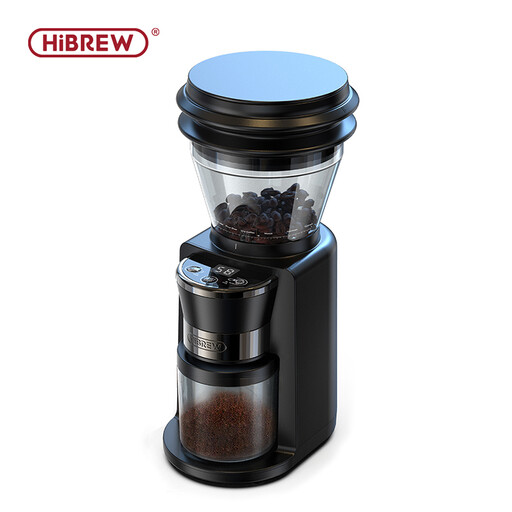
Why This Fits Their Persona: Its larger hopper and powder container are practical for busy households, shared kitchens or lower-volume office use.
The published 10-cycle operating limit makes workload expectations clear, helping buyers avoid treating a home coffee grinder as an unrestricted commercial coffee grinder.
It lists a 210g bean container, 100g powder tank, 34 grind sizes and a stated 220–240V, 50Hz supply.

Why This Fits Their Persona: This rechargeable coffee grinder is designed for home, office, travel and camping where a mains socket may not be convenient.
Its Type-C charging and one-touch operation address portability without requiring manual cranking, while the dry-brush cleaning guidance clarifies maintenance.
It has a 1000mAh battery, stainless steel burr and adjustment range for espresso, moka pot, pour-over and French press.
We have compiled a complete, real-time list of products that fully satisfy these strict selection criteria and UK safety regulations.
A manual grinder uses no electricity, while an electric model adds a small amount to household consumption. The more relevant running costs are often replacement burrs, cleaning supplies and the type of coffee beans used. Choose electric for speed and convenience; choose manual when low operating cost, portability and quiet use matter more.
Lifespan depends on burr material, bean type, cleaning, workload and whether the machine is operated within its stated limits. Avoid foreign objects and very oily or damp beans, follow cooling instructions and replace worn parts where available. A grinder used beyond its intended duty cycle may deteriorate sooner.
Espresso normally uses a fine grind, while French press generally uses a coarse grind. The correct setting varies with the beans, brewer and extraction time, so treat the dial as a starting reference. Make small adjustments and keep notes of settings that produce a balanced cup.