Busy filter-coffee households
You make cafetière, filter, AeroPress or pour-over coffee for more than one person and want an electric burr grinder that fits a repeatable morning routine.


For a family breakfast, choose an electric burr grinder by your usual brew method and portion routine, not hopper size alone. A straightforward filter-oriented grinder suits households making cafetière, filter or pour-over coffee; regular espresso calls for finer adjustment, while pre-weighed small portions call for a single-dose workflow. Timed controls can simplify repeated portions, but the dose may still need checking when you change beans.
You make cafetière, filter, AeroPress or pour-over coffee for more than one person and want an electric burr grinder that fits a repeatable morning routine.
Espresso-based drinks are a regular part of breakfast, so fine grind adjustment and a practical way to dose into a portafilter matter more than coarse-brewing settings alone.
You weigh the beans for each brew or change coffees often, and want to assess whether single-dose or timed controls make preparing those portions easier.
Start with the coffee your household makes most often, then decide whether speed across several drinks or handling individual small doses matters more.
| Concern | What to check | Who this matters to |
|---|---|---|
| Repeatable breakfast preparation | Check whether the controls suit several successive portions and whether dosing is timed or based on another measure. | When several drinks need making before everyone leaves, I want a routine I can repeat without hand-grinding each portion. Around 31% of consumers put preparation speed and repeatability first. |
| Match with the brewer | Check the exact model's stated grind range for your primary method; for espresso, look for a dedicated fine-adjustment range. | If our breakfasts alternate between espresso and filter coffee, I need settings identified for both rather than a setting count alone. Brew-method fit comes first for around 31% of consumers. |
| Small-dose handling | Check for a suitable dosing cup or documented single-dose mode, and how the grounds container is cleaned. | I weigh beans for each brew and sometimes switch coffees, so handling a small portion without scattering grounds matters. Around 23% of consumers prioritise small-dose flexibility and tidiness. |
| Support and upkeep | Check the exact model's warranty, access to care guidance and parts, and whether it is a current or discontinued model. | For a grinder used most mornings, I want to know how to clean it and where to seek help if something wears out. Ongoing support is the primary concern for around 15% of consumers. |
A setting count does not tell you whether adjustment is fine enough for your espresso machine or whether the stated range covers your preferred filter method.
Identify your main brewer first, then check how the manufacturer describes the exact grinder's usable ranges.
Keeping beans in a hopper and weighing out each small dose are different routines, particularly if you change coffees often.
Choose the routine you intend to use before looking for a documented single-dose mode, auto-stop feature or suitable dosing accessory.
Wilfa says its Svart grinder range has been discontinued and identifies Zense as its replacement. That does not make the models interchangeable.
If considering a Svart grinder, confirm the exact model and seller terms, and check the support and parts available for it.
An electric grinder needs an appropriate electrical-waste collection route when it reaches the end of its usable life.
GOV.UK says waste electrical products can be taken to a local household waste recycling centre.
Its Encore range includes options for straightforward brewing, espresso adjustment and individual-dose routines.
Its Zense range is relevant to households considering one countertop grinder for several stated brewing methods.
Its dose-control grinders are relevant when a household wants adjustable settings and a repeatable preparation routine.
These grinders cover repeated countertop preparation, adjustable espresso grinding and portable electric options. Match the stated controls and portion capacity to the number of drinks you make, rather than assuming every model handles small doses in the same way.
 No image available
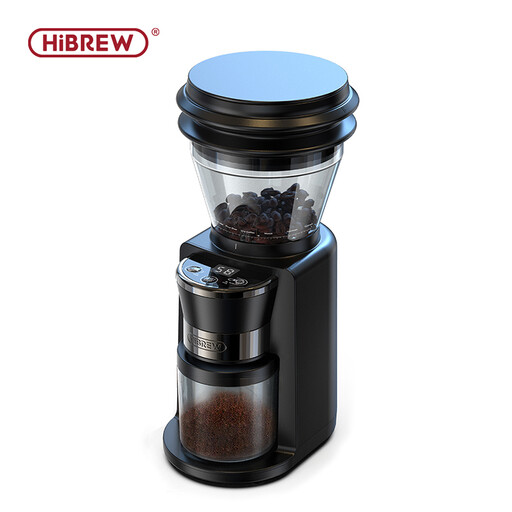
Consider this countertop grinder if your breakfast routine alternates between filter coffee and espresso. Its title specifies a conical burr and 60 grind settings; check how its Dosing iQ controls fit the portion you usually prepare, especially when changing beans.
 No image available
For a household considering manual and automatic operation, check whether its portion controls suit each breakfast drink. The named configuration has 34 grind settings, a 48 mm conical burr, a 210 g bean container and a 100 g grounds container; container size alone does not establish how it handles a small dose.
 No image available
This portable option is worth considering if you prepare small portions away from a mains socket as well as at home. Its title specifies 30 settings, from espresso to French press, and auto-stop; check the amount it can grind per batch and follow its guidance on consecutive batches when preparing several drinks.
No image available
Consider this model primarily for espresso preparation if stepless adjustment is important to your routine. Its title specifies a 55 mm titanium-alloy conical burr and a 72 W AC motor; confirm its dosing controls and suitability for any other brew methods your family uses.
 No image available
For occasional small portions where portability matters, compare its capacity with the amount your family grinds at breakfast. Its title specifies adjustable settings, one-touch operation and a rechargeable 1000 mAh battery with Type-C charging; check how many portions it can handle in your routine.
Choose a burr grinder if controlled grind adjustment is important for your brewing method. Coffee-equipment retailer Coffee Hit advises against blade grinders because they cut beans less evenly; check that a burr model also states a suitable range for the coffee you make.
Yes, if the exact model states suitable ranges for both methods. Baratza assigns Encore ESP settings 1–20 to espresso and 21–40 to filter, French press and cold brew; you will still need to adjust the grind for your beans and brewer.
Look for a workflow that lets you measure and handle the portion you intend to brew. Baratza describes single-dose auto-stop on the Encore ESP Pro, but neither auto-stop nor an anti-static feature guarantees that every ground bean leaves the grinder; weigh the finished dose if that matters to you.
Check the exact model's care instructions, warranty and access to parts or support. Baratza has a UK product-support hub, while Wilfa identifies Zense as the replacement for its discontinued Svart range, making model identification particularly useful when considering older stock.
Use an electrical-waste collection route rather than putting the grinder in general household waste. GOV.UK says waste electrical products can be taken to a local household waste recycling centre.