Occasional hosts making a filter pot
You want a filter setting you can return to when friends visit, without spending time on adjustments intended for recipes you do not make.


For a pot of filter coffee when friends visit, choose a burr grinder with a filter-range setting you can return to and controls you find straightforward to adjust. Consider an integrated scale or finer adjustment if you regularly change doses or recipes; check cleaning access and the exact electrical specification before buying.
You want a filter setting you can return to when friends visit, without spending time on adjustments intended for recipes you do not make.
You change the coffee dose, water volume or brewing method and want to measure and adjust each recipe deliberately.
You mainly make filter coffee for guests but also prepare other brews at home, so the grinder’s stated range and cleaning routine both matter.
For filter coffee when friends visit, decide whether your main priority is a setting you can repeat, changing doses, covering other brew methods or keeping cleaning manageable.
| Concern | What to check | Who this matters to |
|---|---|---|
| Repeatable filter grind | Look for a filter-capable range and an adjustment control you can return to. Wilfa advises starting near the middle of its Zense range for filter coffee, then adjusting after brewing. | When making a pot for friends, I want a starting setting I can return to while adjusting for the beans and taste. Around 31% of consumers put repeatable filter grinding first. |
| Dosing for different groups | Decide whether you want an integrated scale or will weigh beans separately; check how the grinder controls each dose. | If the number of guests changes, I want to measure a different dose without losing track of my recipe. Around 31% of consumers prioritise dosing control. |
| Other brew methods | List the methods you use and check the model’s stated range. Fellow says its Ode Brew Grinder Gen 2 is for brewed coffee, not espresso. | If I make other brews at home, I need one grinder whose stated range covers them as well as filter coffee. Around 23% of consumers place flexibility across methods first. |
| Cleaning and upkeep | Read the model’s instructions for cleaning the hopper, burr area and grounds path; check parts support if that matters to you. | After preparing several brews, I want a cleaning routine I can realistically keep up with. Around 15% of consumers put manageable cleaning and upkeep first. |
A numbered setting is not a universal filter-coffee recipe. Wilfa notes that the appropriate setting varies with the beans, brewing method, taste and grinder calibration.
Start within your grinder’s filter range, brew a complete pot and change the setting a few steps at a time after tasting.
Fellow states that the Ode Brew Grinder Gen 2 is intended for brewed-coffee methods and not for espresso.
If espresso is part of your plans, check that the exact grinder is stated to cover it before choosing a brew-focused model.
Fellow’s Ode Brew Grinder Gen 2 product page specifies 120V power. A model name alone does not establish the electrical specification of a listing offered for delivery in the UK.
Check the exact variant’s voltage, plug, supplier information and warranty territory before ordering, including the information applicable to your delivery address.
Retained grounds and coffee oils can affect flavour and make the grinder harder to keep clear. Baratza provides a routine cleaning procedure for its grinders.
Choose a model whose cleaning instructions you can follow, and clean its accessible parts as its manufacturer directs.
Wilfa’s Zense and Uniform Evo offer different levels of adjustment and dosing control for home brewing.
Baratza presents Encore as a home grinder for filter brewing and provides GB cleaning guidance and a parts catalogue.
Fellow positions Ode Brew Grinder Gen 2 for brewed-coffee methods, including pour-over and electric coffee makers.
These grinders offer adjustable settings to consider when preparing coffee for friends. Check each model’s filter suitability, cleaning instructions and electrical details against the way you brew.
 No image available
Consider this model if you want to return to an adjustable grind setting when preparing filter coffee. Its product name specifies 60 grind settings and a conical burr.
If you make several servings at once, check the batch capacity and cleaning procedure. Confirm the exact model’s voltage, plug and safety information before ordering.
 No image available
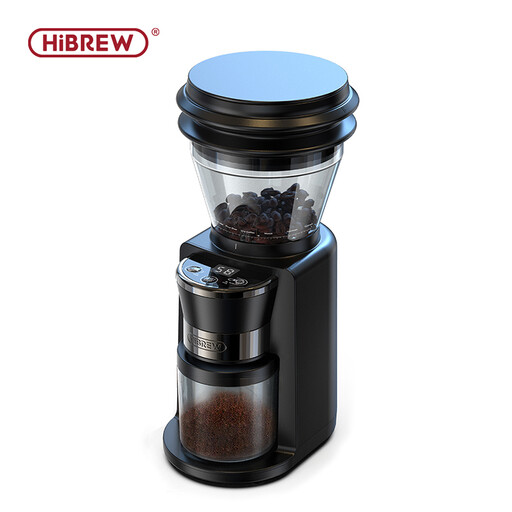
Consider this model if adjustable grinding and container capacity matter when preparing coffee for guests. Its product name specifies 34 grind settings, a 48 mm conical burr, a 210 g bean container and a 100 g grounds container; those capacities do not establish how many servings one grind produces.
Check which settings suit your filter method and how to clean the burr area and grounds path. The stated instructions limit continuous operation to 10 grinding cycles and call for at least 30 minutes of cooling if an E-2 error appears; also confirm the exact plug and safety information.
Start within your grinder’s filter-capable range, brew a pot and adjust after tasting. For its Zense grinder, Wilfa suggests starting around the middle of the range, moving finer if the coffee tastes sour and thin or coarser if it tastes bitter and heavy; that number is not transferable to every grinder.
Follow the instructions for your model and clean more often if its use calls for it. Baratza’s general guidance describes routine cleaning every four to six weeks, including brushing loose grounds from accessible burr and chute areas; wash and thoroughly dry removable parts only as directed.
No. GOV.UK says sellers must provide remedies when goods are faulty, misdescribed or do not do what they are supposed to do. A change-of-mind return is a different question from a remedy for a fault, so check which situation applies before approaching the seller.
Check the exact variant’s voltage, plug and supplier safety information rather than relying on its model name. Requirements and arrangements can differ between Great Britain and Northern Ireland, so ask the seller for information applicable to your delivery address if it is unclear.