What matters when buying?
Choose for your filter brewer first, then check whether the grinder fits your morning batch and any other brewing methods used at home.
| Concern |
What to check |
Who this matters to |
| Filter grind adjustment |
Confirm that the exact model names filter coffee or pour-over among its brewing methods. Look at independent assessments of grind consistency where available; setting count alone does not establish it. |
If my brewer needs a filter-appropriate grind, I want an adjustment range I can use without guessing from the number of settings. Around 42% of consumers put filter grind adjustment first. |
| Breakfast batch workflow |
Compare the stated bean or grounds capacity with your recipe, and check how grounds are collected, doses are set and the grinder is cleaned. |
When I prepare several cups before the family sits down, repeated measuring and clearing up matter to me. For around 33% of consumers, the batch workflow is the primary concern. |
| Other brewing methods |
List the brewers your household uses, then check the exact model’s stated range. Do not infer espresso suitability from burr size or setting count. |
I make filter coffee at breakfast but want to keep using another brewer without assuming one grinder covers everything. That flexibility comes first for around 25% of consumers. |
Joybuy manual grinder options
These manual grinders are options if grinding by hand suits your breakfast routine. For either one, check filter-grind suitability for your brewer and whether preparing your usual family batch by hand is practical.
 No image available
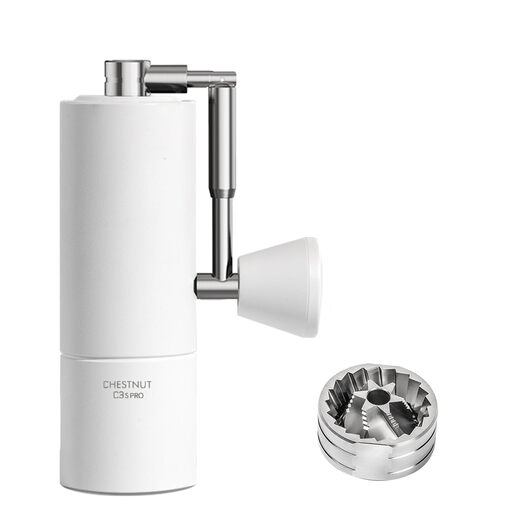
TIMEMORE Chestnut C3S PRO manual grinder, white
Consider this if hand-grinding fits your routine and the exact model’s adjustment range suits your filter brewer.
The product name specifies a stainless-steel S2C conical burr, a foldable handle and adjustable grinding described from espresso to French press. Check your batch dose before choosing a manual grinder for several cups.
View on Joybuy
 No image available
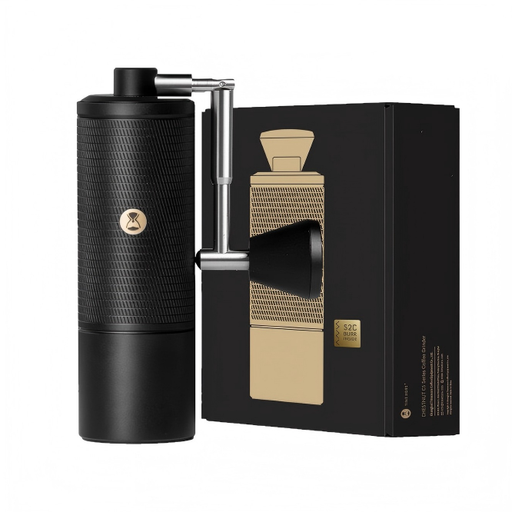
TIMEMORE C5 Pro manual coffee grinder
Consider this manual model if you are comfortable grinding the beans for your breakfast batch by hand.
Before choosing it for filter coffee, confirm the adjustment range for your brewer and compare its bean capacity with the dose you normally prepare.
View on Joybuy
Common questions
Where should I start with the grind setting for filter coffee?
Start with the grinder’s filter or pour-over guidance, then adjust for your brewer, beans and recipe. Grind describes a medium, roughly coarse-sand-sized grind for gravity-led methods such as V60 and Chemex; the appropriate setting still depends on how your own brew flows and tastes.
How do I tell whether a grinder can handle breakfast for several people?
Compare its stated bean and grounds capacity with the dose you use for one batch, and consider whether you would be willing to refill it. The cited UK listing gives the Fellow Ode Gen 2 a 100 g capacity, but that figure applies to that model rather than to family brewing generally.
Can a filter-focused grinder make espresso too?
Not necessarily: the cited UK listing explicitly excludes espresso for the Fellow Ode Gen 2. If espresso is part of your plans, check that the exact grinder states espresso use; Baratza describes an espresso-fine setting within the Encore’s range, but setting range alone does not establish the results you will get.
What should I check about cleaning and repairs?
Check the exact model’s cleaning instructions, warranty terms and access to service parts before buying. Baratza says it offers parts and repair guidance for the Encore, but its statement about component life is not a guarantee of support from every seller.
What should I do with an old electric coffee grinder?
Look for an appropriate reuse or electrical-equipment recycling route rather than putting it in household rubbish. Check your local authority’s arrangements or whether a retailer offers take-back when you replace the grinder.


