Small-portion brewers near colleagues
If you usually make one or two cups and want to avoid motor noise near desks or meeting rooms, a compact hand grinder is worth considering if you are happy to grind each portion yourself.


Choose a compact manual grinder if the office usually makes one or two cups at a time and avoiding motor noise matters more than speed. An electric burr grinder makes more sense when several colleagues want a quicker routine, provided its dosing arrangement and grind range suit their beans and brewers. Whichever route you choose, agree who will clean a shared grinder; an office-owned electric model also needs an appropriate equipment-maintenance routine.
If you usually make one or two cups and want to avoid motor noise near desks or meeting rooms, a compact hand grinder is worth considering if you are happy to grind each portion yourself.
If people alternate between roasts or decaf, look for a way to measure each portion before grinding. Check whether a dosing cup is included or a compatible single-dose accessory is available.
If colleagues share a grinder for filter, cafetière, AeroPress or espresso-style drinks, check its stated adjustment range against the equipment they actually use.
Choose it when: One or two cups are the usual portion and avoiding motor noise is worth the hand effort.
Allow for: Someone must grind each dose by hand, and the adjustment range still needs to suit the office brewer.
Choose it when: Several people want a quicker routine for individual portions or use different brew methods.
Allow for: Motor noise, a suitable power arrangement and an agreed cleaning routine.
| Concern | What to check | Who this matters to |
|---|---|---|
| Disruption nearby | Decide where grinding will happen. If sound is decisive, seek model-specific sound information or assess the grinder in the intended space. | If I make coffee close to working colleagues, I want to avoid interrupting them; around 36% of consumers put low disruption first. |
| Individual portions | Check how each person will measure beans and whether a dosing cup or compatible single-dose accessory is included. | When colleagues switch between regular beans and decaf, I want to prepare my own portion without relying on a filled communal hopper. Individual-dose flexibility comes first for around 29% of consumers. |
| Brewer compatibility | List the office brewers, then check the exact grinder’s stated range, particularly if espresso and filter-style methods coexist. | If our office uses several brewers, I need one grinder whose adjustments fit those methods; around 21% of consumers make brew-method compatibility their primary concern. |
| Simple upkeep | Agree who empties grounds and cleans the grinder; for an electric model, establish appropriate cable, plug and equipment checks. | I would rather share an appliance with a cleaning routine people will actually follow. For around 14% of consumers, straightforward upkeep takes priority. |
A hopper filled with one person’s beans is inconvenient when the next person wants another roast or decaf.
Look for an included dosing cup, a confirmed compatible single-dose accessory or a manual grinder sized for small portions. Check what comes in the box.
An espresso-oriented adjustment range does not settle whether a grinder suits the office’s filter or cafetière brewing.
List the brewers in use and check the exact model’s stated range. Baratza specifies separate espresso and brewed-coffee settings for the Encore ESP; Wilfa states that Zense spans espresso to French press.
The Health and Safety Executive describes portable-equipment maintenance in terms of user checks, visual inspection and testing, rather than a test sticker alone.
For an office-owned electric grinder, agree who reports damaged cables or plugs and who arranges checks under the workplace’s maintenance process.
Wilfa announced in July 2026 that its Svart Coffee Grinder and Svart Aroma Precision Coffee Grinder were being discontinued.
Check the current product status and support terms. Assess Zense against your own brewing requirements rather than assuming it has the same specifications as Svart.
A reference point for compact manual grinding: Hario UK says the Mini Mill PLUS lower bowl measures grounds for up to two 12 g cups.
The Encore ESP is an electric option for offices that need both espresso and brewed-coffee settings.
Wilfa UK describes Zense as an electric grinder with 30 settings spanning espresso to French press.
These electric grinders offer different ways to approach small portions and shared-office brewing. Compare their stated features with your usual dose, brew method and tolerance for motor noise; a manual grinder remains a separate option.
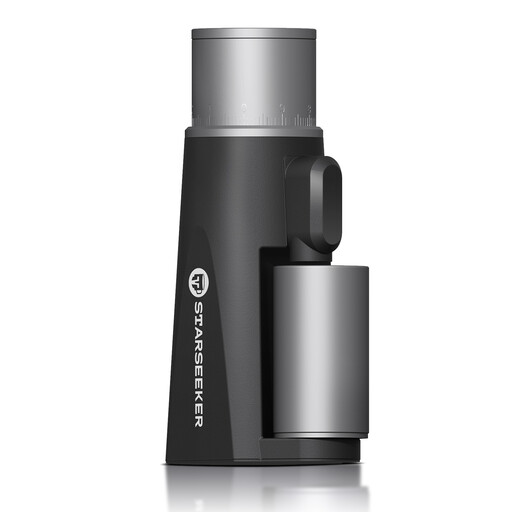 No image available
Consider this portable model if colleagues want an electric grinder for individual espresso or pour-over preparation. Its name specifies a small conical burr; check its operating limits before planning successive shared use and assess sound in the intended space.
 No image available
Consider this model if the office switches between espresso and French press; its name specifies 30 settings across those methods, a metal body, automatic stop and clog protection. Establish how each colleague will measure a small dose, and check whether motor noise suits the workspace.
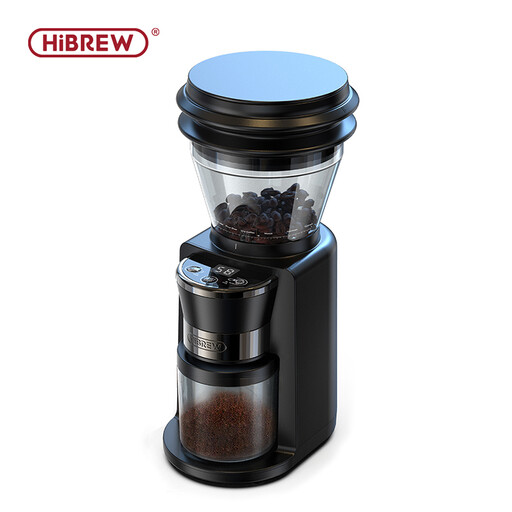 No image available
If several colleagues need individual portions, confirm that this model’s dispensing options produce the amounts they use. Its name specifies a 210 g bean container, 100 g powder tank, 48 mm conical burr, anti-static function and manual and automatic modes; also check the plug and power arrangement before office installation.
It can be practical when one or two cups are the usual portion, avoiding motor noise matters and users accept hand grinding. Hario UK says the Mini Mill PLUS bowl measures grounds for up to two 12 g cups; check its adjustment range for the office brewer.
Measure the beans for each brew and empty the grounds container after use rather than relying on a filled communal hopper. Baratza says its compatible single-dose hopper lets users measure beans and switch roasts, but it is a separate accessory.
Do not treat an annual test as a substitute for an appropriate maintenance plan. The Health and Safety Executive describes portable-equipment maintenance using user checks, visual inspection and testing; the workplace should determine suitable arrangements for the grinder’s use and condition.
Include the grinder in the food business’s cleaning arrangements. GOV.UK says a food-business cleaning schedule must cover what is cleaned or disinfected, how often and which products are used; a shared office outside that setting should still agree who cleans the grinder.