
24/7 Customer Support

Free returns

Same-day & Next-day Delivery

Quality Guaranteed

Unlock Your Welcome Offers: FREE Delivery | Up to 80% OFF | Free 30-day JoyPlus trial
Download the APP
A coffee machine with milk frother can make espresso, cappuccino, latte and iced coffee more convenient at home. However, the right choice depends less on impressive pressure figures or attractive styling and more on the brewing system, cleaning routine and drink options you will genuinely use.
Before buying, watch for three common pitfalls.
A pod coffee machine with milk frother is quick and tidy, but capsules are not universally interchangeable. A Lavazza A Modo Mio coffee machine, for example, is designed for Lavazza A Modo Mio capsules rather than every capsule format sold in the UK.
Check:
If you prefer freshly ground beans or wider coffee choice, a traditional espresso machine may be more suitable.
Some machines only heat and froth milk. If you want iced lattes, cold foam or chilled cappuccino-style drinks, look specifically for a hot and cold milk frother coffee machine. A standard steam wand can texture hot milk, but it will not produce cold foam without a separate electric milk frother or handheld whisk.
Figures such as 15 or 20 bar describe the pump’s maximum capability, not necessarily the pressure used throughout extraction. Good everyday results also depend on the coffee dose, grind, tamping, water temperature and machine design.
For a semi-automatic machine, compatibility with ground coffee and E.S.E. pods, temperature control and a usable steam wand may be more meaningful than a high headline pressure number.
A capsule coffee machine is convenient for consistent portions and fast preparation. It generally requires less technique and creates less loose coffee mess. A machine such as the Lavazza Jolie & Milk EVO offers programmable espresso and lungo selections, while the Deséa provides several one-touch coffee and milk-based recipes.
An espresso machine with steam wand gives you more control over dose, extraction and milk texture. The trade-off is a little more preparation and cleaning. Some models, such as the Gastroback Design Espresso Piccolo Pro, accept both ground coffee and E.S.E. pods, offering a practical middle ground.
Look for clear information about whether the frother supports:
A built-in frother is convenient, but milk residue needs prompt rinsing. A separate electric milk frother can be useful if you already own a coffee machine without an integrated milk function.
Water-tank capacity affects how often you refill the machine. A 1.0-litre tank suits smaller households, while a 1.1 to 1.5-litre tank may be more practical for multiple users or a small office.
Measure the available worktop area, including space needed to open a capsule lever, remove the tank and lift a steam wand. Slim dimensions can be particularly useful in UK kitchens with limited counter space.
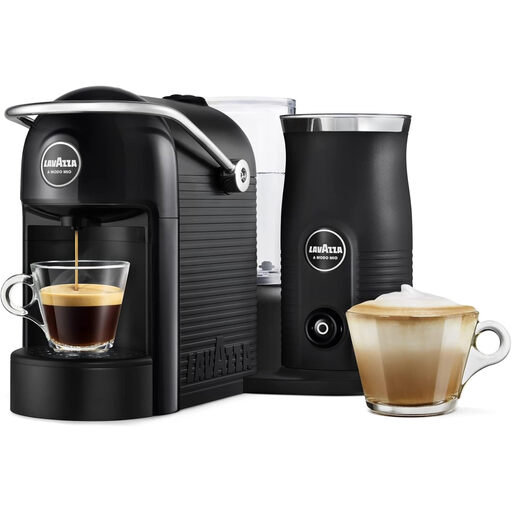
Why This Fits Their Persona: A compact capsule machine for households wanting espresso or lungo with milk foam without learning manual tamping and steaming.
Its capsule format and two programmable selections make the daily process straightforward; buyers should still budget for A Modo Mio capsule supply.
1.0 L removable water tank, integrated milk frother and stated heat-up time of about 35 seconds.

Why This Fits Their Persona: Suitable for users who want one-touch recipes, hot and cold milk foam and a more feature-led capsule coffee setup.
The specification clearly includes cold frothing, helping iced-latte drinkers avoid buying a hot-only milk system.
1.1 L water tank, glass mug/frothing jug, four coffee sizes and five stated milk-based recipes.

Why This Fits Their Persona: A choice for home baristas and small offices that value manual control over espresso dosing and milk texture.
It does not lock you into capsules: it uses ground coffee and provides a manual steam wand, although it requires more cleaning and practice.
1.5 L removable tank, separate temperature controls and a stated 20-bar pump.
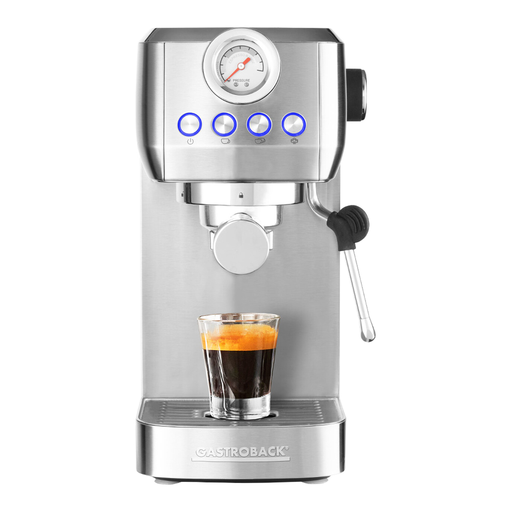
Why This Fits Their Persona: Its slim 15 cm width suits smaller UK worktops, while dual compatibility helps households move between loose grounds and E.S.E. pods.
It avoids capsule-format lock-in and provides a manometer, making the brewing setup more transparent for users who want adjustment.
1.3 L water tank, 15-bar ULKA pump, steam wand and compatibility with ground coffee and E.S.E. pods.
We have compiled a complete, real-time list of products that fully satisfy these strict selection criteria and UK safety regulations.
Milk systems need more attention than the coffee-brewing side. Rinse removable frothing parts after each use, wipe a steam wand immediately after steaming and empty the drip tray regularly. Follow the manufacturer’s descaling guidance and use a suitable product rather than household substitutes.
For running costs, compare the price per capsule with the cost of ground coffee. A capsule machine may save preparation time, while a ground-coffee model can offer more choice and potentially lower drink costs depending on your coffee selection. Also account for milk, electricity, replacement filters and descaling supplies.
Yes, but the machine must support cold frothing or be paired with a separate frother. Brew espresso into a glass containing ice, then add cold milk foam. Avoid pouring hot milk directly over ice if you want a colder, less diluted drink.
There is a learning curve. You need to position the wand correctly, introduce air briefly and then create a smooth whirlpool in the milk. Clean the wand straight after use to prevent residue. Users seeking one-touch preparation may prefer an integrated automatic frother.
Lifespan depends on usage, water hardness, cleaning and maintenance. Regular rinsing, prompt milk-system cleaning and descaling can help protect the internal components. Before purchasing, check that removable parts are easy to access and that replacement accessories are available.