
24/7 Customer Support

Free returns

Same-day & Next-day Delivery

Quality Guaranteed

Unlock Your Welcome Offers: FREE Delivery | Up to 80% OFF | Free 30-day JoyPlus trial
Download the APP
Buying one of the many coffee machines available in the UK can appear straightforward, but the wrong choice may leave you with expensive capsules, difficult cleaning or a machine that does not fit your daily routine. Before choosing between filter coffee machines, pod coffee machines and espresso machines, check how you actually drink coffee, how much space you have and what ongoing maintenance will involve.
A high bar number is often used as a marketing headline for espresso machines. However, pump pressure is only one part of extraction. Grind size, dose, temperature control, basket design and brewing consistency also affect the result. A machine advertised with 19 or 20 bars is not automatically suitable for every type of coffee.
Pod coffee machines are convenient, but each system has its own capsule format. Before purchasing, check whether your preferred coffee is available in the required system and compare capsule prices. A machine that appears affordable may cost more over time if you drink several coffees each day.
The Lavazza A Modo Mio Deséa, for example, is designed for Lavazza A Modo Mio capsules rather than every capsule format. Compatibility should be confirmed before buying, even when a listing mentions several systems elsewhere in the product description.
Coffee residue, milk deposits and limescale can affect performance and flavour. Hard-water areas in the UK may require more frequent descaling and water filter replacement. Check whether the water tank, drip tray, milk jug and brewing components can be removed easily.
Coffee machine water filters are not interchangeable by appearance alone. Always match the filter code and machine model. For example, the De’Longhi DLSC002 is listed for De’Longhi bean-to-cup and pump espresso machines with removable water tanks, while Waterdrop alternatives are designed for specific Siemens, Bosch, De’Longhi or Philips systems.
Choose the brewing format that matches your normal routine:
Capacity also matters. A 600ml tank may suit one person or a small office, while a 1.1L or 1.25L tank is more practical for several servings.
For filter brewing, the 92–96°C range is commonly used as a reference for coffee extraction. The Moccamaster KBG Select product specification states a brewing temperature of 92–96°C and a brewing time of approximately six minutes for a 1.25-litre jug.
For pod machines, look at heat-up time and recipe controls. The Lavazza Deséa is specified with a heat-up time of approximately 28 seconds, four coffee sizes and five milk-based recipes. These features may suit households that want repeatable drinks without manual dosing.
Measure your worktop before ordering. Also check:
For espresso equipment, accessories can also affect compatibility. A 58mm portafilter cleaning brush, such as the MHW-3BOMBER model listed by Joybuy, is intended for 58mm filter baskets and is not automatically suitable for smaller domestic portafilters.
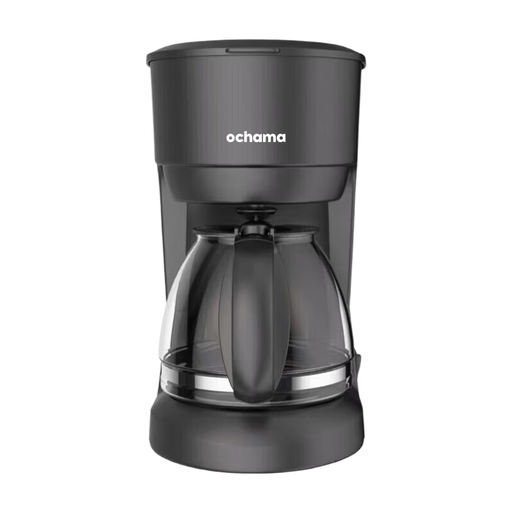
Why This Fits Their Persona: A compact option for a single person, small household or office where simple filter brewing is the priority.
Its 750ml tank and drip-brewing format make the intended capacity clear, helping buyers avoid paying for unnecessary espresso features.
600W power, automatic drip brewing, compact design and removable parts for cleaning.

Why This Fits Their Persona: Suitable for coffee drinkers who prepare several cups and value a repairable design with a substantial glass jug.
The full and half-carafe switch makes capacity more flexible than a machine designed only for one fixed batch size.
1.25-litre capacity, approximately six-minute full-jug brewing, automatic shut-off after 40 minutes and a five-year manufacturer’s warranty.

Why This Fits Their Persona: A practical match for households wanting espresso, cappuccino, latte and iced coffee recipes from one pod machine.
Its stated capsule system is clear, so buyers can check pod availability before committing to recurring purchases.
Integrated hot and cold milk frother, 1.1-litre water tank, approximately 28-second heat-up and operation below 43dB as specified.
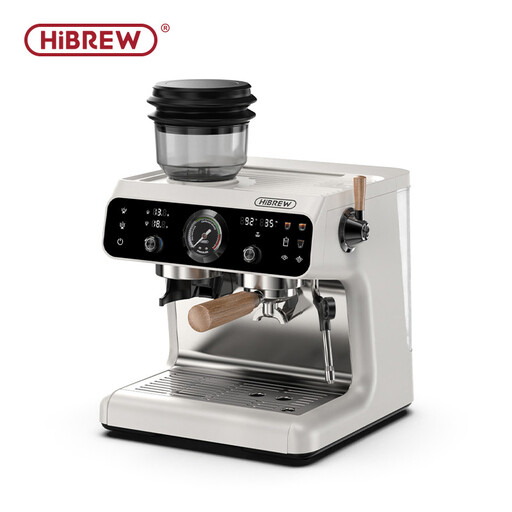
Why This Fits Their Persona: Designed for users who want grinding, espresso preparation and milk frothing in one larger worktop machine.
The 2.8-litre tank, 250g bean capacity and stated dimensions make it easier to assess whether the machine suits frequent use and available worktop space.
48mm burr grinder with 30 settings, dual heating, PID temperature control and a 58mm portafilter.
We have compiled a complete, real-time list of products that fully satisfy these strict selection criteria and UK safety regulations.
To keep coffee machines working consistently:
Running cost depends on the brewing system. Filter coffee generally requires ground coffee and replacement coffee filters, while pod machines add a capsule cost for every drink. Electricity use depends on wattage, heat-up time and standby behaviour. Comparing the price per serving before buying can provide a more realistic estimate than the purchase price alone.
Lifespan varies according to construction, frequency of use, water hardness and maintenance. Replaceable parts, accessible cleaning components and compatible filters can make ongoing ownership more practical. Follow the manufacturer’s descaling and cleaning instructions rather than relying only on taste or visible scale.
Yes, but the method depends on the machine. Some filter coffee makers can brew directly over ice when the jug and instructions permit it. Pod machines with a cold mode may prepare a cold drink more directly. Never place ice in a component that is not designed for it, and allow hot parts to cool safely before cleaning.