
24/7 Customer Support

Free returns

Same-day & Next-day Delivery

Quality Guaranteed

Unlock Your Welcome Offers: FREE Delivery | Up to 80% OFF | Free 30-day JoyPlus trial
Download the APP
Choosing among coffee machines can be surprisingly difficult. Product pages often highlight pump pressure, capsule compatibility or “café-style” results, but these figures do not always explain how a machine will fit your routine. A compact pod appliance may suit a busy household, while an espresso enthusiast may prefer control over grinding, dosing and milk texture.
Before buying, consider the coffee you actually drink, the space available and the cleaning you are prepared to do. The right choice is not necessarily the machine with the longest feature list; it is the one that matches your daily habits without creating unnecessary running costs or maintenance.
A specification such as 15-bar or 20-bar pump pressure can attract attention, but it does not alone determine the taste of an espresso. Grind size, dose, tamping, water temperature and extraction time also affect the cup. A manual espresso machine may offer more control, but it requires practice. A pod machine reduces those variables, giving a more straightforward routine.
“Capsule coffee machine” is a broad term. Nespresso Original, Nespresso Vertuo, Dolce Gusto and Tassimo T DISCs are different systems and are not generally interchangeable. Check the exact capsule format before purchasing, especially if you already have a cupboard full of coffee pods.
Some systems offer espresso-sized drinks, while others include larger mugs, milk drinks or speciality beverages. A machine that appears affordable may become less convenient if its compatible pods are difficult to source or cost more than your preferred ground coffee.
Coffee machines need more than a nearby socket. Manual espresso machines require the portafilter and steam wand to be cleaned after use. Bean-to-cup coffee machines need attention around the grinder, hopper and brewing components. Capsule coffee machines are simpler, but still require descaling and drip-tray cleaning.
Measure the full working area, including space for opening a water tank, lifting a hopper lid or storing accessories. Also check the UK electrical specification: appliances should be suitable for 220–240V, 50Hz mains use and connected according to the manufacturer’s instructions.
If you are considering whole coffee beans, an integrated burr grinder can reduce the need for a separate appliance. Look for adjustable grind settings rather than assuming that a high number automatically means better results. Espresso generally needs a finer grind than French press brewing, while filter coffee sits between the two.
Machines using pre-ground coffee are easier to set up, but you must buy the correct grind. Finely ground espresso coffee is not always suitable for a French press, and coarse coffee may extract too slowly in an espresso machine.
A 0.7-litre tank may suit one person or occasional use, while a 1.3 to 1.8-litre tank can reduce refilling in a family kitchen or office. Larger tanks also take up more space and may be heavier to remove.
For milk drinks, compare a manual steam wand with an automatic milk frother. A steam wand allows more control but requires cleaning and some technique. Automatic systems are convenient for cappuccinos and lattes, although milk-contact parts still need regular washing.
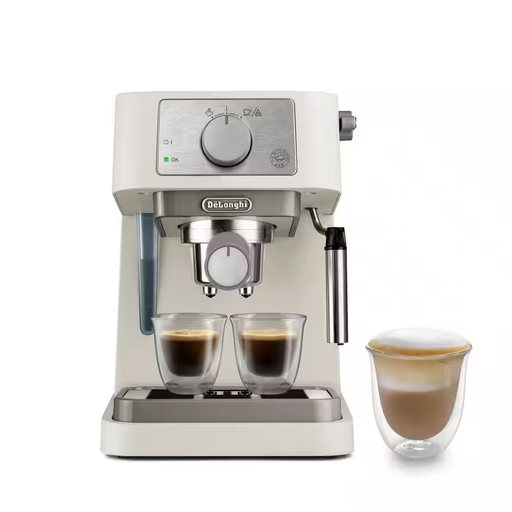
Why This Fits Their Persona: A compact option for beginners who want espresso and milk drinks without moving straight to a larger bean-to-cup machine. Its approximate 150 × 280 × 310mm dimensions suit many smaller UK worktops.
It clearly supports ground espresso and ESE pods, helping buyers choose between loose coffee and a portioned format instead of assuming all capsules fit.
15-bar pump, manual stainless steel steam wand, 1-litre water tank and single and double-shot filter baskets.
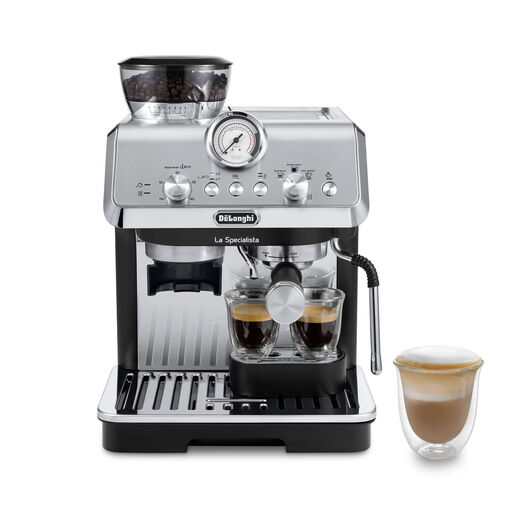
Why This Fits Their Persona: Suits home coffee drinkers who want fresh grinding, manual dosing and control over espresso and milk-based recipes.
Its specifications explain the grinder and temperature controls, making the level of user involvement clear rather than presenting one-touch convenience as a universal fit.
Integrated burr grinder with 8 settings, three infusion temperatures, 1.7-litre removable tank and manual steam wand.

Why This Fits Their Persona: Designed for households that want fresh beans, adjustable brewing and hot or cold drink options from one appliance.
The 20-level grind adjustment and 1.8-litre water tank make its capacity and customisation more transparent than a generic “all-in-one” description.
Built-in burr grinder, 20-bar pump, PID temperature control, steam wand and hot-and-cold extraction modes.
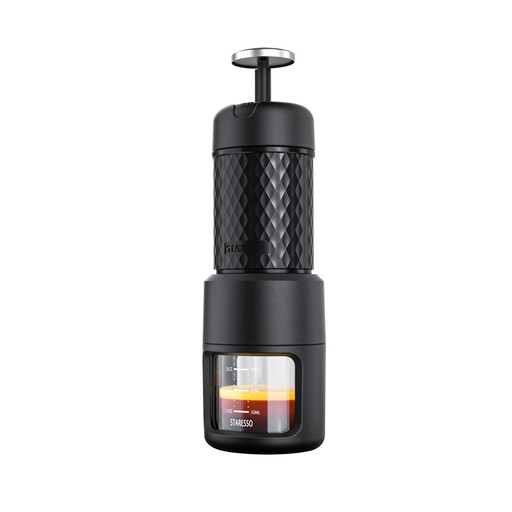
Why This Fits Their Persona: A practical choice for offices, university accommodation, travel and outdoor use where electricity is unavailable.
It does not rely on mains power or a particular electrical setup, but users should still prepare hot water safely within the stated 85–95°C range.
No electricity required, compatible with coffee powder and capsules, with 30ml, 60ml and 90ml cup markings.
We have compiled a complete, real-time list of products that fully satisfy these strict selection criteria and UK safety regulations.
It depends on the drink frequency, capsule price and whether you already own a grinder. Ground coffee and coffee beans can offer more portion flexibility, while pods provide measured servings and less preparation. Compare the cost per cup rather than the machine price alone.
Follow the appliance manual and consider your local water hardness. Some manufacturers suggest descaling approximately every three months, but frequent use or hard water may require more regular attention. A removable tank, drip tray and washable components can make routine care easier.
Not usually. Bean-to-cup models generally use whole beans, while manual espresso machines may accept ground coffee and ESE pods. Capsule coffee machines are tied to their specified system. Check the compatibility section before ordering supplies such as coffee pods, ground coffee or coffee beans.