
24/7 Customer Support

Free returns

Same-day & Next-day Delivery

Quality Guaranteed

Unlock Your Welcome Offers: FREE Delivery | Up to 80% OFF | Free 30-day JoyPlus trial
Download the APP
Buying one of the many coffee machines available in the UK can seem straightforward until you compare pump pressure, grinders, milk systems, capsule types and cleaning requirements. A compact machine may fit neatly on a worktop but require more hands-on preparation, while an automatic model may save time but need more space and regular maintenance.
Before choosing, look beyond promotional phrases such as “barista-style” or “one-touch”. The useful questions are: how is the coffee brewed, what ingredients does it accept, how much control do you want and what cleaning will be required after daily use?
A specification such as 15-bar or 20-bar pump pressure can look persuasive, but pressure alone does not determine the flavour of your espresso. Grind size, dose, tamping, water temperature and extraction time also matter.
A manual espresso machine can offer control, but you will need to learn how to grind and tamp consistently. A semi-automatic coffee machine may provide a practical balance between control and convenience. Fully automatic models handle more of the process for you, although they may offer fewer manual adjustments.
A “cappuccino machine” may use a manual steam wand, an automatic milk frother or a separate milk-frothing device. These options suit different routines.
A steam wand gives you more control over texture and is useful for practising latte art, but it requires a milk jug and cleaning immediately after use. An automatic milk system is convenient for households that regularly make cappuccinos and lattes, but its milk-contact components usually need rinsing or a cleaning cycle after use.
A coffee pod machine is often simple to operate, but you must check capsule compatibility and availability before buying. Some systems accept only a particular capsule range. Whole-bean machines avoid pod waste and grind coffee as needed, but beans require storage and the grinder needs occasional cleaning.
For any home coffee maker, also check the water tank, drip tray and grounds container. Small capacities may suit one person or a flat kitchen, while larger tanks reduce refilling for families or shared households.
Measure the available worktop before ordering. Do not check width alone: depth, height above the machine and clearance for opening a bean hopper or capsule head are also important.
A 1-litre tank can be suitable for occasional espresso, while a 1.7 to 1.8-litre water tank is more convenient for several drinks. Remember that milk systems, drip trays and grounds containers also require space for removal.
If you want a coffee machine with grinder, check the number of grind settings and whether the grinder is adjustable while operating, as instructed by the manufacturer. More settings can provide finer adjustment, but they also add another feature to learn.
For milk drinks, decide between a manual steam wand and an automatic milk frother. A manual wand is generally more involved; an automatic system is easier for repeatable one-touch recipes but adds milk components to your cleaning routine.

Why This Fits Their Persona: A compact option for beginners, flat dwellers and occasional espresso drinkers who want to use either ground coffee or E.S.E. pods.
It clearly uses a manual steam wand rather than implying automatic milk preparation, so buyers can plan for the extra preparation and cleaning.
15-bar pump, 1-litre removable tank, two filter baskets and a compact 150 x 280 x 310 mm footprint.
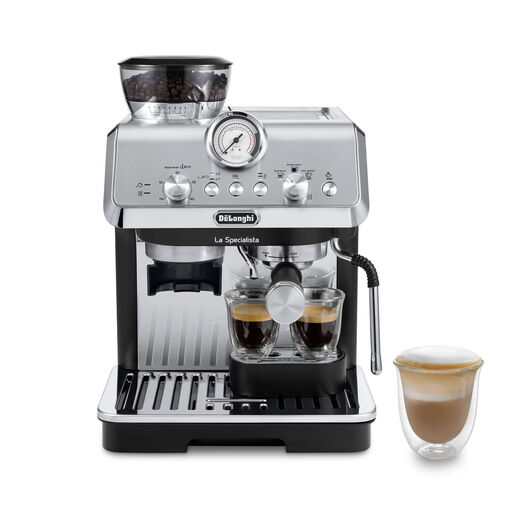
Why This Fits Their Persona: Suits coffee drinkers who want an integrated grinder while retaining control over dosing, tamping, extraction and milk texture.
Its specification makes the manual workflow clear, avoiding confusion between a fully automatic bean-to-cup machine and a hands-on setup.
Integrated burr grinder with eight settings, three infusion temperatures, 1.7-litre tank and a manual steam wand.
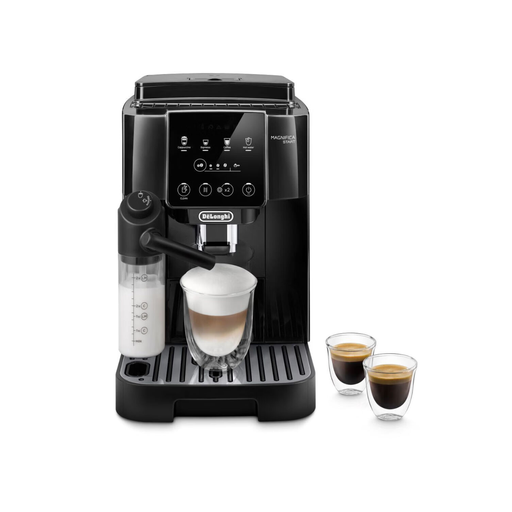
Why This Fits Their Persona: A practical match for busy households that want espresso and milk-based drinks with minimal manual preparation.
The LatteCrema Hot system and cleaning function are specified directly, making the milk workflow easier to assess before purchase.
250g bean hopper, 1.8-litre water tank, 13 grind settings and one-touch espresso, coffee, cappuccino and hot-water options.
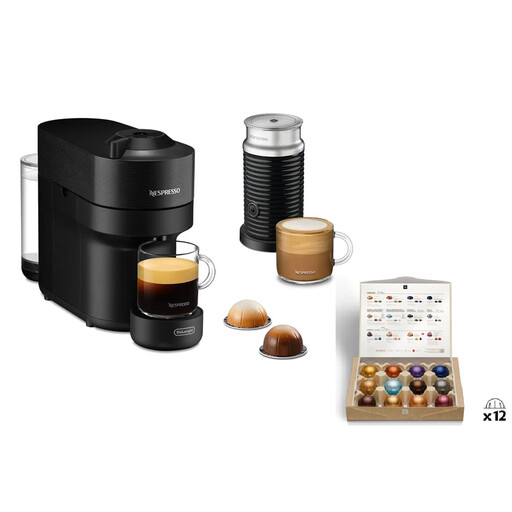
Why This Fits Their Persona: Suitable for busy professionals and compact kitchens where quick, low-effort preparation matters more than manual brewing control.
The compatible system is clearly identified as Nespresso Vertuo, so buyers can check capsule prices and availability before ordering.
One-touch brewing, barcode recognition, six cup sizes, approximately 30-second heat-up and an Aeroccino milk frother.
Before the first brew, rinse removable parts and follow the supplied instructions. Place the appliance on a stable, heat-resistant surface near a suitable 220–240V UK socket. Keep steam wands away from hands and wipe them after milk preparation.
For continued performance:
The right choice is the machine whose preparation routine you will actually use. Compare the full specifications, dimensions, warranty information and compatible consumables before placing an order.
We have compiled a complete, real-time list of products that fully satisfy these strict selection criteria and UK safety regulations.
The answer depends on the capsule and coffee-bean prices, drink frequency and machine maintenance. Pods offer measured portions and convenience, while whole beans can provide more flexibility in quantity and roast choice. Compare the ongoing price per drink rather than only the purchase price.
Follow the appliance’s indicator or manual. Descaling frequency varies with water hardness, usage and the machine’s internal design. UK households in hard-water areas may need to pay closer attention to the warning indicators and use only the recommended descaling product.
It has a learning curve because you must dose, tamp and steam milk yourself. However, models with clear controls, included filter baskets and a visible water tank can make the process easier for beginners. Choose a manual machine if you enjoy preparation; choose a fully automatic model if speed and repeatability are priorities.