
24/7 Customer Support

Free returns

Same-day & Next-day Delivery

Quality Guaranteed

Unlock Your Welcome Offers: FREE Delivery | Up to 80% OFF | Free 30-day JoyPlus trial
Download the APP
Choosing between espresso coffee machines, bean-to-cup coffee machines and pod coffee machines is not simply a matter of comparing prices. The right option depends on how much control you want, how often you make coffee and whether milk drinks are part of your daily routine.
Marketing can make every machine sound café-ready, but a few overlooked details can lead to unnecessary expense, difficult cleaning or disappointing drinks. This guide explains the practical specifications worth checking before you buy, followed by our top recommendations for different household needs.
Many espresso machines advertise 15-bar or 20-bar pump pressure. This figure describes the pump’s maximum capability, not necessarily the pressure used throughout extraction. Coffee quality also depends on grind size, dose, water temperature, tamping and the quality of the beans.
Treat pressure as one specification rather than a complete measure of performance. A machine with adjustable temperature, consistent water delivery and a suitable portafilter may offer more useful control than one promoted mainly through a high bar figure.
A coffee machine with milk frother can make cappuccinos and lattes more convenient, but milk systems need regular cleaning. Steam wands should generally be wiped and purged after use, while automatic milk carafes may contain removable parts that require rinsing.
If you mainly drink black coffee, a manual steam wand may be unnecessary. If several people want milk drinks each morning, a fully automatic coffee machine or a separate automatic milk frother could reduce preparation time.
A machine may look compact in product photographs but still need clearance above or behind it to remove the water tank or bean hopper. Check the stated dimensions, tank position and cup clearance before ordering.
For a busy household or small office, a 1.5-litre or larger water tank can reduce refilling. However, a larger tank also adds weight and may take longer to remove and clean. Capacity should match actual daily use rather than simply being as large as possible.
Compare the water tank capacity, bean hopper size and number of drinks supported before refilling. A 1.2-litre tank may suit one or two coffee drinkers, while 1.8 litres can be more convenient for a family or shared workspace.
Also check whether tanks, drip trays and brew groups are removable. These features make routine cleaning easier and help you follow the manufacturer’s maintenance instructions.
A manual steam wand offers hands-on control over texture and is suitable for users learning to make cappuccinos, lattes or flat whites. Automatic systems are quicker and more repeatable, but their milk containers and connecting parts need careful cleaning.
A separate milk frother can be a sensible alternative if you already own a preferred home coffee maker. For example, automatic milk frothers can heat or foam milk independently, allowing one appliance to serve several drinks.
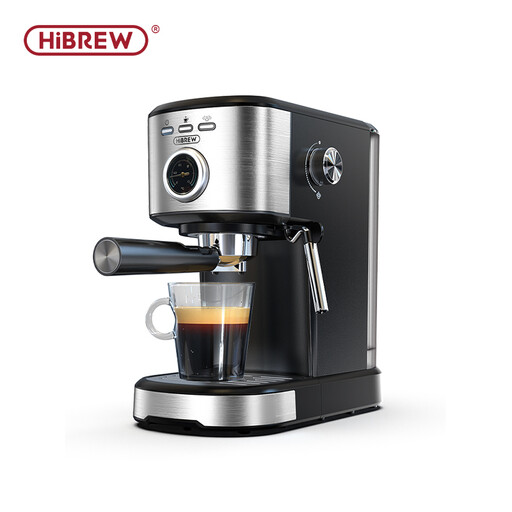
Why This Fits Their Persona: A practical starting point for UK shoppers who want to learn espresso preparation without immediately choosing a larger bean-to-cup system. Its 1.2-litre removable tank suits moderate daily use.
The real-time temperature meter provides visible brewing information, while the removable drip tray supports simpler cleaning.
One-touch extraction, 15-bar pump specification, dual-mode milk frothing and a cup warmer.
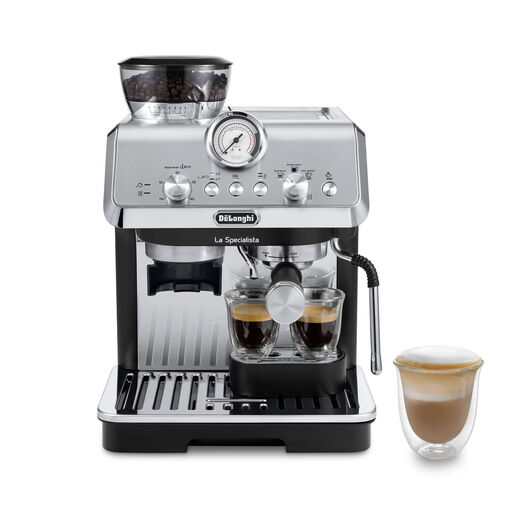
Why This Fits Their Persona: Suits home baristas who want integrated grinding but still prefer to control dosing, tamping and milk texture.
It combines eight grind settings with three infusion temperature choices, so buyers are not limited to a single preset.
Integrated burr grinder, 1.7-litre tank, 15-bar pump specification and professional-style steam wand.

Why This Fits Their Persona: Designed for busy households or small offices where several users want different drinks with minimal preparation.
Its one-touch recipes reduce repeated manual steps, while the 1.8-litre tank and 250g bean hopper reduce interruption during busy periods.
Seven one-touch recipes, integrated grinder and automatic milk frothing system.
We have compiled a complete, real-time list of products that fully satisfy these strict selection criteria and UK safety regulations.
Before ordering, check that the appliance is suitable for a 220–240V UK electrical supply and confirm whether the supplied plug and warranty arrangements meet your needs. Keep the machine on a stable, heat-resistant surface with space for ventilation and tank removal.
Running costs vary by system. Pods are convenient but create an ongoing capsule expense. Ground coffee and whole beans offer more choice, although bean-to-cup models may require replacement filters, descaling products and regular cleaning. Follow the manufacturer’s instructions rather than relying only on the pump pressure or advertised drink count.
The answer depends on the coffee format, drink frequency and maintenance. Pods can have a higher per-drink cost, while beans and ground coffee allow more flexibility. Electricity use is also affected by heat-up time, standby settings and how often the machine is switched on.
Lifespan depends on construction, water hardness, usage and cleaning. Regularly empty the drip tray, rinse removable parts, clean milk components and descale when instructed. Machines used several times daily may require more frequent maintenance than occasional-use appliances.
Choose one if you regularly make cappuccinos, lattes or flat whites. A manual steam wand suits users who want control, while an automatic system is more convenient for shared households. If milk drinks are occasional, a separate automatic milk frother can provide flexibility without requiring a more complex coffee machine.