
24/7 Customer Support

Free returns

Same-day & Next-day Delivery

Quality Guaranteed

Unlock Your Welcome Offers: FREE Delivery | Up to 80% OFF | Free 30-day JoyPlus trial
Download the APP
Buying coffee machines for a UK kitchen can appear straightforward until you compare pump pressure, grinder settings, milk systems, pod compatibility and cleaning requirements. A compact espresso machine may suit a flat perfectly, while a busy household may save time with an automatic bean-to-cup model.
The key is to match the machine to how you actually drink coffee. Before choosing between espresso machines, pod coffee machines and automatic coffee machines, watch out for these common buying pitfalls.
Marketing often places a large number of bars at the centre of the product description. However, pump pressure alone does not determine whether a machine suits your coffee routine. Grind size, coffee dose, tamping, water temperature and extraction control also affect the result.
A 15-bar pump is common across domestic manual espresso machines and bean-to-cup coffee machines. Consider it alongside the brewing controls, grinder and filter system rather than selecting solely by the highest number.
A machine advertised as a cappuccino maker may use a manual steam wand, a classic frother or an automatic milk carafe. These systems require different levels of involvement. Manual wands offer more control but require practice and cleaning after every use. Automatic milk systems are more convenient but may have additional parts, tubes or cleaning cycles.
If you regularly prepare lattes, cappuccinos or flat whites, check whether the milk components are removable, dishwasher-safe or equipped with a self-cleaning function.
A machine may fit the available width but still be inconvenient if the water tank or bean hopper cannot be removed easily. Measure the full footprint, including space above the machine and room to open the top or remove the rear tank.
For smaller UK kitchens and flats, compact manual espresso machines or pod coffee machines can be easier to position. Larger bean-to-cup models may offer more convenience but need a permanent, accessible worktop location.
Your choice of coffee input affects cost, effort and flexibility:
Check the exact capsule or pod format before purchasing. Not all pods are interchangeable, and availability and pricing can vary between systems.
For bean-to-cup coffee machines, examine the number of grinder settings and the bean hopper capacity. More settings provide greater scope to adjust the grind, although the process still requires gradual changes and suitable coffee beans.
The Philips EP2220/10 has a 100% ceramic grinder with 12 settings, a 275g bean hopper and three coffee strength settings. The De’Longhi Magnifica models listed below provide 13 grind settings and 250g hoppers. These details are more useful than general claims about flavour because they show how much control and storage the machine provides.
A removable water tank is useful for filling and cleaning. Capacities around 1.0 to 1.8 litres can suit different household sizes, but a larger tank may also increase the machine’s footprint.
Look for removable drip trays, accessible brewing groups and clear cleaning instructions. The Philips EP2220/10 includes a removable brew group, dishwasher-safe milk-system components, drip tray and coffee-ground container. The De’Longhi Magnifica Start with automatic milk uses a milk carafe with a cleaning function, while manual steam-wand models need the wand wiped and purged after use.
All coffee machines produce hot water, steam and heated surfaces. Use a stable, heat-resistant surface, follow the supplied instructions and connect appliances only to a suitable 220–240V earthed UK socket. Never handle a portafilter or steam wand immediately after use.
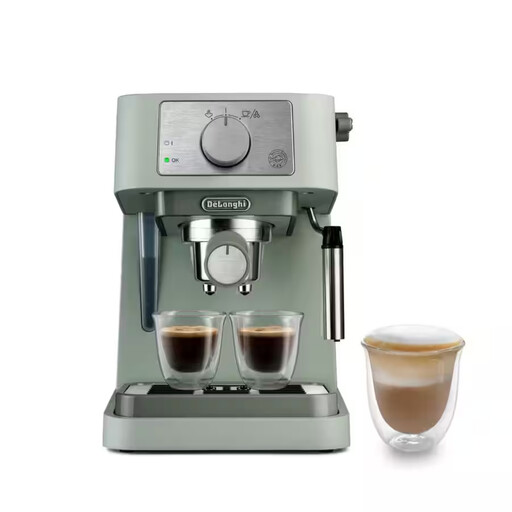
Why This Fits Their Persona: A compact option for first-time home coffee makers who want espresso, cappuccinos or iced coffee without a built-in grinder.
Its compact dimensions and visible water level help address limited worktop space and refill concerns. It uses ground coffee or ESE pods, giving two input options.
15-bar pump, manual stainless-steel steam wand, single and double-shot baskets and a two-tier removable drip tray.
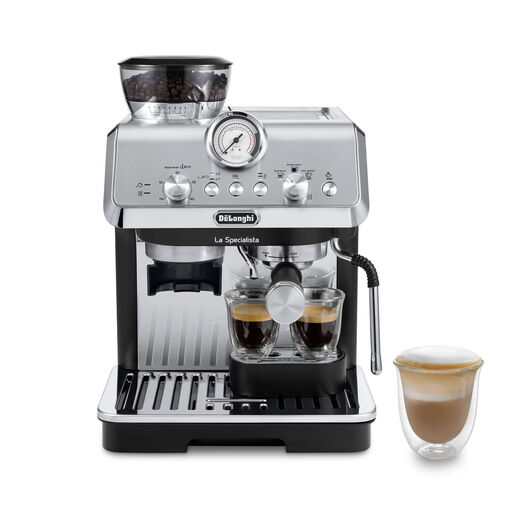
Why This Fits Their Persona: Suitable for home baristas who enjoy controlling grinding, dosing, tamping and milk steaming rather than selecting a single automatic recipe.
It provides practical control beyond a headline pressure figure, including eight grind settings, three infusion temperatures and a professional steam wand.
1.7-litre removable tank, integrated burr grinder, dosing funnel, tamper, tamping mat and stainless-steel milk jug.
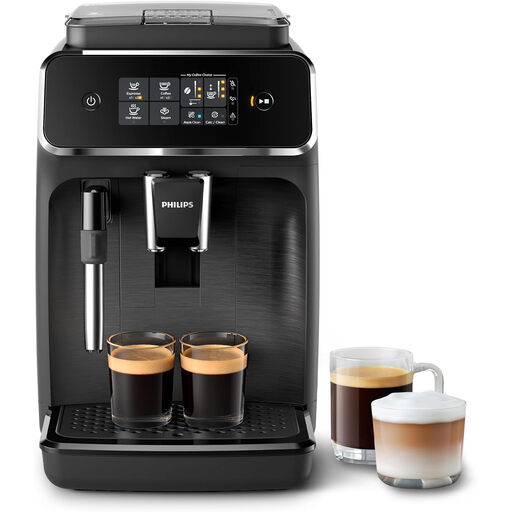
Why This Fits Their Persona: A practical choice for households wanting fresh-ground espresso or coffee from touch controls, with a classic milk frother for cappuccinos.
The removable brew group and dishwasher-safe parts make routine cleaning more manageable than systems with inaccessible internal components.
1.8-litre water tank, 275g hopper, 12-step ceramic grinder, three strength settings and automatic descaling alerts.

Why This Fits Their Persona: Designed for frequent drink makers who want hot espresso, cold brew-style drinks and hot or cold milk recipes from one appliance.
Its dedicated cold drink functions are more suitable for iced coffee than simply pouring a standard hot drink over ice.
Over 50 listed hot and cold recipes, 1.8-litre tank, 300g bean hopper, colour touchscreen and hot-and-cool milk systems.
We have compiled a complete, real-time list of products that fully satisfy these strict selection criteria and UK safety regulations.
The purchase price is only part of the budget. Manual espresso machines require ground coffee, while bean-to-cup models need whole beans and periodic filters or descaling products. Pod machines can be quick to use, but capsule prices and recycling arrangements depend on the system.
To reduce waste, brew the quantity you need, use the machine’s energy-saving mode where available and avoid leaving water sitting in the tank for long periods. Clean milk equipment immediately after use, empty drip trays when prompted and descale according to the manufacturer’s instructions and local water hardness.
For iced coffee, use a concentrated espresso or cold-drink programme where available. Brewing a normal large coffee directly over ice can create a diluted drink. Large ice cubes melt more slowly, while cold milk or water can be added after brewing.
Running costs depend mainly on the coffee format. Ground coffee and beans are usually purchased by weight, whereas pod costs vary by capsule system. Electricity use depends on power rating, heat-up time, drink volume and standby settings. Filters, cleaning tablets and descaling products should also be included in your household budget.
Lifespan varies according to construction, frequency of use, water quality and maintenance. Regular rinsing, cleaning, correct descaling and careful handling of hot components can help preserve performance. Always follow the manufacturer’s maintenance schedule and retain proof of purchase for warranty support.
You need either pre-ground coffee or a grinder. Manual espresso machines such as the Stilosa accept ground coffee and ESE pods, while bean-to-cup coffee machines include a built-in grinder. If you want fewer separate appliances and one-touch preparation, an integrated grinder may be more convenient.