
24/7 Customer Support

Free returns

Same-day & Next-day Delivery

Quality Guaranteed

Unlock Your Welcome Offers: FREE Delivery | Up to 80% OFF | Free 30-day JoyPlus trial
Download the APP
For UK coffee drinkers, coffee machines with milk frother can make espresso, cappuccino, latte, flat white, hot chocolate and iced coffee at home. However, the right choice depends less on headline wattage or pressure figures and more on how the machine handles milk, coffee compatibility, cleaning and worktop space.
A capsule machine may suit a busy household, while a manual espresso machine gives more control to developing home baristas. A standalone frother can also be a practical solution if you already own a coffee maker.
A specification such as “15 bar” describes the pump’s maximum pressure, not the complete quality of every espresso. Grind size, coffee freshness, dose, tamping and water temperature all affect the cup. A 15-bar espresso machine with milk frother can be useful, but the figure should not be the only reason to buy.
For a manual model, check whether it includes suitable single and double-shot baskets, a tamper and a stable portafilter. These accessories make the setup more practical for beginners.
A manual steam wand requires you to position a jug and texture the milk yourself. It offers more control, but it also requires practice and cleaning after each use.
An integrated or automatic frother is simpler for repeatable drinks. Some models also provide cold frothing, which matters if you regularly make iced lattes. Check the stated capacity and whether the milk jug or frothing vessel is removable.
A pod coffee machine is convenient, but capsules are not universally interchangeable. A Lavazza A Modo Mio coffee machine uses its own capsule format, while other systems use different pods. Before purchasing, confirm the exact pod type, local availability and ongoing capsule cost.
If you prefer freshly ground coffee or want more flexibility, look for a manual espresso machine or an ESE pod compatible coffee machine. These may involve more preparation but can accommodate ground coffee and standardised ESE pods, depending on the model.
Capsule machines reduce measuring and tamping, making them suitable for quick weekday drinks. Manual machines require more involvement but allow you to adjust the dose and coffee used.
For households with varied preferences, consider whether the machine supports:
A dedicated iced latte coffee machine is not essential. In many cases, you can cold-froth milk separately, brew espresso and pour it over ice. Follow the manufacturer’s instructions and use heat-resistant drinkware where hot coffee is involved.
Milk frothers commonly state separate capacities for frothing and heating. Foam expands, so the maximum frothing volume is usually lower than the heating capacity. For example, the Gastroback Latte Magic produces up to 350 ml of milk froth or heats up to 250 ml of milk or hot chocolate per cycle, according to its product specifications.
Automatic settings are convenient, while a steam wand is more adaptable for different textures. If you use plant-based milk, check the packaging guidance and expect results to vary between oat, soya and almond drinks.
Measure the available worktop depth and height, including space needed to remove a water tank or open the capsule area. Compact machines can still require clearance around the sides and above.
Useful practical checks include:
UK buyers should use a suitable 220–240V earthed socket and follow the supplied instructions. Do not assume that a machine designed for another market is suitable for UK use simply because an adaptor fits.

Why This Fits Their Persona: A compact option for UK kitchens that want ground-coffee flexibility without a larger automatic system.
It does not rely on a proprietary capsule format; the machine accepts ground espresso and ESE pods. The removable parts also support routine cleaning.
15-bar pump rating, manual steam wand, 1-litre water tank and an approximate 150 x 280 x 310 mm footprint.

Why This Fits Their Persona: Suitable for shoppers who value one-touch recipes and want hot or iced milk drinks with minimal preparation.
The product clearly uses Lavazza A Modo Mio capsules, helping buyers identify compatibility before ordering. It also includes a glass mug that functions as the frothing jug.
Four coffee sizes, five stated milk-based recipes, 1.1-litre water tank, approximately 28-second heat-up and hot or cold frothing.
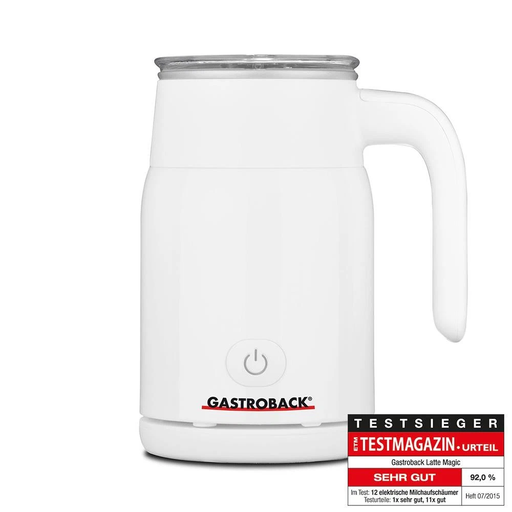
Why This Fits Their Persona: A standalone choice for households that already own a pod coffee machine or espresso maker and prepare several milk drinks.
It separates milk preparation from coffee brewing, so you are not replacing a working coffee machine just to improve froth. The removable spiral and non-stick interior support cleaning.
Hot and cold frothing, automatic shut-off, up to 350 ml of froth and up to 250 ml of heated milk or hot chocolate per cycle.
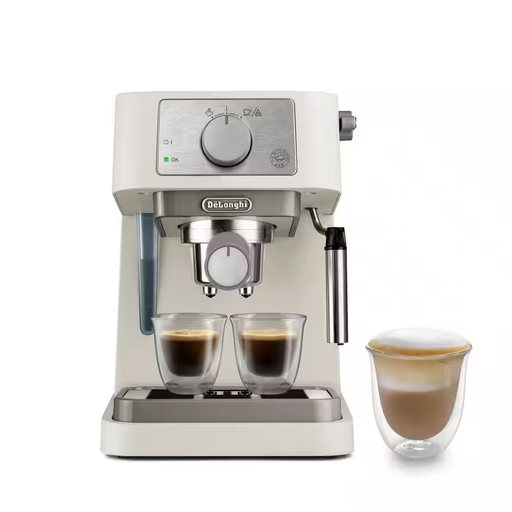
Why This Fits Their Persona: A hands-on option for users who want to practise tamping, steaming and adjusting drinks rather than pressing a single recipe button.
The manual format makes its preparation requirements clear. It includes single and double filters, a tamper and ESE pod compatibility rather than restricting you to one capsule range.
15-bar pump rating, stainless steel manual steam wand, two-tier drip tray and dedicated steam and espresso controls.
We have compiled a complete, real-time list of products that fully satisfy these strict selection criteria and UK safety regulations.
Running costs include electricity, coffee, milk and cleaning supplies. Capsule machines may reduce preparation time but require compatible capsules for every drink. Manual machines let you choose ground coffee or ESE pods, which can provide more control over ongoing purchases. A standalone frother uses additional electricity, although its automatic shut-off can limit unnecessary heating.
There is no single lifespan for every model. Regular rinsing, wiping the steam wand immediately after use and descaling according to the manual can help maintain performance. Milk residue is particularly important to remove because it can build up in contact areas. Hard-water households may need to follow descaling instructions more frequently.
Yes, where the machine or separate frother supports cold milk frothing. Brew espresso separately, prepare cold milk or foam, then combine with ice in a suitable glass. Do not place ice or cold liquids in components unless the instructions allow it. A machine with an integrated hot and cold milk frother, such as the Lavazza A Modo Mio Deséa, is designed around a wider range of milk-based drinks.