
24/7 Customer Support

Free returns

Same-day & Next-day Delivery

Quality Guaranteed

Unlock Your Welcome Offers: FREE Delivery | Up to 80% OFF | Free 30-day JoyPlus trial
Download the APP
Choosing among coffee machines can be harder than it looks. Product listings often highlight pump pressure, drink counts and “café-style” results, while giving less attention to cleaning, counter space and the skills required to use the appliance properly.
For UK households, the right choice depends on how much control you want, how often you make coffee and whether you prefer freshly ground beans or pre-ground coffee. This guide explains the key differences, common purchasing traps and suitable options for different types of home coffee drinkers.
A listing for a 20-bar espresso machine may sound more capable than a 15-bar model. However, the pump’s maximum rating is not the same as the pressure delivered through the coffee puck during extraction. Grind size, dose, tamping, water temperature and bean freshness also affect the cup.
Treat pump pressure as one specification rather than a guarantee of flavour. A stable brewing process and adjustable controls can be more useful than a large number on the box.
Semi-automatic espresso coffee machines usually require you to dose ground coffee, tamp it, lock in the portafilter and clean the group head afterwards. A steam wand also needs wiping and purging after every milk drink.
This can be rewarding for aspiring home baristas, but it may become inconvenient if several family members want coffee quickly before work. Automatic coffee machines reduce those steps, although they still need regular rinsing, emptying and descaling.
A machine with numerous recipes is not necessarily easier to maintain. Milk systems can contain removable tubes, carafes or frothing parts that need frequent cleaning. Check whether the drip tray, brew group, milk container and filter baskets are removable before buying.
Also consider water hardness in your area. Many UK homes benefit from following the manufacturer’s descaling schedule and using a compatible water filter where specified.
There are three main formats:
If you already buy ground coffee, a semi-automatic model may be more practical. If speed and repeatability matter, a built-in grinder and automatic dosing can save time.
Coffee machines with built-in grinders should offer enough adjustment for your preferred beans. The Philips EP2220/10, for example, lists 12 grinder settings, while the De’Longhi Magnifica Start lists 13. The HiBREW H20 provides 20 grind adjustments, giving more incremental control on paper.
Capacity matters for daily use. A 1.8-litre water tank is convenient for several drinks, but it adds to the machine’s footprint and filled weight. Bean hoppers ranging from around 250g to 300g can reduce refilling, although beans should still be stored appropriately to preserve flavour.
For cappuccino machines, latte machines and coffee machines with milk frothers, decide between:
Measure your worktop before ordering. Compact models may still need clearance above the machine for a bean hopper or water tank. UK buyers should also confirm that the appliance is suitable for a 220–240V mains supply and follow the supplied safety instructions. Hot water, steam and metal brewing parts can cause burns, so place the appliance on a stable, heat-resistant surface.

Why This Fits Their Persona: A compact option for UK kitchens where users want espresso, cappuccino or latte drinks without committing to a large bean-to-cup appliance.
Its specification clearly identifies ground coffee compatibility, so buyers are not expecting an integrated grinder. The 1.3L tank and 700ml milk depot are also stated for easier planning.
20-bar listed pump pressure, 1,350W power and a 23 x 23 x 32cm product size.
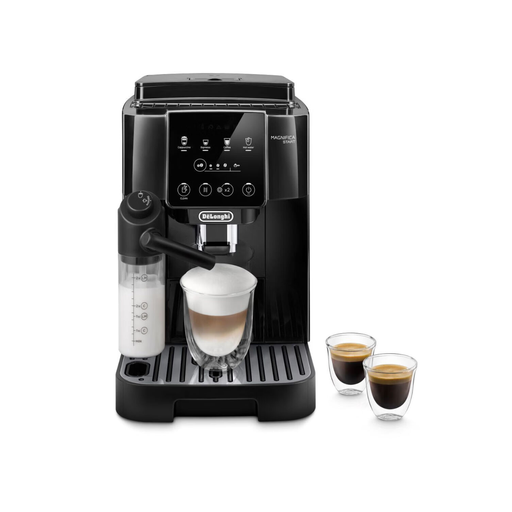
Why This Fits Their Persona: Suitable for households wanting fresh bean grinding, one-touch recipes and automatic milk preparation with fewer manual steps.
The built-in grinder, 250g hopper and 1.8L tank are specified, while the milk system includes a self-cleaning function. Routine cleaning and descaling are still required.
Four listed one-touch recipes, 13 grind settings and adjustable aroma and temperature controls.
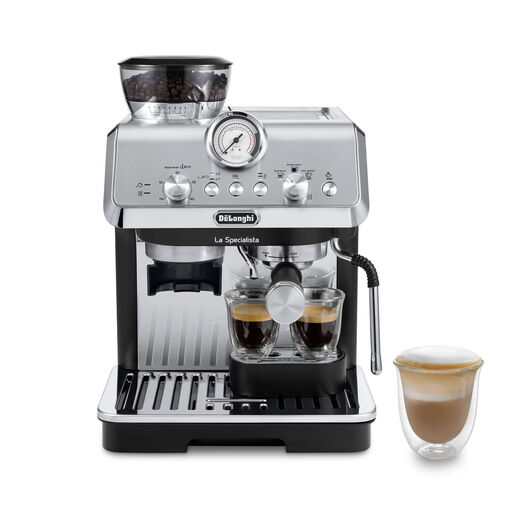
Why This Fits Their Persona: Designed for users who want control over grinding, tamping, temperature and milk steaming rather than a fully automated routine.
The manual workflow is clear, avoiding the expectation that a bean-to-cup label means one-touch operation. The supplied kit includes a tamper, dosing funnel, mat and milk jug.
Integrated burr grinder with eight settings, three infusion temperatures and a 1.7L removable tank.

Why This Fits Their Persona: A versatile choice for homes where different people want hot espresso drinks, iced milk drinks or cold brew-style coffee.
Its hot and cold functions are specifically listed, rather than implying that any espresso machine automatically makes cold brew. Automatic cleaning and descaling functions are also specified.
Over 50 listed hot and cold recipes, a 300g hopper, 1.8L tank and separate hot and cool milk systems.
We have compiled a complete, real-time list of products that fully satisfy these strict selection criteria and UK safety regulations.
A separate electric milk frother can be useful if you mainly drink filter coffee or want to add foam without buying a machine with a steam system. The Gastroback Latte Magic produces hot or cold froth, with stated capacities of up to 350ml for froth and 250ml for heated milk. A 350ml stainless-steel latte jug, such as the HiBREW model, may suit manual steaming and latte-art practice.
Running costs include beans or ground coffee, milk, water filters, descaling solution and electricity. Larger tanks and hoppers reduce refilling but can increase the appliance’s size. For occasional users, a simpler semi-automatic model may avoid paying for features that remain unused.
Both ratings are common in domestic espresso machines. The number describes the pump’s stated maximum pressure, not a guaranteed extraction result. Use the manufacturer’s instructions and consider temperature control, grind adjustment and cleaning facilities as well.
Lifespan varies with construction, usage, water quality and maintenance. Empty the drip tray and grounds container when required, rinse removable parts, clean milk components after use and descale according to the manual. Avoid operating the appliance without water or ignoring warning indicators.
They may involve higher initial spending and additional costs for filters or cleaning products, but they can reduce the need for separate grinders and dosing equipment. Compare the machine price, bean consumption, milk usage and maintenance routine against how many drinks your household makes each week.