
24/7 Customer Support

Free returns

Same-day & Next-day Delivery

Quality Guaranteed

Unlock Your Welcome Offers: FREE Delivery | Up to 80% OFF | Free 30-day JoyPlus trial
Download the APP
Choosing among coffee machines can feel more complicated than it should. Pod systems, filter brewers, espresso machines and multi-capsule models all promise convenience, yet the wrong choice can leave you with expensive capsules, a machine that does not fit your mug or a cleaning routine you quickly stop following.
The most useful approach is to match the machine to your daily habits first, then check capacity, compatibility and maintenance requirements.
“Capsule coffee maker” is a broad term, not a universal compatibility guarantee. Lavazza A Modo Mio capsules, Nespresso OriginalLine capsules, Dolce Gusto-style capsules, K-Cup pods and E.S.E. pods use different formats.
Before ordering, check:
A multi-capsule coffee maker can offer more flexibility, but the extra adapters may add complexity and require careful cleaning.
Espresso machines often advertise pump pressure such as 15 or 19 bar. This is a useful specification, but it does not alone determine the taste of the finished drink. Temperature stability, grind size, dose, tamping and the quality of the portafilter also matter.
For home use, look for practical features such as a stable heating system, a suitable portafilter and a steam wand if you regularly prepare cappuccinos or lattes.
A machine may fit beneath a cupboard but still need clearance for a removable water tank or capsule holder. Check the full dimensions, cup clearance and access to the drip tray before buying.
Milk systems also need attention. A coffee machine with milk frother can be convenient, but milk residue should be cleaned after use. Removable tanks, drip trays and brewing components make regular maintenance easier.
Choose the brewing method around your routine:
For a small kitchen or small-footprint office setup, confirm the water tank capacity. Compact machines may be convenient but require more frequent refilling.
For filter coffee, a brewing range of 92–96°C is a useful technical reference. The Moccamaster models listed below specify this range and use a copper heating element. A hot plate, thermal jug and automatic shut-off also affect how practical the machine is during a busy morning.
For espresso machines, a thermoblock system can shorten heat-up time. The Gastroback Design Espresso Piccolo Pro, for example, lists a dual-circuit thermoblock and a 1.3-litre removable water tank.
Hard water is common in parts of the UK, and limescale can affect water flow and heating components. Check whether your chosen machine supports coffee machine water filters and follow its manual for replacement intervals.
Examples include:
Filters do not remove the need for cleaning or descaling. For manual espresso machines, a portafilter cleaning brush can help remove dry coffee residue from a 58mm basket.
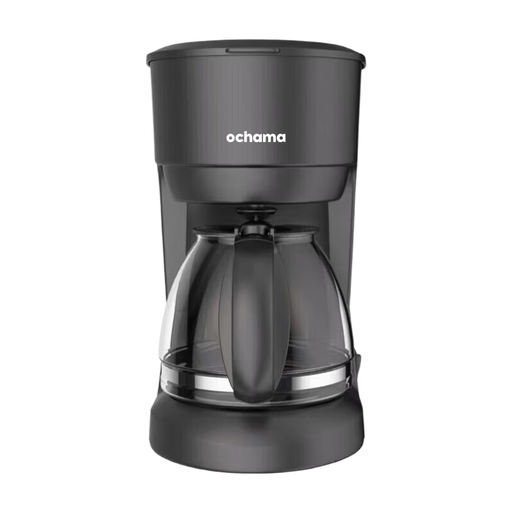
Why This Fits Their Persona: Its compact format suits a small UK kitchen, home office or single-user setup where a straightforward filter brew is preferred.
It uses ground coffee rather than locking you into a specific capsule format, while detachable parts support routine cleaning.
600W operation, 750ml water capacity, automatic brewing and a 30-minute keep-warm function.

Why This Fits Their Persona: This suits coffee drinkers who value batch brewing, repairable construction and a distinctive kitchen finish.
The 1.25-litre capacity and full-or-half carafe switch make it easier to select an appropriate batch size rather than over-brewing.
92–96°C brewing specification, approximately six-minute full jug brewing and automatic shut-off after 40 minutes.

Why This Fits Their Persona: It is suited to households that regularly prepare espresso, cappuccino, latte or iced latte drinks with minimal manual steps.
Its compatibility is clearly stated as Lavazza A Modo Mio, avoiding uncertainty over which capsule format to buy.
1.1-litre tank, four coffee sizes, five milk recipes, hot and cold frothing and listed heat-up time of approximately 28 seconds.
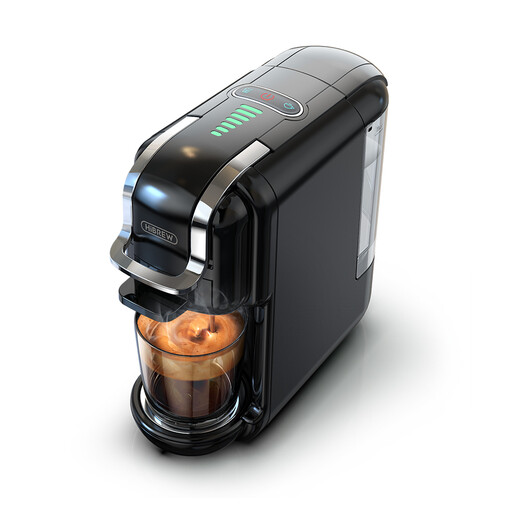
Why This Fits Their Persona: This model is designed for households with different capsule preferences or users who want to switch between pods, E.S.E. pads and espresso powder.
The listed adapters cover five formats, reducing the need to buy separate machines for different pods. Always verify your preferred capsule before ordering.
Hot and cold modes, 600ml tank, 220–240V specification, 19-bar listed pump pressure and 15-minute automatic shut-off.
We have compiled a complete, real-time list of products that fully satisfy these strict selection criteria and UK safety regulations.
Rinse removable parts regularly and empty the drip tray before residue builds up. Milk frothers should be cleaned after each milk-based drink. Use the machine’s recommended descaling process rather than relying on water filters alone.
For espresso machines, brush coffee grounds from the portafilter basket and group area. Replace compatible filters according to the manufacturer’s instructions, water hardness and usage. A filter listed for one De’Longhi, Philips or Siemens model may not fit another, so check the part number carefully.
Running cost depends on the brewing method. Filter machines use ground coffee and paper filters, while pod systems add the recurring cost of capsules. Espresso machines can be economical with ground coffee but require more preparation and cleaning. Electricity use also varies with heating time, standby settings and batch size.
There is no single interval for every household. Follow the machine’s indicator or manual, and consider local water hardness and daily usage. A water filter may help reduce limescale, but it does not replace descaling when the manufacturer specifies it.
A larger filter coffee machine can be practical for several users because it brews multiple cups in one cycle. Look for a suitable jug capacity, automatic shut-off and either a hot plate or thermal carafe. For smaller households, a compact 600–750ml machine may reduce waste and counter-space use.