
24/7 Customer Support

Free returns

Same-day & Next-day Delivery

Quality Guaranteed

Unlock Your Welcome Offers: FREE Delivery | Up to 80% OFF | Free 30-day JoyPlus trial
Download the APP
Choosing between coffee makers can seem straightforward until capacity, heat retention, cleaning and brewing speed enter the picture. A compact automatic coffee maker may suit a flat or office with limited space, while a 1.25-litre coffee machine is more practical for a family kitchen. A French press coffee maker offers manual control, but glass and hot water require careful handling.
As the Joybuy Product Recommendation Officer, I focus on the details that are easy to overlook behind polished product descriptions. Here are the main buying traps to avoid, followed by practical recommendations for different UK households.
Manufacturers often measure capacity using small European cups rather than a typical UK mug. For example, an eight-cup cafetière may hold approximately 1 litre, but the stated cup size can be around 4oz. If you usually drink large mugs, check the millilitre capacity instead of relying on the cup count.
A 1-litre coffee maker is generally suitable for several smaller servings, while a 1.25-litre coffee machine can provide up to 10 small cups, depending on the manufacturer’s measurement.
A glass jug on a hot plate can keep coffee warm, but leaving coffee on heat for too long may alter its flavour. If you serve coffee gradually during a morning or work meeting, a thermal jug coffee machine may be more suitable because it uses an insulated carafe rather than continuous hot-plate heating.
French presses also vary significantly. A standard glass model offers visibility and a traditional appearance, whereas an insulated French press is designed to retain heat for longer.
Coffee oils and fine grounds can build up in filter baskets, plungers and jug lids. A removable filter basket helps with daily rinsing, but the main body of an electric machine must not be immersed in water. For a French press, the plunger should be disassembled regularly so residue does not remain trapped around the mesh.
Always check which parts are dishwasher-safe and whether replacement filters, jugs or seals are available.
A filter coffee machine or drip coffee maker typically offers consistent brewing with less hands-on work. An automatic coffee maker can be useful for busy mornings, shared kitchens and offices, particularly if it has simple controls and an automatic switch-off feature.
A French press gives you more control over steeping time and coffee strength. It normally works with coarse-ground coffee and a reusable metal filter, so there is no need for paper filters or capsules. However, it leaves more natural oils and some sediment in the cup than a paper-filter system.
Consider how many people drink coffee at the same time:
A larger reservoir can reduce refilling, but it may also take up more worktop space. Measure the available height and width, including room to open the lid and remove the jug.
For electric machines, look for clear information about brewing temperature, automatic switch-off and removable parts. The supplied Moccamaster specifications state a brewing range of 92–96°C, with automatic switch-off functions on the listed models.
For glass cafetières, heat-resistant borosilicate glass is designed for hot drinks, but it can still break through impact or sudden temperature changes. Never pour cold water into a hot carafe, use a chipped vessel or place a French press directly on a hob. Handle the jug by its grip and press the plunger slowly.
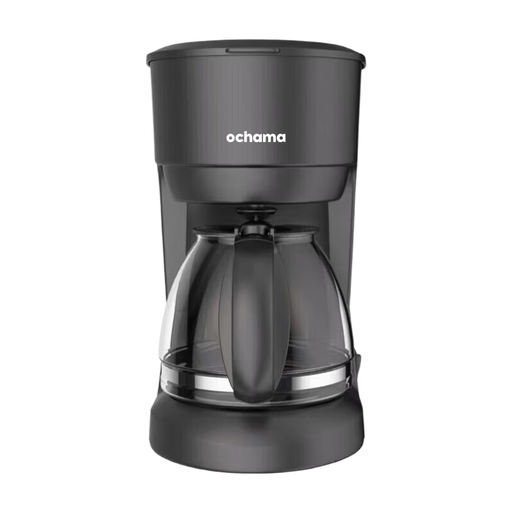
Why This Fits Their Persona: Its compact format suits smaller UK kitchens, bedrooms, home offices and individual coffee routines where a full-size machine would be unnecessary.
The 750ml tank makes the capacity clear, helping buyers avoid paying for a large machine they will rarely fill.
600W operation, fully automatic brewing, 30-minute keep-warm function and detachable parts for cleaning.

Why This Fits Their Persona: Designed for shoppers who value a large glass jug, distinctive retro styling, quick batch brewing and repairable construction.
The half-carafe switch addresses the waste of brewing a full jug when only a few cups are needed, while the 40-minute switch-off reduces accidental extended heating.
Brews a full 1.25L jug in approximately six minutes, includes auto drip-stop and has replaceable parts with a five-year manufacturer’s warranty.
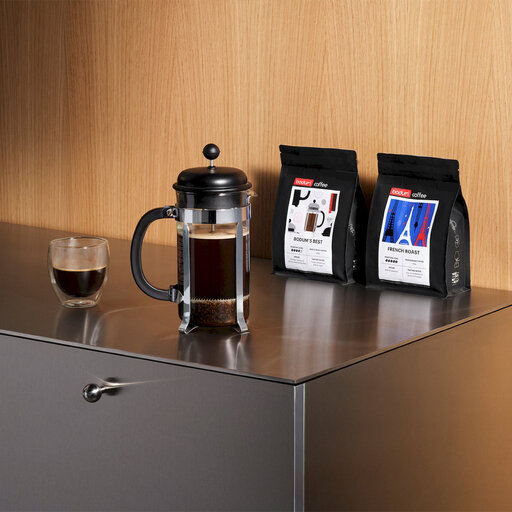
Why This Fits Their Persona: A straightforward choice for people who prefer manual brewing, reusable filtration and a visible glass carafe without an electrical connection.
Its instructions specify coarse grounds, a four-minute steep and slow plunging, helping prevent pressure build-up and gritty results caused by unsuitable coffee.
Heat-resistant borosilicate glass, stainless steel plunger and dishwasher-safe components.
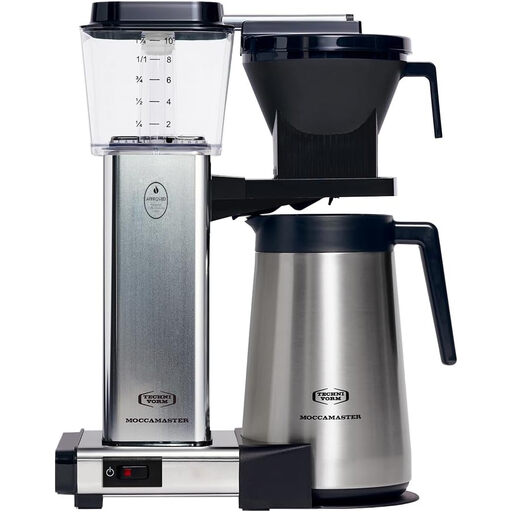
Why This Fits Their Persona: Its insulated stainless steel carafe suits shared kitchens, meetings and households where coffee may be served over an extended period.
The thermal jug avoids relying on a hot plate to keep coffee warm, which is useful when coffee is poured gradually rather than immediately.
1.25L capacity, approximately six-minute brewing time, stainless steel thermal carafe and automatic switch-off.
We have compiled a complete, real-time list of products that fully satisfy these strict selection criteria and UK safety regulations.
Usually, a French press has no electricity cost because it only requires hot water, although your kettle still uses energy. It also avoids paper filters and capsules. An automatic coffee maker may be more convenient for repeated batches, but its running cost depends on wattage, brewing frequency and whether a hot plate remains switched on.
Lifespan depends on construction, cleaning and replacement-part availability. Regularly descale electric machines according to the manufacturer’s instructions, empty grounds promptly and avoid forcing a French press plunger. Models with replaceable jugs, seals or internal parts can be easier to maintain over time.
For one or two drinkers, 750ml to 1 litre is often sufficient. A 1.25-litre coffee maker is more practical for families, guests or home offices. Remember that stated cup counts may use smaller European cup measurements, so compare the actual millilitre capacity before ordering.