Hosts serving a small mixed group
Mini bites can be set out without cutting a larger piece. If you know roughly how many guests are coming, a stated pack count makes it easier to plan how many pieces to put on the table.


Choose a counted mini-bite pack when you need to plan portions for a coffee morning; a bite-sized pack can also work for self-service, but check its piece count before relying on it for a particular turnout. Choose traditional fudge if you want fudge rather than a brownie or biscuit-based treat, and check the exact pack presentation and allergen label before serving.
The useful distinction is whether guests need a ready-to-serve bite, a known number of portions or a traditional fudge sweet.
Mini bites can be set out without cutting a larger piece. If you know roughly how many guests are coming, a stated pack count makes it easier to plan how many pieces to put on the table.
Clotted cream, chocolate and caramel fudge listings offer an alternative to brownie or biscuit-based bites. Check whether the particular pack contains separate pieces or needs portioning before guests arrive.
Compare each product’s current on-pack ingredients and allergen statement with attendees’ requirements. A small serving is not a reason to assume that a fudge-related treat is suitable for someone with a food allergy.
Decide what you want guests to pick up, then check portions, ingredients and serving instructions on the exact pack.
| Priority | What to check | Your needs |
|---|---|---|
| Serving format | Check whether the product is a loose bite, a counted cake bite or traditional fudge. Confirm whether the pieces can be served as supplied or need cutting or unwrapping. | I want guests to help themselves without preparing each portion. A loose mini bite may suit the table, provided its pack presentation works for serving. |
| Portion planning | Look for a stated piece or serving count rather than using pack weight as a count. Sainsbury’s lists 10 servings of approximately 12 g for Thorntons Chocolate Fudge Brownie Mini Cake Bites; Tesco gives nutrition per mini bite for its Chocolate Fudge Mini Bites. | With a known turnout, I’d rather count out portions in advance. A per-bite nutrition figure helps identify the serving basis, but it does not tell me how many bites are in the pack. |
| Type of sweet | Read the product description and ingredients to see whether fudge is the main sweet or one component. Tesco describes chocolate-coated biscuit, fudge, rice and oat clusters; Sainsbury’s describes the Thorntons bites as brownies with fudge pieces. | Are guests expecting fudge, or would a brownie or chocolate-coated cluster also fit the occasion? I’d choose the format deliberately rather than go by the word “fudge” alone. |
| Allergens | Check the current pack for ingredients and may-contain statements, including any relevant milk, cereals, egg, soya, peanut or nut information. Compare that statement with attendees’ requirements before serving. | If someone has told me about a food allergy, I need the label for the exact product I’m putting out. I’ll keep its packaging available so the information stays with the food. |
| Storage and pack presentation | Follow the exact product’s storage instructions, including directions for after opening. For traditional fudge, confirm whether the chosen pack contains individually wrapped pieces if that matters for the table. | I may set treats out over the course of a coffee morning, so I need to know how to store what remains and whether the pack suits self-service. |
Tesco’s Chocolate Fudge Mini Bites contain biscuit and cereal ingredients as well as fudge; the Thorntons mini cake bites sold by Sainsbury’s are brownies with fudge pieces. Either would be a different treat from traditional fudge.
Read the description before choosing. Pick a traditional fudge product if that is the texture you intend to serve, or a mixed bite if its cake or cluster format suits your guests.
A mini format does not remove the need to check ingredients. Tesco lists several cereal and other allergen ingredients for its Chocolate Fudge Mini Bites and says they may contain peanuts and nuts; Sainsbury’s says the Thorntons brownie bites may contain nuts.
Ask about relevant dietary requirements beforehand, read the current pack label and keep the packaging available when serving.
A weight tells you how much product is in a pack, not how many self-service pieces guests can take. Product listings use different bases: Tesco provides information per mini bite, while the Thorntons cake-bite pack states 10 servings.
Use a stated count when planning for a known turnout. Otherwise, check the pack’s serving information and allow for guests taking more than one piece.
For a planned gathering, the format and stock at the shop you intend to use matter more than a category photograph. Marks & Spencer asks shoppers to select a local Foodhall to view its stock.
Check the particular product at your chosen shop shortly before the coffee morning, and keep another acceptable format in mind if your first choice is not there.
These ranges illustrate different formats; a retailer listing does not establish that every fudge pack is mini-sized or individually wrapped.
Tesco Groceries describes its Chocolate Fudge Mini Bites as a 196 g pack of milk-chocolate-coated clusters containing biscuit, fudge, crisped rice and oats.
Sainsbury’s lists Thorntons Chocolate Fudge Brownie Mini Cake Bites as chocolate-dipped brownies with fudge pieces.
Marks & Spencer lists traditional fudge, including clotted cream fudge, and says its wider fudge and toffee range includes packs of individually wrapped pieces.
Waitrose & Partners lists clotted cream fudge and dark chocolate and caramel fudge in its confectionery range.
Alongside the Thorntons cake bites, Sainsbury’s lists its own 20-serving brownie mini bites.
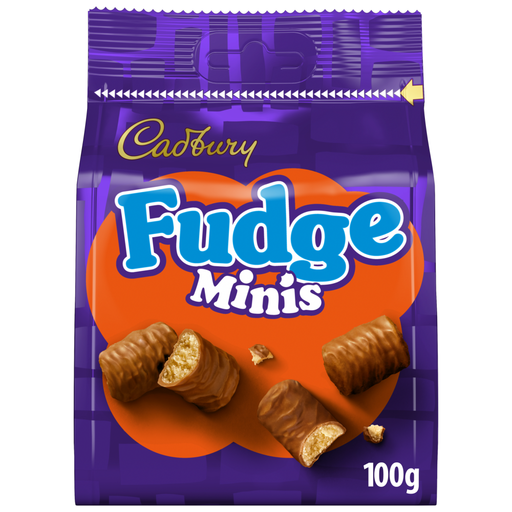
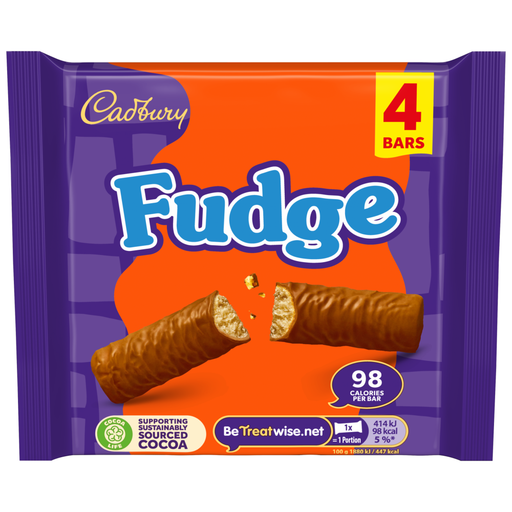
These Cadbury options offer a mini-labelled fudge sweet and a four-bar pack for a coffee morning. The bars are a different serving format from bite-sized pieces, so choose according to how you intend to set out the treats.
 No image available
The mini format is an option for guests helping themselves to a small sweet. Check the pack’s piece count if you need to plan a particular number of portions, and read the current label for milk and soya information before serving.
 No image available
The stated four-bar pack gives you a unit count for a small gathering, but bars are not described as mini bites. Check whether their size and pack presentation suit self-service, and read the current label for milk information.
No. Tesco Chocolate Fudge Mini Bites are chocolate-coated clusters with biscuit, fudge, crisped rice and oats, while the Thorntons mini cake bites listed by Sainsbury’s are brownies with fudge pieces. Read the description if you want traditional fudge rather than a fudge-containing bite.
Start with a stated piece or serving count where the pack gives one, then consider whether guests might take more than one. Sainsbury’s lists 10 servings for the Thorntons mini cake bites and 20 for its own brownie mini bites; Tesco gives information per Chocolate Fudge Mini Bite, which is not itself a pack count.
Read the current pack’s ingredients and allergen statement against each guest’s stated requirements, including any may-contain warning. The Tesco and Thorntons examples have different ingredients and warnings, so the word “fudge” cannot tell you whether either product is suitable.
Use the online listing to shortlist products, but check the physical pack before serving for an allergy-related decision. Tesco advises customers to read the product label rather than rely solely on its website information.
Follow the instructions on the exact product. Tesco’s Chocolate Fudge Mini Bites listing says to store them in a cool, dry place away from direct sunlight; Sainsbury’s says the Thorntons mini cake bites should be kept in a cool, dry place and in an airtight container once opened.