Hosts comparing sugars
If you are buying shortbread for several guests, the sugars figure per 100g lets you compare products on the same basis. A lower figure than another biscuit’s does not, by itself, make a product “reduced sugar”.


Do not describe ordinary shortbread as “reduced sugar” simply because its listed sugars are lower than another biscuit’s; check whether the current pack makes that specific claim. For a like-for-like comparison, M&S lists 14.7g sugars per 100g for its All Butter Scottish Shortbread Assortment, while Tesco lists 16.1g per 100g for its Finest Scottish Shortbread Fingers. Then consider how many biscuits you will serve and check the exact pack for guests’ allergen requirements.
If you are buying shortbread for several guests, the sugars figure per 100g lets you compare products on the same basis. A lower figure than another biscuit’s does not, by itself, make a product “reduced sugar”.
Per-biscuit nutrition, pack size and the number of pieces can help you decide how much shortbread to put out for a coffee morning.
Gluten-free and made-without-wheat descriptions answer different questions from sugar content or suitability for someone with a nut, peanut or milk allergy. Check the exact pack against each guest’s requirements.
Compare sugars per 100g first, then look at the serving information and the ingredient and allergen label for the pack you will serve.
| Priority | What to check | Your needs |
|---|---|---|
| Sugars and labels | Compare listed sugars per 100g across similar shortbreads. Check the current pack before using a “reduced sugar” description; a traffic-light colour is not a substitute for the stated figure. | I want to compare what the labels actually say, rather than rely on a general impression. In a 2024 survey of 611 Northern Ireland interviewees, the Food Standards Agency and Ipsos Northern Ireland reported that approximately 49% actively used traffic-light labelling when shopping for food; that figure is not specific to shortbread or sugar. |
| Serving size | Check sugars per biscuit where stated, plus the piece size and pack count. Review energy and saturated fat alongside sugars: Tesco lists 3.4g sugars per 21g Finest finger, while M&S lists 16.0g saturates per 100g for its assortment. | For a group, I need to know how many pieces to put out. Per-biscuit figures make that decision easier than a per-100g figure alone. |
| Allergens | Read the exact pack’s ingredients and precautionary wording. If gluten-free shortbread is required, check its marking separately from any nut, peanut or milk requirements. | A guest’s gluten requirement does not tell me whether the same biscuit meets their other allergen requirements. I need the label for the product I will serve. |
A smaller sugars figure than a named alternative describes that comparison, not a claim made by the product.
State the two products and their per-100g figures if you need to explain the choice to guests. Use “reduced sugar” only when the current product makes that specific claim.
A per-100g comparison does not tell you how much is in one biscuit. The M&S assortment lists 16.0g saturates per 100g, and Tesco Finest fingers list 17.1g per 100g, according to their respective product information.
Use per-100g sugars to compare products, then check the stated per-piece information and decide how many biscuits to serve.
The Walker’s gluten-free rounds listed by Sainsbury’s may contain nuts. M&S says its Made Without Wheat rounds are not suitable for people with a nut or peanut allergy.
For a guest with an allergy, read the full ingredients and precautionary wording on the exact pack rather than relying on one dietary description.
These figures describe particular products, not every shortbread made by each brand; compare the current packs before choosing.
Its All Butter Scottish Shortbread Assortment is a 650g sharing option.
Tesco Finest Scottish Shortbread Fingers have both per-100g and per-biscuit nutrition information.
Standard shortbread fingers and gluten-free rounds serve different requirements.
Dean’s offers traditional rounds and a foodservice chocolate-chip mini-pack format.
Taste the Difference Scottish Shortbread Fingers include a per-finger sugars figure.
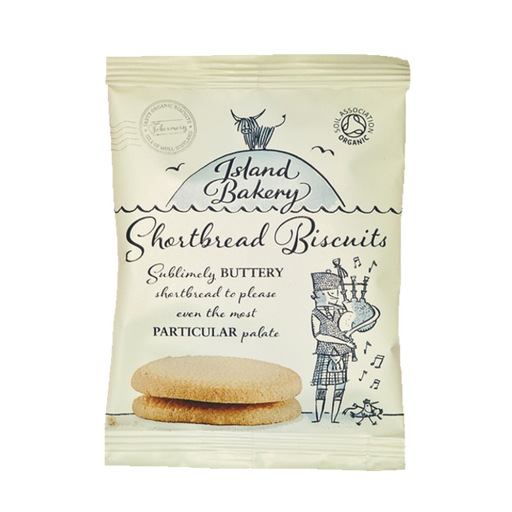
This 25g shortbread option has a stated pack size that may help with serving plans. Check its current nutrition and allergen label before offering it to guests.
 No image available
The stated 25g pack size gives you a quantity to use when planning servings for a coffee morning. Check the pack’s sugars information and full allergen wording before serving.
No. A lower per-100g figure than another shortbread supports a comparison between those products, not a reduced-sugar description. Check whether the current pack makes that specific claim before using it.
Use sugars per 100g to compare products on the same basis, then check per-biscuit information to plan servings. Tesco, for example, lists 16.1g per 100g and 3.4g per 21g Finest shortbread finger. The listed total-sugars figure is not an exact calculation of free sugars.
No. Sainsbury’s lists 23.2g sugars per 100g for Walker’s Gluten Free Shortbread Rounds, while Walker’s lists 16.2g per 100g for its standard Shortbread Fingers. Choose a gluten-free product to meet a gluten requirement, then assess its sugars and other allergens separately.
Read the ingredients and precautionary wording on the exact pack and keep that information available for guests. GOV.UK guidance says that any of the 14 specified allergens present as ingredients in prepacked food must be clearly labelled in its ingredients list. Do not assume a made-without-wheat biscuit is suitable for someone with a nut or peanut allergy.