For an older person reducing caffeine because of bladder symptoms, consider decaffeinated coffee and check the exact product label: decaf is not necessarily caffeine-free. Choose ground coffee when a suitable brewer and someone to prepare it are available; choose instant coffee if a spoon-and-water routine is the priority. Where nutrition, hydration or swallowing needs require assessment, coffee choice should fit the individual care plan rather than replace it.
Who is this choice for?
People considering less caffeine
Someone who enjoys coffee but finds that caffeinated drinks affect bladder urgency or frequent toileting may want to consider decaf. Gloucestershire Hospitals NHS Foundation Trust explains that caffeine can make the bladder fill sooner; Lancashire Teaching Hospitals NHS Foundation Trust notes that decaf can still contain a little caffeine.
Carers preparing a daily drink
A carer choosing between grounds and instant coffee needs to consider the equipment available and who will measure, brew and clear away the coffee. Ground coffee needs a suitable brewer; an instant product is prepared directly in a cup according to its own instructions.
People with assessed nutrition or hydration needs
If an older person has poor intake, dehydration risk or a swallowing-related care plan, their drink choice needs to fit that plan. Norfolk and Waveney Integrated Care System guidance says the nutritional needs of older people receiving care should be assessed and reviewed regularly.
What should you check before buying?
Decide whether the drink needs to be instant or brewed, then check caffeine information and preparation requirements on the exact product.
Decaffeinated ground coffee
Consider it when: the person wants brewed coffee and the household has a brewer suited to the product's stated grind and preparation method.
Bear in mind: grounds need measuring, brewing and clearing away, and decaf can still contain caffeine.
Decaffeinated instant coffee
Consider it when: a coffee mixed directly in a cup better suits the person or carer preparing it.
Bear in mind: instant coffee is a different format from grounds; check its own ingredients, caffeine declaration and instructions.
Regular ground coffee
Consider it when: the person has no reason to reduce caffeine and has a suitable way to brew ground coffee.
Bear in mind: Gloucestershire Hospitals NHS Foundation Trust advises that caffeine can make the bladder fill sooner, which matters if bladder symptoms are present.
| Priority | What to check | Your needs |
|---|
| Caffeine |
Check whether the exact product is labelled decaffeinated and whether it gives a caffeine limit. Lancashire Teaching Hospitals NHS Foundation Trust notes that decaf may retain a little caffeine. |
If caffeine affects my bladder symptoms, I want to compare the exact coffees I might buy rather than assume every decaf product contains the same amount. |
| Preparation |
For grounds, match the stated grind and brew methods to the household's equipment. For instant coffee, read the product's mixing instructions and consider who will handle the water. |
A simple cup to prepare matters if I or the person making the drink cannot comfortably manage a brewer and its clean-up. |
| Nutrition and hydration |
Where a care plan applies, check how coffee fits the person's drinks, food and preparation requirements. Norfolk and Waveney Integrated Care System guidance calls for regular assessment of nutritional needs in care settings. |
I want the coffee choice to fit the person's assessed needs, not stand in for meals, drinks or support specified in their care plan. |
| Storage |
Read the exact pack's instructions for storage after opening. Check that its pack size suits how the household will use it. |
If coffee is prepared only occasionally, I need a pack that can be stored as directed between uses. |
What can go wrong when choosing?
-
Assuming decaf means no caffeine
Decaf can retain low levels of caffeine, according to Lancashire Teaching Hospitals NHS Foundation Trust. A limit stated for one product does not describe every decaf coffee.
Check the label of the exact pack. If reducing caffeine is part of clinical advice, follow that advice when choosing a drink.
-
Buying grounds when an instant jar was intended
Ground coffee needs brewing equipment, whereas instant coffee is mixed into water according to the product's instructions. A jar or tin describes the container, not necessarily the coffee format.
Check whether the label says ground or instant before choosing the product.
-
Overlooking the brewing method
Rombouts describes its decaf grounds as medium ground for filter and cafetière use, while Lavazza lists moka, filter and French press methods for its decaf grounds. Those directions should not be transferred to another product.
Match the exact coffee's stated preparation method to the brewer in the household and follow the brewer's instructions.
-
Expecting a coffee purchase to address poor intake
Norfolk and Waveney Integrated Care System guidance identifies greater malnutrition and dehydration risk among older, more dependent people and calls for their nutritional needs to be assessed.
If poor intake, dehydration risk or swallowing difficulty is a concern, involve the appropriate care or healthcare professional and choose drinks within the resulting plan.
Brand and product-format references
These examples show why the exact product and its preparation instructions matter more than the brand name alone.
Lavazza
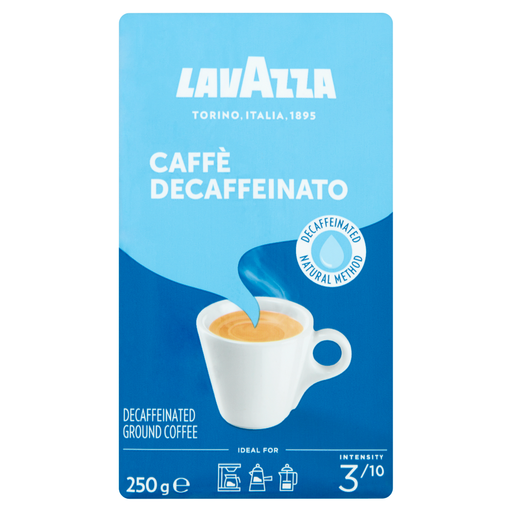
Lavazza UK describes a 250 g decaffeinated ground coffee for moka, filter and French press preparation.
- Its stated brew methods give households with those brewers a starting point for checking compatibility.
- The directions for this ground coffee do not establish compatibility with every espresso machine or describe an individual's caffeine tolerance.
illy
illy UK describes a 125 g decaf ground-coffee tin for espresso and a separate 95 g decaf instant-coffee can.
- The ground product states caffeine no higher than 0.1%; the instant product's instructions call for one or two teaspoons with hot or cold water.
- The instant product states caffeine no higher than 0.3%. Its declaration and preparation instructions are not interchangeable with those of the ground product.
Rombouts
Rombouts UK describes its 250 g decaf ground coffee as medium ground for cafetières, filter machines and filter cones.
- The named methods help a household check the coffee against its existing brewer.
- This is ground coffee, not a product to dissolve directly in a cup.
Taylors of Harrogate
Tesco Groceries and a Joybuy product page identify Taylors of Harrogate Decaf Ground Coffee in a 200 g pack.
- The product identity distinguishes a decaf ground-coffee option from regular grounds and instant coffee.
- Check the physical pack or Taylors' own instructions for the appropriate brew method.
Tesco Finest
Tesco Groceries identifies a 227 g Decaffeinated Colombian Ground Coffee in its Tesco Finest range.
- The listing identifies both its decaf designation and ground format.
- Check the current product information and local stock before planning to buy it.
Coffee options on Joybuy
These options include decaf instant coffee for a cup prepared without a brewer, plus ground coffees for households choosing brewed coffee. One ground-coffee option is not identified as decaf, so check its pack if reducing caffeine matters.
 No image available
NESCAFÉ Original Decaff Coffee 300g
This decaffeinated soluble coffee suits a household choosing an instant format rather than grounds that need a brewer. Check the pack if a particular caffeine limit matters.
View on Joybuy
 No image available
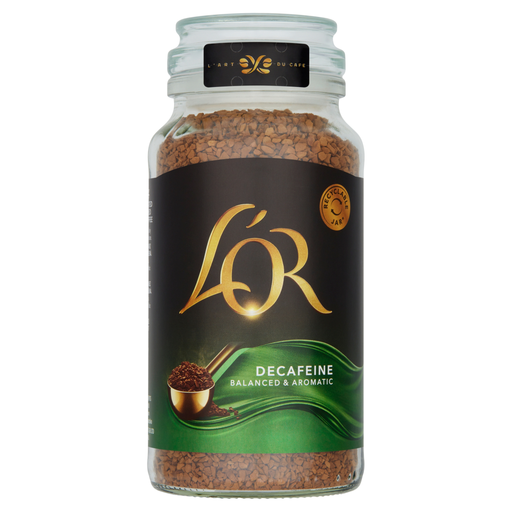
L'Or Decaffeinated Coffee 150g
This is listed as decaffeinated freeze-dried instant coffee, for a household choosing instant preparation. Follow the pack's instructions and check its caffeine declaration if a specific limit is needed.
View on Joybuy
 No image available
Taylors of Harrogate After Dark Ground Coffee 200g
This ground coffee is listed with cafetière and filter preparation for households using those methods. If caffeine reduction is important, check the exact pack's caffeine designation before buying.
View on Joybuy
 No image available
Taylors of Harrogate Decaf Ground Coffee 200g
A decaf ground-coffee option for someone with a suitable brewer. The listed pack is 200 g; check its brewing directions and caffeine information against the household's needs.
View on Joybuy
 No image available
Lavazza Decaf Classico Ground Coffee 250g
This 250 g decaf ground coffee is an option when brewed coffee is wanted. Check the exact pack's brewing directions for the household's equipment and its caffeine information if a specific limit matters.
View on Joybuy
Questions about coffee for older people
Is decaffeinated coffee completely caffeine-free?
Not necessarily. Lancashire Teaching Hospitals NHS Foundation Trust says decaf may retain very low levels of caffeine. Check the exact product: illy UK states no higher than 0.1% caffeine for its 125 g ground decaf tin and no higher than 0.3% for its separate 95 g instant decaf can.
Should someone with bladder urgency consider decaf?
Decaf is a route to consider if caffeine appears to worsen bladder symptoms. Gloucestershire Hospitals NHS Foundation Trust explains that caffeinated drinks can make the bladder fill sooner; follow individual clinical advice where it applies.
Can ground coffee be prepared like instant coffee?
No. Ground coffee needs an appropriate brewing method: Rombouts specifies cafetières, filter machines and filter cones for its decaf grounds. By contrast, illy's instant decaf instructions say to mix one or two teaspoons with hot or cold water.
Can choosing a coffee address an older person's nutrition needs?
Coffee can be part of a person's routine, but choosing a coffee does not replace nutrition and hydration assessment. Norfolk and Waveney Integrated Care System guidance says older, more dependent people have greater risk of malnutrition and dehydration and that their nutritional needs should be reviewed regularly.


