Students without access to a pod machine between lectures
If water and a mug are available but a compatible machine is not, instant coffee or sachets provide a way to prepare coffee without carrying unusable pods.


Choose an instant-coffee jar for a lunch break when you can get water and a mug but cannot rely on reaching a coffee machine. Pods make sense when a machine is reliably accessible and you know which capsules fit it; you will also need a practical way to handle the used pods.
For a university lunch break, access to preparation facilities matters more than whether coffee comes in a pod or a jar.
If water and a mug are available but a compatible machine is not, instant coffee or sachets provide a way to prepare coffee without carrying unusable pods.
Pods are an option when the machine is accessible at the time you plan to make coffee. Identify its system before choosing capsules: even Nespresso Original and Vertuo use different formats.
Check that the specific instant coffee or machine-compatible pod you intend to buy comes in a decaffeinated version. A decaf preference does not remove the need to check the preparation format.
Start with where you will make the drink, then check the format and the practicalities of using it regularly.
| Priority | What to check | Your needs |
|---|---|---|
| Lunch-break preparation | Check whether you can access water and a mug, or the matching pod machine, when you want coffee. Instant coffee needs water and stirring; Dolce Gusto capsules go into a Dolce Gusto machine. | I want to make coffee between classes, not just before leaving home. If only water and a mug are available, an instant-coffee jar fits that routine. |
| Pod compatibility | Read the machine’s system name and the capsule label. Nespresso says Original and Vertuo pods fit their respective machine lines; TASSIMO says its machines accept official T DISCs only. | There is a machine I can use, but I need pods made for that particular system rather than coffee pods in general. |
| Drink choice | Check the exact range for the drink you want, including decaf. Dolce Gusto lists several drink types; TASSIMO lists coffee and non-coffee options. Decaffeinated instant coffees are also listed by Tesco Groceries. | If I prefer decaf or sometimes want a different drink, I need to find that option in a format I can actually prepare. |
| Serving and carrying | Check the jar or pack size and what you will carry. NESCAFÉ’s guidance for a typical mug uses about 1.8g of instant coffee with 200ml of hot water; a jar still requires a mug and water. | I might keep a jar where I make coffee rather than carry it to every lecture. The container and serving routine need to work for my lunch break. |
| Used pods | Check a locally usable collection route before choosing a pod system. Nespresso describes collection and drop-off options; Dolce Gusto asks users to drain capsules before putting them in a Podback bag. | If I use pods regularly, I need somewhere practical to store them and a recycling route I can use from my accommodation or campus area. |
Pods are not interchangeable across systems. Nespresso distinguishes Original from Vertuo, and TASSIMO says its machines use official T DISCs rather than Nespresso or Dolce Gusto capsules.
Read the machine’s name and system, then check that the exact capsule pack names that format before ordering.
A pod is an ingredient for a compatible machine, not a ready-to-drink coffee. Instant coffee can instead be prepared with water and a mug.
Check the facilities you can actually reach during lunch. If you only have access to water and a mug, take instant coffee rather than pods.
Pod schemes involve specific collection steps. Dolce Gusto instructs users to drain capsules before putting them in a Podback bag, while Nespresso describes its own collection and drop-off options.
Check the relevant scheme’s local route and follow its instructions for storing and returning used capsules.
These brands illustrate preparation formats and compatibility rules; the names alone do not tell you which product fits your machine or lunch-break facilities.
A pod option for someone who can use a Nespresso machine and knows whether it is an Original or Vertuo model.
A machine-dependent pod system with a range of drink types, including selected decaffeinated options.
A T DISC system to consider when a TASSIMO machine is already accessible.
A brand with different capsule formats, including A Modo Mio, for buyers who can identify their machine system.
An instant-coffee option when water and a mug are available but a pod machine is not.
These instant-coffee jars suit the machine-free route when you can get water and a mug during your lecture lunch. Check the jar size and pack configuration against where you plan to keep them.
 Image unavailable
This instant-coffee jar is an option for making a drink with water and a mug rather than a pod machine.
The title identifies a 300g decaffeinated coffee jar. You will still need water and a mug; check the pack’s caffeine information if you need an exact figure.
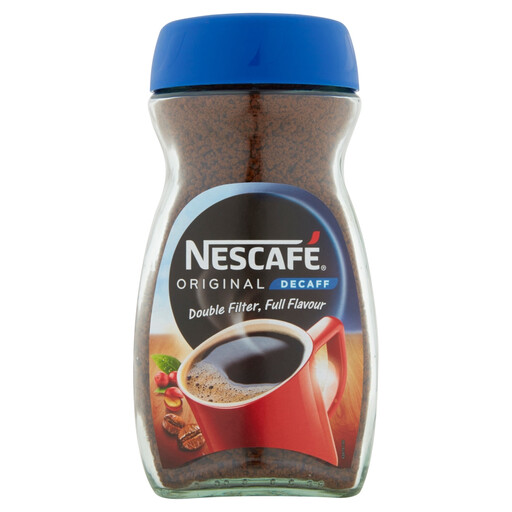 Image unavailable
This decaffeinated instant coffee suits a lunch break with water and a mug but no accessible pod machine.
The jar is labelled 200g and identified as the New Shape variant. Check the pack’s caffeine information if you need an exact figure.
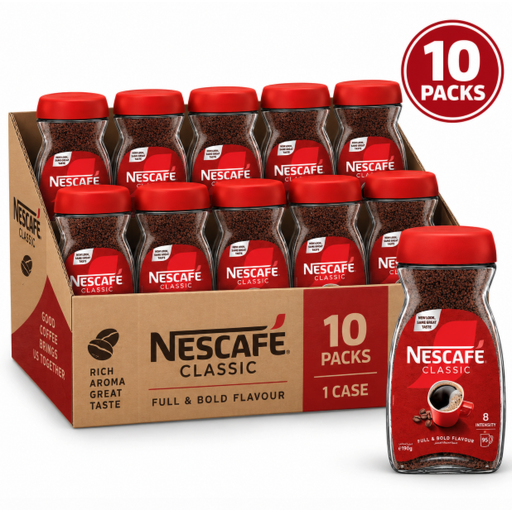 Image unavailable
This instant coffee can be prepared with water where a pod machine is not available.
The listing identifies ten 190g jars, a pack configuration better considered for keeping supplies in one place than carrying the whole pack to lunch. Each drink still requires water and a mug.
Only if you can use a machine that accepts those pods when you want the drink. Instant coffee can be made with water and a mug; pods require the matching machine, whether that is a Dolce Gusto, Nespresso or TASSIMO system.
No. Nespresso says its Original and Vertuo pods are made for their respective machine lines, while TASSIMO says its machines accept official T DISCs rather than Nespresso or Dolce Gusto capsules. Check the exact machine before buying.
NESCAFÉ’s serving guidance is about 1.8g of instant coffee, roughly one teaspoon, with 200ml of hot water. Check the directions for the particular coffee you buy and adjust how you prepare it to your taste.
Follow the collection instructions for your pod system rather than assuming pods go into ordinary household recycling. Nespresso describes collection and drop-off options; Dolce Gusto instructs users to drain capsules, put them in a Podback bag and check local recycling routes.
The NHS advises no more than 200mg of caffeine a day during pregnancy. Caffeine can also come from tea, cola, energy drinks, chocolate and some supplements, so account for sources beyond the lunch-break coffee and check the particular product’s information.