What should you check?
Start with the preparation the person can manage, then check caffeine preference and, for pods, machine compatibility. Consider fluid intake and any nutrition plan separately from the coffee format.
| Priority |
What to check |
Your needs |
| Preparation |
Check whether the product is soluble instant coffee or a machine-specific capsule. Read the pack’s preparation directions. |
I would rather make coffee with a kettle and mug than load and use a machine. |
| Decaf choice |
Look for an explicit decaf description. If caffeine affects the person’s symptoms or their care advice, check that the chosen variant is decaffeinated. |
Decaf matters to me because of a preference or an individual reason to reduce caffeine, not simply because of age. |
| Pod compatibility |
Match capsules to the machine’s exact system. Nespresso lists Original and Vertuo separately; TASSIMO states that its T DISCs are for TASSIMO machines. |
We already have a machine, and I want to avoid ordering pods it cannot use. |
| Fluids |
Consider coffee among the person’s drinks across the day. The NHS says tea and coffee count towards fluid intake and advises consuming caffeine in moderation. |
I want a drink the person enjoys without overlooking their wider fluid intake. |
| Nutrition and ingredients |
Check the current pack for ingredients and per-serving nutrition, particularly for milk-containing pods. Sainsbury’s lists 4 kcal and less than 0.5 g protein per serving for its Gold Roast Decaffeinated Instant Coffee Granules. |
If food intake or a prescribed diet is a concern, I need to consider the drink alongside the person’s individual nutrition plan, not use coffee in its place. |
Brand and retailer references
These examples help distinguish instant jars from machine-specific pods; a brand name alone does not establish compatibility or nutritional suitability.
Nescafé
Its Original Decaf instant-coffee jar is a machine-free example listed by Tesco.
- Tesco gives preparation directions of one teaspoon in 200 ml hot water for the 100 g jar.
- Check the particular jar’s label rather than assuming every Nescafé product has the same directions.
Kenco
Kenco Decaf is another instant-coffee jar example.
- Tesco describes the 190 g decaf product as freeze-dried coffee in a recyclable glass jar and lid.
- Confirm that the selected Kenco variant says decaf if caffeine reduction matters.
Tesco
Its grocery listings provide examples of decaf instant jars from Nescafé and Kenco.
- The listings distinguish a 100 g Nescafé jar from a 190 g Kenco jar.
- Check the current product label for the variant and preparation information when buying.
Sainsbury’s
Its Gold Roast Decaffeinated Instant Coffee Granules offer an own-label jar example.
- The 200 g listing identifies freeze-dried decaf coffee and gives per-serving nutrition information.
- Its listed 4 kcal and less than 0.5 g protein per serving should not be mistaken for nutrition support.
Nespresso
Nespresso UK lists decaf coffees for Original and Vertuo machines.
- Both machine systems have separately identified decaf ranges.
- Check whether the household has an Original or Vertuo machine before choosing capsules.
Dolce Gusto
NESCAFÉ Dolce Gusto offers machine-specific decaf pods, including Café au Lait Decaf.
- The Café au Lait Decaf product information identifies a portioned milk-containing drink.
- It contains whole milk powder; check both machine compatibility and the current ingredient label.
TASSIMO
TASSIMO UK lists decaf T DISCs for its own machines.
- Its decaf range provides a pod route for a household with a TASSIMO machine.
- TASSIMO states that its pods are only compatible with TASSIMO machines.
Lavazza
Lavazza lists instant coffee in its business range and capsules in distinct machine formats.
- Its capsule information identifies decaf options compatible with Nespresso Original.
- Check the exact capsule format and machine model; Lavazza also lists exceptions within its A Modo Mio compatibility information.
Joybuy coffee options
These options include instant coffee for a kettle-and-mug routine and decaf pods for a household with a Dolce Gusto machine. Check the individual variant before choosing, particularly if decaf is important.
 No image available
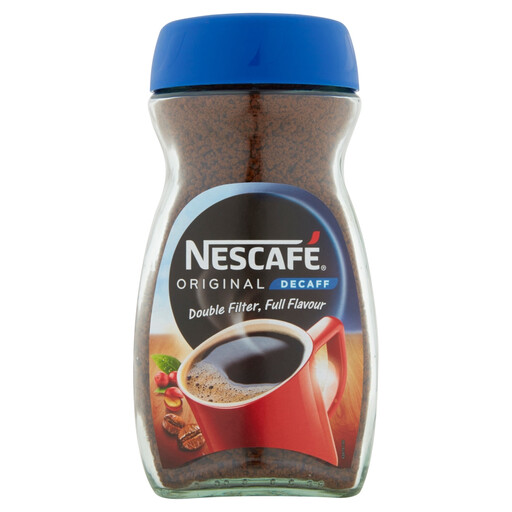
NESCAFÉ Original Decaff Coffee 300 g
A decaffeinated soluble-coffee jar for a machine-free routine. Check the pack for its preparation directions and per-serving nutrition information; do not rely on coffee for nutrition support.
View on Joybuy
 No image available
NESCAFÉ Decaf (New Shape) 200 g
A 200 g decaffeinated soluble-coffee jar to consider when pods are not wanted. Check its pack for preparation directions and per-serving nutrition information.
View on Joybuy
 No image available
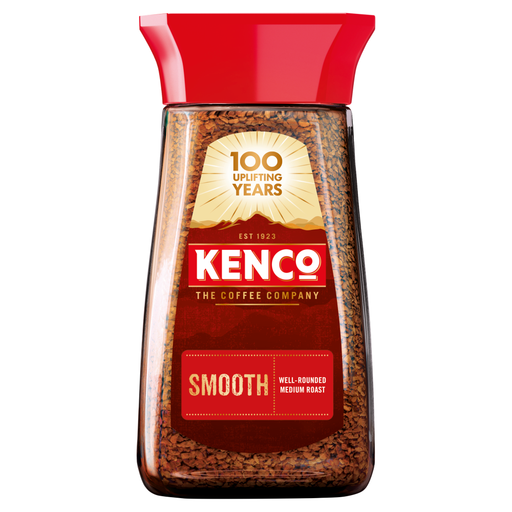
Kenco Smooth Instant Coffee 200 g
An instant-coffee jar for someone who wants hot-water preparation and does not require a decaf-labelled product. The stated directions are to add 1–2 teaspoons to hot water; choose an explicitly labelled decaf variant if reducing caffeine matters.
View on Joybuy
 No image available
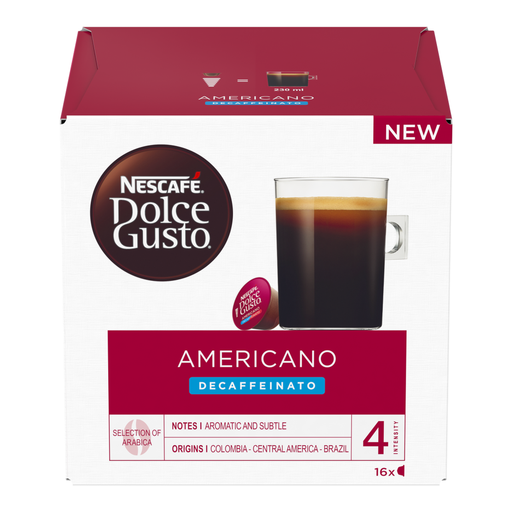
NESCAFÉ Dolce Gusto Americano Decaf, 16 capsules, 128 g
Decaf pods for a household with a compatible Dolce Gusto machine, rather than a kettle-only routine. The pack contains 16 capsules for 16 servings; confirm the machine system before ordering.
View on Joybuy
Frequently asked questions
When is an instant-coffee jar more practical than pods?
An instant jar is the machine-free choice for someone who uses a kettle and mug. Pods are worth considering if a matching machine is already in use and individual servings suit the household; check the capsule system before buying.
Does an older adult always need decaf?
No: decaf is an individual preference or a choice informed by personal circumstances, not an age-based rule. NHS Tayside says caffeine can worsen bladder frequency, urgency or incontinence for some people; follow personalised advice where caffeine restriction has been recommended.
Does coffee count towards daily fluid intake?
Yes. The NHS includes tea and coffee among drinks that count towards daily fluid intake and advises consuming caffeine in moderation. Consider coffee alongside the person’s other drinks and any individual hydration advice.
Can a coffee jar or pod replace nutrition support?
No coffee format should be used in place of an individual nutrition plan. Sainsbury’s lists 4 kcal and less than 0.5 g protein per serving for its Gold Roast Decaffeinated Instant Coffee Granules; the British Dietetic Association’s care-home guidance treats nutrition-risk screening and care planning as separate matters.
What should I check in a milky decaf pod?
Check machine compatibility and the current ingredient and nutrition label. For example, NESCAFÉ Dolce Gusto lists whole milk powder, 39 kcal and 2.1 g protein per mug for its Café au Lait Decaf; those product-specific figures do not establish that it meets someone’s nutritional requirements.


