Canteen managers with an existing machine
Identify the installed machine and its compatible pod system before considering pack quantities. Then plan for lunchtime service, restocking, decaf requests and the site’s waste arrangements.


Start with the canteen’s machine: Lavazza BLUE capsules, E.S.E. pods, Nespresso-compatible capsules and Dolce Gusto capsules are different formats, while a one-cup filter offers a route without a capsule machine. For lunch service, choose a compatible regular or decaf product, plan replenishment around expected servings, and establish how staff will handle used pods and information about the finished drinks.
Identify the installed machine and its compatible pod system before considering pack quantities. Then plan for lunchtime service, restocking, decaf requests and the site’s waste arrangements.
Choose a decaffeinated product made for the machine already in use. Illy lists an E.S.E. decaf pod, Sainsbury’s lists a Nespresso-compatible decaf capsule, and Joybuy lists a Dolce Gusto decaf product; they are not interchangeable formats.
A one-cup ground-coffee filter provides an individually portioned alternative without an espresso-capsule machine. Staff still need a suitable hot-water preparation method and time to make each cup.
Confirm the machine format first; only then compare the products and service arrangements within a usable route.
| Priority | What to check | Your needs |
|---|---|---|
| Machine fit | Record the machine make, model and required format. Check the exact product’s compatibility wording: Lavazza BLUE, E.S.E., Nespresso-compatible and Dolce Gusto are distinct routes; a one-cup filter is not a machine capsule. | I want portions that work with the machine at our service point, rather than stock selected by roast or pack size alone. |
| Lunch service | Estimate servings during the lunch period and check pack quantity, storage space and replenishment arrangements. A manual one-cup filter also needs a hot-water preparation step. | At a busy counter, I need a preparation routine and an ordering schedule that suit the number of drinks we serve. |
| Decaf choice | Check that the exact product is labelled decaffeinated and fits the machine. Illy specifies E.S.E. compatibility for its Decaf pod; Sainsbury’s labels its Espresso Decaff capsules Nespresso compatible. | If we offer decaf at lunch, it needs to be a clearly identified option staff can prepare using our equipment. |
| Used pods | Identify the material and the collection route for the exact product. Nespresso UK describes dedicated recycling options for its capsules; check the relevant scheme or waste contractor before assigning a workplace bin. | Our staff need clear instructions for where each used capsule or filter goes after service. |
| Drink information | Keep ingredient information for the finished drink, including additions such as milk or flavourings, and assess shared preparation equipment. GOV.UK and Food Standards Agency allergen guidance covers prepacked and non-prepacked food and drink. | When someone asks about a drink, I need staff to check the whole recipe and preparation process, not just the coffee pod. |
A matching roast preference or convenient pack size does not establish machine compatibility. Lavazza BLUE, E.S.E., Nespresso-compatible and Dolce Gusto products follow different system requirements.
Record the machine’s exact model and confirm compatibility for the product before ordering a larger quantity.
An incompatible order can leave the canteen with unusable stock during service.
Milk, flavourings and shared preparation equipment can affect the allergen information relevant to a served drink, even when the pod contains coffee only.
Maintain information for each complete drink and assess preparation and cross-contact before making a customer-facing allergen claim.
A recyclable capsule or a filter described as compostable still needs an appropriate route at the workplace. Nespresso UK specifies collection options for its capsules, while acceptance of used filters depends on the site’s arrangements.
Confirm the applicable scheme or waste contractor, label the collection point and tell staff which items belong there.
Sorting and storing used products adds a routine for staff to manage.
These brand examples illustrate different formats; a brand name alone does not establish compatibility with a canteen’s machine.
Lavazza presents BLUE as a capsule system for small businesses. It is a dedicated system, separate from Lavazza products labelled Nespresso compatible.
Illy’s E.S.E. range is relevant where the workplace has an E.S.E.-compatible espresso machine.
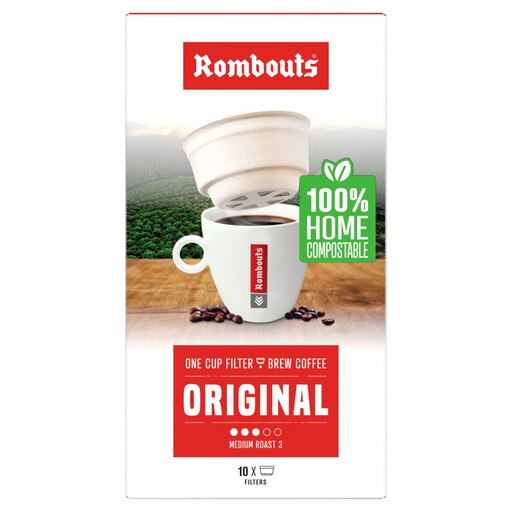
Rombouts one-cup filters offer a manually prepared ground-coffee format rather than a machine capsule.
Tesco Groceries lists a Finest Decaffeinated Accordo coffee-capsule product alongside other coffee formats.
Sainsbury’s lists its Espresso Decaff product as Nespresso compatible, in a pack containing 30 servings.
These options cover Nespresso-compatible and Dolce Gusto capsules, plus a one-cup filter alternative. Choose within the format your canteen can prepare; the filter is not an espresso-machine pod.
 No image available
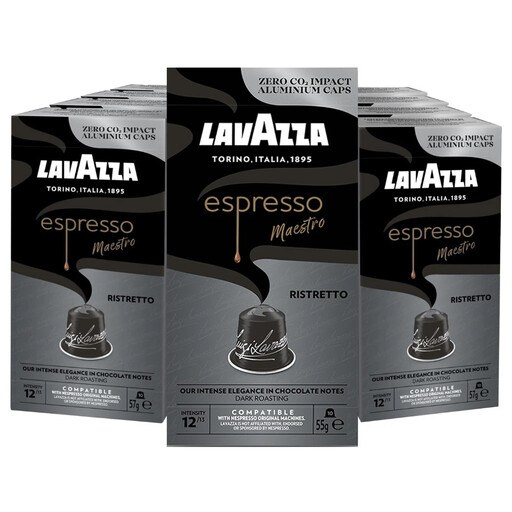
A Ristretto capsule option for a canteen with a compatible Nespresso-format machine. Confirm the exact machine model before ordering and arrange a route for used capsules.
 No image available
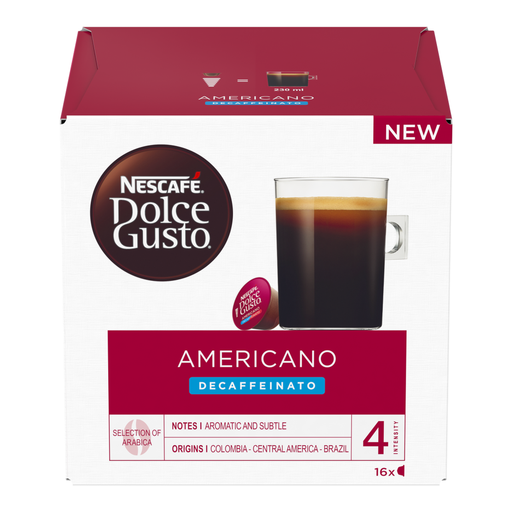
A decaf Americano option for a canteen using a compatible Dolce Gusto machine. Joybuy lists 16 capsules containing decaffeinated roast and ground coffee; account for any added ingredients when providing information about the served drink.
 No image available
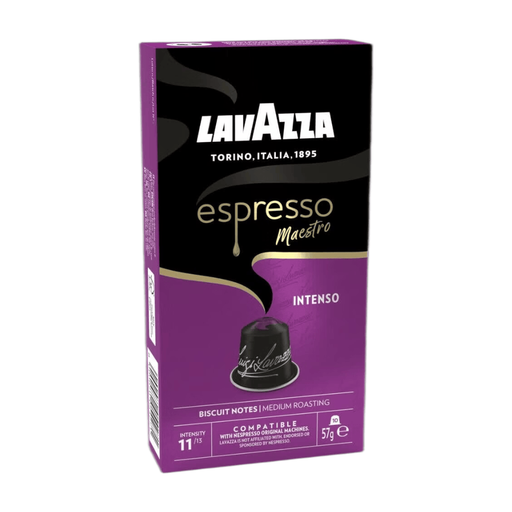
An Intenso capsule option where the workplace machine accepts this Nespresso-compatible format. The title specifies 10 capsules; check expected lunch servings when planning replenishment.
 No image available
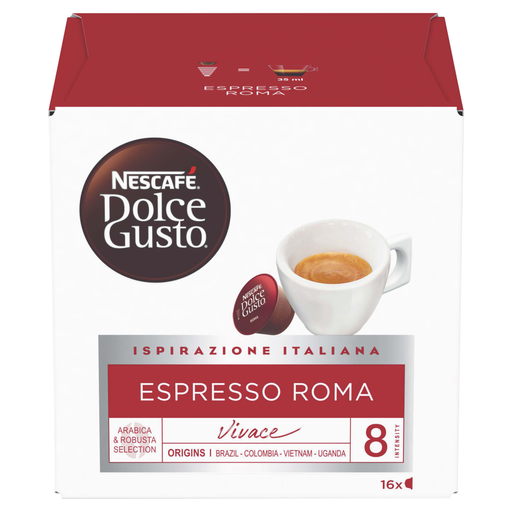
An Espresso Roma choice for a compatible Dolce Gusto machine. Joybuy describes the 16 pods as suitable for Nescafé Dolce Gusto machines; they are a different format from Nespresso-compatible capsules.
 No image available
A one-cup ground-coffee filter for a site using manual preparation rather than a capsule machine. Check the preparation instructions and servings on the pack for lunch-service planning, and confirm that the workplace waste provider accepts used filters in the intended stream.
No. Check the machine’s make, model and required format: Lavazza BLUE is a dedicated system, illy specifies an E.S.E. machine for its cited Decaf pods, Sainsbury’s labels its Espresso Decaff capsules Nespresso compatible, and Dolce Gusto is another capsule format.
Estimate the number of lunch servings and choose a compatible product before deciding how many packs to order. Pack counts vary: Lavazza lists 100 capsules for its BLUE Vigoroso product, while Sainsbury’s lists 30 servings for its Espresso Decaff capsules. Check storage, delivery arrangements and how quickly the chosen format can be prepared at your counter.
Check the route for the exact capsules rather than assuming the workplace bin accepts them. Nespresso UK describes collection and drop-off options for its capsules; confirm the applicable scheme or your waste contractor’s requirements before giving staff disposal instructions.
No such conclusion follows from the pod alone. Assess the complete drink, including milk or flavourings and any shared equipment, before making an allergen claim. GOV.UK and Food Standards Agency guidance for food businesses addresses allergen information for prepacked and non-prepacked food and drink.
Confirm machine supply, fault support, delivery schedules, cleaning responsibilities and a backup drink route in the proposed arrangement. Lavazza presents BLUE as a small-business capsule system, but the service terms for a workplace need to be checked with the supplier.