Who is each format for?
Start with where you will make coffee and whether you need each portion packed separately; a count of sticks and the weight of a jar answer different questions.
Students stocking a shared kitchen
A jar suits regular use when you have somewhere suitable to store it and are happy to measure each mug. Check its weight, serving guide and current unit price rather than treating a large pack as automatically better value. In a Spring 2025 survey of 1,000 UK students about coffee on campus, conducted by 3Gem for Nestlé Professional, 72% said cost increases had changed their coffee-buying habits; that figure does not measure jar purchases at home.
Students carrying individual portions
Sticks may suit a routine that takes you between a shared kitchen and campus, or a cupboard where you would rather keep portions separate. Check whether an 80-count listing contains plain instant coffee or a coffee-and-whitener blend: the count alone does not tell you what is in each stick.
Students choosing a particular coffee style
If roast description, stated strength or a decaffeinated format matters to you, decide on that before committing to a large pack. Kenco labels Rich as intensity 9, Sainsbury’s lists Douwe Egberts Pure Gold as medium roast and strength 3, and Nescafé lists Original Decaf jars. The labels are product-specific, not a shared taste scale.
What should you check before buying?
Decide whether the requirement is exactly 80 separate portions or simply a supply for many mugs. Then compare products of the same format using their serving instructions, ingredients and current labels.
| Priority |
What to check |
Your needs |
| Portions and storage |
Check the stick count or jar weight; read the stated amount of coffee per mug; confirm where you can store and prepare it. |
I want individual portions I can carry, or a jar I can keep in the kitchen and measure myself. For Nescafé instant coffee, Nescafé estimates about 111 mugs from 200g at its guide of 1.8g per 200ml mug; using more coffee reduces that yield. |
| Spending |
Compare current unit prices for jars of different weights. For sticks, check the pack count, seller, delivery terms and final checkout total before comparing servings. |
I need to judge the whole purchase, not just the pack size. In 3Gem’s Spring 2025 survey of 1,000 UK students for Nestlé Professional, 72% said cost increases had changed their campus coffee-buying habits, while 39% prioritised affordability in its reported quality-versus-value finding. Neither figure identifies a preferred home instant-coffee format. |
| Flavour and strength |
Read the product’s roast description and strength label; do not treat ratings from different brands as a common scale. Consider a smaller pack if you have not tried that coffee. |
I would rather establish which cup I enjoy before buying a large supply. In the same 2025 campus-coffee survey by 3Gem for Nestlé Professional, 58% of the UK students surveyed said they were willing to pay more for higher-quality coffee; this does not predict how any particular instant coffee will taste. |
| Ingredients |
Check whether each portion contains plain instant coffee or added whitener. Read the ingredient and allergen label on the exact product if those details affect your choice. |
I may want to add my own milk or drink the coffee black. Kenco describes its 2 in 1 sachets as a blend of instant coffee and whitener, so they are not interchangeable with plain granules. |
| Packaging |
Compare the actual pack formats and check local recycling instructions. If choosing a refill, confirm that you have a clean, dry container suitable for storing it. |
I may prefer to refill a container I already use rather than buy another jar. A refill, a glass jar and individually wrapped sticks also differ in how I would store and dispose of their packaging. |
| Preparation space |
Check your accommodation’s appliance rules, whether a kettle is supplied and where you may use it. |
I need an allowed way to heat water. The University of Kent prohibits using or storing cooking appliances in bedrooms in its accommodation; I should check the rules for my own halls rather than assume they are the same. |
Brand and retailer references
These examples help distinguish pack formats and labelled coffee styles; a brand’s wider range does not tell you what is in a particular 80-count pack.
Nescafé
Nescafé lists Original jars in 100g, 190g and 300g sizes, alongside refill packs and Original Decaf jars.
- Nescafé’s preparation guide uses approximately 1.8g of its instant coffee with 200ml of water, giving a stated estimate of about 111 mugs from 200g.
- That estimate depends on the serving size; it is not a cup-count guarantee for every product or every way of making coffee.
Kenco
Kenco offers Rich in 95g and 190g jars, as well as refill and coffee-and-whitener sachet formats.
- Kenco labels Rich as intensity 9, which may help if you already know you prefer that product style.
- Kenco 2 in 1 contains whitener and should not be mistaken for individually portioned plain coffee.
Douwe Egberts
Sainsbury’s lists Pure Gold as a 190g freeze-dried instant coffee, described as medium roast and strength 3.
- The pack weight and stated roast provide specific points to check against your preferred format and flavour.
- Its strength number cannot be directly compared with another brand’s intensity rating as though both used one scale.
Carte Noire
Sainsbury’s lists a 180g Classique jar, while an Amazon UK search listing describes a separate Carte Noire pack of 80 sticks.
- The stick listing gives an exact count worth investigating if separate portions are the main requirement.
- Check the specific 80-stick product page for its contents, seller and delivery terms before deciding whether it suits you.
Tesco
Tesco lists Gold Instant Coffee in a 200g jar, providing a supermarket own-label jar to compare by pack weight and current shelf label.
- Tesco’s preparation directions specify one to two teaspoons per cup, making the chosen dose important when estimating how long the jar will last.
- Check the current pack and unit label when buying rather than assuming its details remain unchanged.
Decaffeinated jar options on Joybuy
These are jar-format options for a student who prefers decaffeinated instant coffee and plans to measure each mug. They are alternatives to individually portioned sticks, not 80-stick packs.
 No image available
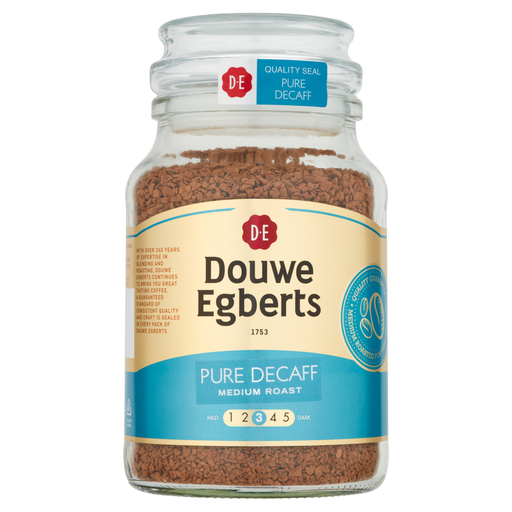
Douwe Egberts Pure Decaffeinated Instant Coffee 190g
For coffee prepared in a kitchen rather than carried as separate sticks, this 190g decaffeinated instant-coffee option lets you measure each portion. Check its serving directions if you need to estimate how many mugs the pack will make.
View on Joybuy
 No image available
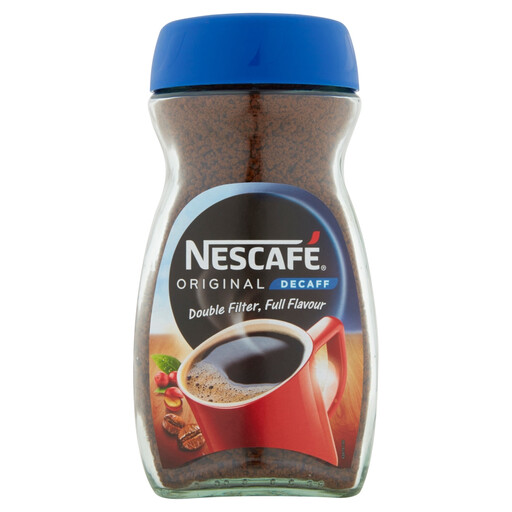
NESCAFÉ Decaf (New Shape) 200g
This 200g decaffeinated instant-coffee option suits making measured mugs in a kitchen rather than taking individual sticks with you. Use the directions for this specific pack when comparing its likely number of servings with an 80-stick box.
View on Joybuy
Questions about moving in with instant coffee
Can a 200g jar make more than 80 mugs?
It can at a sufficiently small serving size. Nescafé estimates approximately 111 mugs from 200g of its instant coffee using 1.8g with 200ml of water per mug; using more coffee makes fewer mugs. Check the guide for the jar you actually choose.
Are sticks or a jar easier to use in a shared kitchen?
Choose sticks when separate portions or carrying coffee matter more; choose a jar when you can store it in the kitchen and measure each drink yourself. Check the contents of any stick pack, as coffee-and-whitener sachets differ from plain instant coffee, and compare the full purchase terms before ordering.
Can I make instant coffee in my bedroom in halls?
Check your own halls rules before using a kettle or another appliance in your room. The University of Kent prohibits using or storing cooking appliances in bedrooms in its accommodation, but another provider’s rules may differ; check where your accommodation allows you to heat water.
Are 2 in 1 sachets the same as plain coffee sticks?
No. Kenco describes its 2 in 1 sachets as instant coffee blended with whitener. If you want black coffee or prefer to add milk yourself, read the ingredients of the exact stick pack rather than relying on its portion count.
Can I use a refill instead of buying another jar?
A refill is an option if you already have a clean, dry container suitable for the coffee. Kenco offers a Rich refill and Nescafé lists Original refill packs; check that the refill is the variant you want and follow its storage and disposal instructions.


