Who this is for

Coffee hosts serving several cups

If you make pour-over coffee, Americanos or instant coffee for visitors, tank capacity, dispensing portions and hot-water settings affect how often you need to pause and refill. Waterdrop and BRITA list these features for their respective countertop models.

Coffee drinkers addressing a known water issue

If you have measured hardness or alkalinity, or identified a persistent taste concern, choose a treatment route for that particular issue. The Speciality Coffee Association of Europe identifies hardness, alkalinity and pH as central measures for characterising coffee water.

Renters wanting a removable appliance

A no-plumbing countertop unit avoids a permanent under-sink installation, but still needs space for filling and routine filter changes. Waterdrop, Tappwater and Frizzlife describe no-installation or countertop options in their ranges.

What matters when choosing

Filtered hot-water dispenser

Choose when: Your public mains water is suitable for drinking and you mainly want convenient hot water while addressing taste or limescale.

Trade-off: Cartridge filtration is not the same treatment route as RO; check its stated effects against the water characteristic you want to change.

Countertop RO

Choose when: You have a specific, measured reason to reduce dissolved solids and want treatment without permanent plumbing.

Trade-off: RO produces wastewater and changes the mineral balance; replacement filters and any remineralisation stage also matter to the decision.

Concern What to check Who this matters to
Coffee-water characteristics Check your water’s hardness and alkalinity, then compare cartridge filtration, RO and any remineralisation stage against the change you want. If I am trying to make my coffee water more consistent, I need to know what I am changing rather than choose by a dissolved-solids display alone. Around 36% of consumers put coffee-water control first.
Serving several guests Compare feed-tank capacity, selectable portions and hot-water settings; an RO feed tank does not indicate how much treated water is immediately available. When friends want coffee together, I would rather prepare successive cups than stop repeatedly to refill. Roughly 29% of consumers place multi-cup service above their other needs.
Maintenance Check the exact replacement-filter schedule and whether an RO model collects or drains reject water. I want a routine I can keep up with after the guests leave, including filter changes and water disposal. About 21% of consumers make manageable upkeep their primary concern.
Worktop fit and safe use Measure the available space and check socket access, the supplied plug and relevant hot-water safety controls. In a kitchen where I cannot alter the plumbing, the appliance must fit and be safely placed near an accessible socket. Around 14% of consumers prioritise this removable setup.

Buying pitfalls

  • Assuming the lowest dissolved-solids reading makes the best coffee

    RO can substantially change dissolved minerals, but a low reading alone does not establish how the water will work for coffee. The Speciality Coffee Association of Europe identifies total hardness, alkalinity and pH as central measures.

    Identify the taste or scale issue, obtain local water information or test the water, then decide whether cartridge filtration, RO or RO with remineralisation addresses it.

  • Overlooking filters and reject water

    A countertop RO unit still needs replacement filters and produces wastewater, which affect the routine of making drinks for guests. Waterdrop describes wastewater as part of countertop RO operation.

    Compare the exact model’s replacement cycle and reject-water arrangements before choosing a treatment route.

    Allow space and time to manage the wastewater as well as to change filters.

  • Equating tank size with cups ready to serve

    A stated feed-tank capacity does not necessarily equal the amount of treated water available at once, particularly with RO.

    Count the cups you normally make, including water used to rinse or preheat brewing equipment, and compare that requirement with the model’s dispensing and refill arrangements.

  • Placing a hot-water unit wherever there is worktop space

    Hot dispensing brings burn and electrical-use considerations. Electrical Safety First advises checking for a UK three-pin plug and fuse on plug-in hot-water dispensers and avoiding overloaded extension leads.

    Choose a position near an accessible wall socket, keep the cord and plug away from splashes, and check child controls or boil-dry protection if those features matter in your kitchen.

Relevant brands for reference

Waterdrop

Its countertop RO range is relevant if you want no-plumbing treatment with hot-water dispensing.

  • Waterdrop states that its K19 has a 5 L feed tank, selectable 240–600 mL portions and temperatures up to 95°C.
  • The company also describes replacement filters and wastewater as considerations for its countertop RO systems; check the exact model’s arrangements.

BRITA

Its Cube represents a filtered hot-water dispenser route rather than RO treatment.

  • BRITA lists a 4 L tank, five temperature settings and heating on demand up to 95°C for the Cube.
  • If you intend to change dissolved minerals for coffee, compare the stated cartridge effects with your measured water characteristics rather than treating the Cube as RO.

Tappwater

Its Countertop RO SMR is an RO route for buyers specifically interested in adding minerals after filtration.

  • Tappwater states that the model combines seven-stage RO, Swedish Mineral Rock remineralisation and presets up to 95°C.
  • Confirm its replacement-filter arrangements and the resulting water characteristics against your coffee-water objective.

Frizzlife

Its WB99-H countertop RO model is relevant if adjustable dispensing and a portable pitcher matter to your setup.

  • Frizzlife lists temperatures from 45°C to 100°C, multiple dispensing quantities and a filter-life display for the WB99-H.
  • Check how its treatment stages relate to your measured coffee-water needs rather than relying on alkaline or reduction language alone.

Sans

Its countertop RO model offers a removable glass jug for moving water from the worktop to the table or fridge.

  • Sans describes RO treatment, instant hot water and a removable jug on its product page.
  • Review the brand’s stated test conditions and replacement-plan terms before relying on reduction claims or choosing a maintenance arrangement.

Joybuy product choices

These countertop choices include filtered hot-water dispensers and RO models for making coffee when friends visit. Compare their stated capacity and controls with your water-treatment goal; a larger tank alone does not establish how many coffees an RO unit can serve before refilling.

Caso Design HW 770 Turbo hot-water dispenser with water filter

Caso Design HW 770 Turbo Ambient & Hot Water Dispenser with Water Filter, 2.7 L, 01889

Consider this filtered-dispenser route if serving hot water and managing taste or limescale are your priorities, rather than RO treatment.

The named variant has a 2.7 L capacity, room-temperature dispensing and 13 temperature settings with a memory function. Check the filter’s treatment details and replacement requirements against your water needs.

View on Joybuy
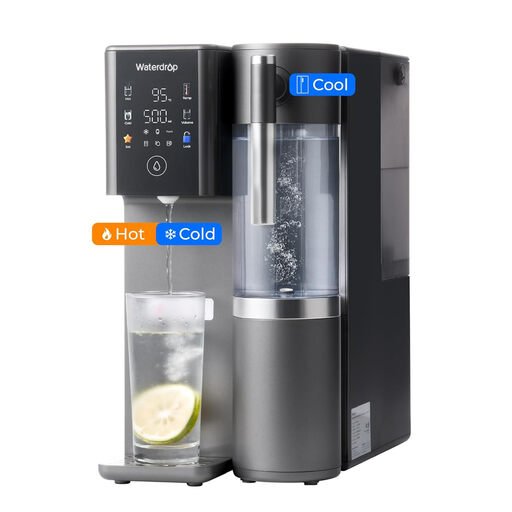
Waterdrop WD-A2 countertop reverse osmosis system

Waterdrop WD-A2 Countertop RO System, 6 Temperature Settings

Consider this RO route if you have a specific water characteristic you want to change while preparing coffee for guests.

The product name states six temperature settings and a 3:1 pure-to-drain ratio. Check the dispensing portions, treated-water capacity and replacement-filter arrangements for this exact model; RO also produces wastewater.

View on Joybuy
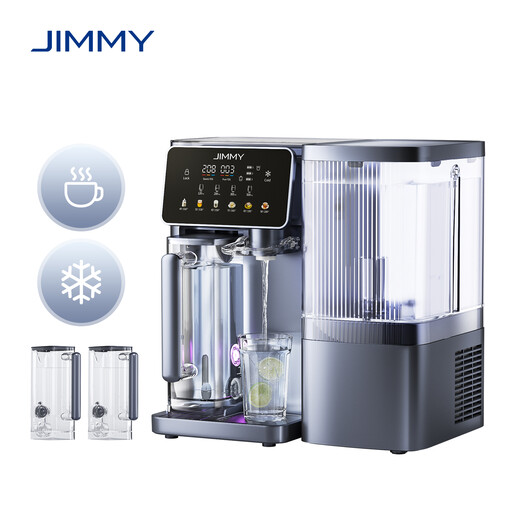
JIMMY R9 Pro countertop RO purifier with two 1 L pitchers

JIMMY R9 Pro Countertop RO Purifier, 5.5 L Tank & Dual 1 L Pitchers

The two pitchers may suit serving water away from the unit if RO treatment fits your measured coffee-water needs.

The named variant has a 5.5 L tank, two 1 L pitchers and hot and cold water options. Check its precise temperature settings, treated-water availability and filter-change routine before planning a multi-cup session.

View on Joybuy
Caso Design HW 1660 Turbo XL hot-water dispenser with water filter

Caso Design HW 1660 Turbo XL Hot Water Dispenser with Water Filter, 4 L, 1884

Consider its stated 4 L capacity if you expect to prepare several drinks, while checking that its filtration suits your water-treatment goal.

The product name identifies a water filter, but the filter’s treatment function and the exact dispensing settings should be checked for this variant before choosing it for coffee.

View on Joybuy

Frequently asked questions

Do I need a purifier if my coffee water comes from the public mains?

Not as an automatic health measure for a compliant public supply in England and Wales. The Drinking Water Inspectorate says additional domestic treatment is not needed for health protection in that setting; a filter can instead be a choice about taste, limescale or coffee preparation.

Will RO automatically make coffee taste better?

No: RO changes dissolved minerals, but a lower dissolved-solids reading does not establish a better result in the cup. The Speciality Coffee Association of Europe identifies hardness, alkalinity and pH as central measures, so check the water you start with and whether the resulting water suits your recipe.

Can a countertop purifier address an unknown problem with a private water supply?

Do not rely on a consumer countertop appliance to resolve an unknown safety concern. The Drinking Water Inspectorate says private supplies are subject to quality requirements, while GOV.UK advises contacting your local council about private-supply problems; seek appropriate advice and testing before choosing treatment.

What should I check before plugging in an instant-hot dispenser?

Check the supplied plug, socket position and relevant safety controls for the exact model. Electrical Safety First advises a UK three-pin plug and fuse for plug-in hot-water dispensers and warns against overloaded extension leads. For applicable products placed on the Great Britain market, the Department for Business and Trade says CE marking continues to be recognised alongside or instead of UKCA marking; Northern Ireland arrangements differ.

How do I compare replacement-filter maintenance?

Compare the replacement interval and compatible filter for each exact model, then consider how often you expect to use it and, for RO, how you will handle reject water. A filter interval stated for one model should not be assumed to apply to another.