Family filter-coffee households
If breakfast means several decaf cups made by filter, pour-over, cafetière or batch brewing, focus on a suitable grind range and a dose that fits your routine.


For repeatable family-breakfast decaf, start with a burr grinder whose stated grind range suits your brewing method. A filter-focused model suits households that do not make espresso; an espresso-capable model offers more flexibility, but changing methods or alternating decaf and regular beans adds adjustment and cleaning steps. Check how much coffee you need to grind in one session before choosing either route.
If breakfast means several decaf cups made by filter, pour-over, cafetière or batch brewing, focus on a suitable grind range and a dose that fits your routine.
If someone also makes espresso, look for a grinder explicitly intended for both espresso and filter methods rather than judging its range by the number of settings alone.
If the grinder sometimes handles regular beans too, consider how you will empty, purge and clean it between coffees. Ordinary cleaning should not be treated as proof of zero carry-over.
For consumers choosing a grinder for family-breakfast decaf, start with the brewing method. Then consider the amount you grind at once and whether the machine will hold only decaf or switch between beans.
| Concern | What to check | Who this matters to |
|---|---|---|
| Grind range | Check that the exact model states support for your brewing method, particularly if you make both espresso and filter coffee. | If I make espresso as well as decaf filter coffee, I need a grind range that covers both methods. Around 30% of consumers put brew-method fit first. |
| Breakfast dose | Compare the stated bean-container or single-dose capacity with the amount you plan to grind at once; check how the grinder stops and collects grounds. | When I prepare several cups, I want to know whether one load will cover breakfast without repeated refilling. An easy family-dose routine comes first for around 40% of consumers. |
| Switching beans | Check how the hopper, burr area and grounds container are emptied and cleaned. A routine purge does not establish zero carry-over. | If I use one grinder for decaf and regular beans, retained grounds matter to me more than a quick change of settings. Around 20% of consumers primarily focus on managing that switch. |
| Grounds transfer | Check the collection cup, dosing arrangement or anti-static features on the exact variant. | I want to move grounds into the brewer without scattering them across the worktop. Keeping that part of breakfast tidy is the primary concern for around 10% of consumers. |
Sage Appliances UK says blade grinders produce uneven particles and unnecessary heat. That makes a blade grinder a less suitable starting point when repeatable brewing is the priority.
Choose the brewing method first, then shortlist burr grinders with a stated range that covers it.
Fellow’s US Ode Brew Grinder Gen 2 information lists 120 V, while UK retailer Coffee Beautiful lists a 220 V UK-plug version. Specifications from one listing should not be applied to the other.
For a mains-powered grinder intended for Great Britain, check the exact listing’s voltage, supplied plug and intended market before ordering.
Baratza advises purging a small amount after major grind-size changes to clear transitional grounds. That step does not establish that no grounds remain when beans are changed.
Follow the manufacturer’s emptying and cleaning instructions. If strict separation matters, use a dedicated grinder rather than relying on a general cleaning routine.
Wilfa UK says its Svart range is being discontinued. An older listing should not be assumed to have the same warranty terms or parts availability as a current Zense model.
Check the exact model’s warranty and parts support before deciding between discontinued stock and a current range.
The Encore ESP is a reference point for households making both espresso and filter-style coffee.
The Zense range is relevant to households looking for a daily grinder that spans espresso through French press.
The Ode Brew Grinder Gen 2 is designed for brewed coffee methods such as pour-over, drip and batch brewing.
These portable electric burr grinders are choices to consider if your household wants to grind for espresso as well as a filter-style method. Compare their breakfast-dose capacity and cleaning routine before deciding whether either fits family use.
 No image available
Consider this model if breakfast brewing alternates between espresso and French press. Its name states 30 settings, a metal body, automatic stop and clog protection. Check how much you need to grind in one session and how you will clean it when changing beans; these features do not establish complete decaf-to-regular separation.
 No image available
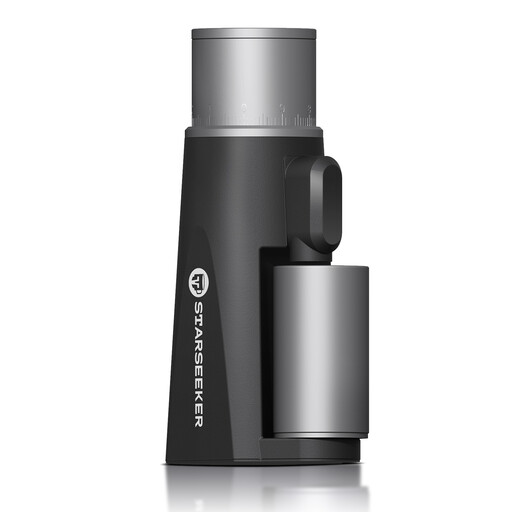
This portable model is listed for households that make espresso and pour-over coffee. Before relying on it for several breakfast servings, check its batch capacity and recommended running time. Plan how to contain scattered grounds and clean the grinder when switching from regular beans to decaf.
Choose a burr grinder when repeatable brewing is your priority. Sage Appliances UK describes blade-ground coffee as having uneven particles and unnecessary heat; check that the burr grinder’s stated range also covers the way your family brews.
One grinder can be used for both, but ordinary purging should not be assumed to remove every retained ground. Baratza recommends a small purge after major grind-size changes; if strict separation is important, a dedicated grinder is the more cautious choice.
Compare the amount you intend to grind in one session with the exact model’s stated capacity, paying attention to whether that figure describes a single-dose load or a bean container. Coffee Beautiful lists a 100 g capacity for its UK-plug Fellow Ode Gen 2, while Wilfa UK specifies a 125 g bean container for Zense Alux; neither figure is a universal serving recommendation.
For a mains-powered grinder intended for use in Great Britain, check the exact listing’s voltage, plug and intended market. GOV.UK’s guidance on the Electrical Equipment (Safety) Regulations 2016 concerns equipment placed on the GB market; Northern Ireland has distinct provisions. Regional versions can differ: Fellow’s US Ode information lists 120 V, while Coffee Beautiful lists a 220 V UK-plug version.