What should you check?
Start with what you need after exercise, then compare cola labels and pack formats if you still want cans at home.
| Priority | What to check | Your needs |
|---|
| Replacing fluids |
Consider how much you sweated and the conditions of the workout. The NHS recommends water for replacing fluid lost through physical activity. |
After exercise, I want to replace the fluid I have lost before deciding whether I also fancy a cola. |
| Recovery food |
Consider the workout and time before your next session. Sports Dietitians Australia identifies carbohydrate, protein and fluid as distinct recovery considerations. |
If I am training again soon, I need to plan food and drink rather than rely on a can of cola alone. |
| Sugar per can |
Read the sugars value for the exact serving. Tesco lists 35 g sugars per 330 ml can of Coca-Cola Original Taste and 0 g per 330 ml can of Coca-Cola Zero Sugar. |
I may still want cola after exercise, but I want to know how much sugar is in the version I buy. |
| Caffeine |
Check the full variant name and ingredients. Tesco lists caffeine flavouring in Coca-Cola Zero Sugar and labels Coca-Cola Zero Sugar Zero Caffeine as caffeine-free. |
For a drink later in the day, I want to be sure the particular pack matches my caffeine preference. |
| Pack format |
Compare can count and can size on the exact pack; Tesco lists several 24 × 330 ml cola options. Check the nutrition information for that variant rather than assuming similar-looking packs are identical. |
I want a can size and pack quantity that suit how I keep cola at home, without treating the multipack as a recovery product. |
Cola multipacks on Joybuy
These cola multipacks are options for people who still want cans at home after addressing post-workout fluid and food needs. They include caffeine-free variants and packs with different can counts; none is presented as a recovery plan.
 No image available
Diet Coke No Caffeine 24 × 330 ml
A caffeine-free cola option if you want a can after addressing fluid and food needs. The pack contains 24 × 330 ml cans; check its nutrition label for the exact variant.
 No image available
Pepsi Max Caffeine Free 24 × 330 ml
A caffeine-free Pepsi Max variant for a later cola choice, not a replacement for water or food. The pack contains 24 × 330 ml cans; check the exact label for nutrition details.
 No image available
Pepsi Max 24 × 330 ml
A cola option for after fluid and food needs are addressed. The pack contains 24 × 330 ml cans; Tesco identifies Pepsi Max No Sugar in this format, but check this pack’s label and caffeine status before choosing it.
 No image available
Coca-Cola Zero Sugar 24 × 330 ml
A zero-sugar cola choice if you want a can after water and food. The pack contains 24 × 330 ml cans; Tesco lists 0 g sugars per 330 ml for this variant and identifies caffeine flavouring in its ingredients.
 No image available
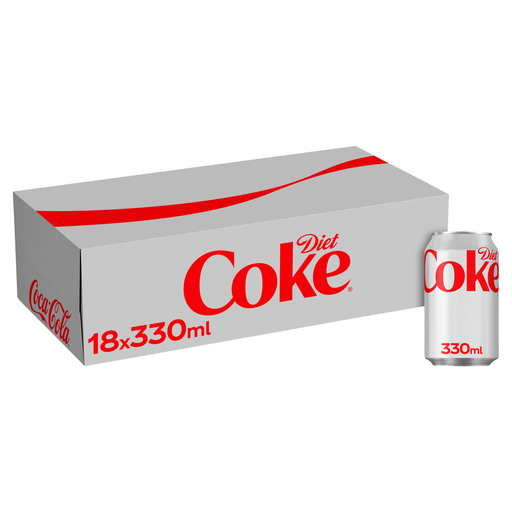
Diet Coke 18 × 330 ml
An 18-can option if you prefer fewer cans than a 24-pack for occasional cola after exercise. Each can is 330 ml; check the exact label for sugars and caffeine if either affects your choice.
Common questions
Can cola replace water after a normal workout?
Do not rely on cola as your main way to replace fluid lost through activity: the NHS recommends water for that purpose. The American College of Sports Medicine says most people exercising for less than 60–90 minutes in normal weather are unlikely to become depleted of electrolytes.
When should I think about food as well as fluid after exercise?
Consider both when the demands of training or an upcoming session make recovery planning important. Sports Dietitians Australia identifies refuelling, rehydration and protein for muscle repair as separate recovery considerations; cola alone is not a substitute for a suitable meal or snack.
Is zero-sugar cola a recovery drink?
No: choosing zero-sugar cola changes the sugar choice, not the need to replace lost fluid and consider food after exercise. Tesco lists 0 g sugars per 330 ml for Coca-Cola Zero Sugar, compared with 35 g for Coca-Cola Original Taste; neither label comparison makes cola a recovery meal.
How can I choose a caffeine-free cola multipack?
Look for an explicitly caffeine-free variant and check the exact pack. Tesco lists caffeine flavouring in standard Coca-Cola Zero Sugar, while Coca-Cola Zero Sugar Zero Caffeine is labelled as containing no caffeine.
Which label details matter when comparing cola cans?
Compare sugars and energy per serving, ingredients, caffeine status, can size and pack count on the variants you are considering. GOV.UK explains that traffic-light labels, where displayed, indicate levels of sugars and other listed nutrients; use the figures for the exact drink rather than judging it by its name alone.


