Parents and carers buying school-day drinks
Compare sugar and caffeine on the exact pack, and distinguish a drink provided by a school from one brought in a packed lunch. NHS oral-health advice also makes the timing of fizzy drinks relevant.


For a back-to-school cola occasion where avoiding both sugar and caffeine matters, look for a variant explicitly labelled zero sugar and caffeine-free: Coca-Cola Zero Sugar Zero Caffeine and Pepsi Max No Caffeine list 0g sugars and no caffeine according to their manufacturers. Standard zero-sugar options such as Pepsi Max still contain caffeine, while regular cola contains sugar. For drinks between meals, NHS oral-health advice recommends water or plain milk rather than fizzy drinks; check the school’s packed-lunch guidance separately.
Compare sugar and caffeine on the exact pack, and distinguish a drink provided by a school from one brought in a packed lunch. NHS oral-health advice also makes the timing of fizzy drinks relevant.
A zero-sugar label answers the sugar question, not the caffeine question. Check both if the drink is intended for a back-to-school occasion.
Some zero-sugar colas contain aspartame and carry a source-of-phenylalanine statement. Anyone who needs to avoid phenylalanine should check the exact product label.
Start with the sugar and caffeine information for the exact variant, then consider when and where the drink will be consumed.
| Priority | What to check | Your needs |
|---|---|---|
| Sugar | Read sugars per 100ml and for the amount likely to be drunk. Coca-Cola Great Britain lists 10.6g per 100ml for Original Taste; PepsiCo UK lists 15g per 330ml can for Pepsi. The NHS gives maximum recommended daily free-sugar amounts of 24g for ages 7–10 and 30g for ages 11 and over. | I’m comparing regular and zero-sugar cola, so I want to know how much sugar the whole can or bottle contributes, not just the per-100ml figure. |
| Caffeine | Check the exact variant for a caffeine-free or no-caffeine designation. PepsiCo UK lists caffeine in Pepsi Max, but no caffeine in Pepsi Max No Caffeine. | Sugar reduction matters to me, but I also want a cola without caffeine around the school day. |
| Between-meal drinks | Consider when a fizzy drink will be consumed, even if it lists 0g sugars. St George’s University Hospitals NHS Foundation Trust identifies fizzy drinks as an acid-erosion concern and recommends water or plain milk between meals. | I’m choosing a routine drink for between lessons, rather than a cola for an occasional meal or social occasion. |
| Ingredients | Read the sweeteners and any source-of-phenylalanine statement on the exact pack. Coca-Cola Great Britain lists aspartame in Coca-Cola Zero Sugar Zero Caffeine; PepsiCo UK identifies a source of phenylalanine on Pepsi Max No Caffeine. | If phenylalanine must be avoided in my household, the word “diet” or “zero” alone does not answer the ingredient question. |
| School rules | For a drink supplied by a state-funded school in England, distinguish the School Food Standards from the individual school’s packed-lunch guidance. The Department for Education’s published list of permitted school-provided drink categories does not include cola. | I’m buying for a lunchbox, so I need to check that school’s packed-lunch rules rather than assume rules for school-provided drinks settle the question. |
PepsiCo UK lists caffeine in Pepsi Max, although it lists 0g sugars. The two claims describe different things.
If avoiding caffeine matters, look for “No Caffeine” or “Caffeine Free” on the exact variant and check its ingredients.
Removing sugar does not remove the acid-erosion concern associated with fizzy drinks in St George’s University Hospitals NHS Foundation Trust oral-health advice.
For between meals, that NHS advice recommends water or plain milk. If choosing cola for another occasion, consider when it will be drunk rather than sipping it throughout the day.
A can or bottle may contain more than 100ml, so its total sugar amount differs from the figure on that basis.
Check the amount actually consumed and compare its sugar figure with the relevant NHS daily free-sugar guidance: 24g for ages 7–10 or 30g for ages 11 and over.
England’s School Food Standards address food and drink provided by schools; they do not, by themselves, set an individual school’s packed-lunch policy.
Check the school’s packed-lunch guidance before buying cola specifically for a lunchbox.
Its named UK variants illustrate the difference between regular cola and a zero-sugar, caffeine-free cola.
PepsiCo UK lists regular Pepsi, zero-sugar Pepsi Max and Pepsi Max No Caffeine as distinct choices.
Tesco’s caffeine-free cola category listed its own-label Caffeine Free Diet Cola alongside branded alternatives.
These packs cover caffeine-free cola and zero-sugar cola that contains caffeine. Compare the exact variant’s sugar and ingredient information before choosing a drink for a school-related occasion.
 No image available
The named caffeine-free variant suits a comparison in which caffeine matters as well as sugar. This pack contains 24 individual 330ml cans; check its nutrition panel and source-of-phenylalanine statement on the exact pack.
 No image available
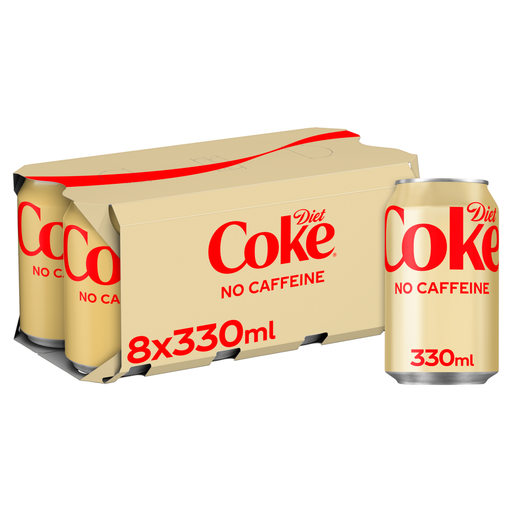
This named caffeine-free variant comes as eight 330ml cans. Check the exact pack’s sugar, sweetener and phenylalanine information rather than treating all diet colas as interchangeable.
 No image available
For a zero-sugar cola choice where caffeine is acceptable, PepsiCo UK lists 0g sugars but includes caffeine in Pepsi Max ingredients. This pack contains 24 cans of 330ml; it is not the No Caffeine variant.
 No image available
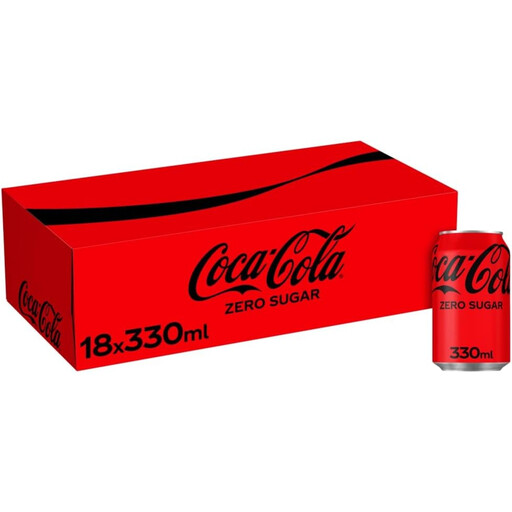
This is an 18-can pack of 330ml Coca-Cola Zero Sugar. It is distinct from Coca-Cola Zero Sugar Zero Caffeine, so check the exact ingredients if avoiding caffeine is part of the decision.
Zero-sugar cola changes the sugar comparison, but it does not remove the concern about fizzy drinks and acid erosion. St George’s University Hospitals NHS Foundation Trust recommends water or plain milk between meals. For sugar figures, Coca-Cola Great Britain lists 0g sugars for Coca-Cola Zero Sugar Zero Caffeine and 10.6g per 100ml for Original Taste.
No. PepsiCo UK lists 0g sugars in Pepsi Max but includes caffeine in its ingredients. If caffeine avoidance matters, choose an explicitly labelled caffeine-free or no-caffeine variant and check the exact pack.
Cola is not among the permitted school-provided drink categories listed in the Department for Education’s account of England’s School Food Standards; the Department also states that compliance is a legal requirement for state-funded schools. This does not, by itself, decide what a pupil may bring in a packed lunch, so check the school’s own packed-lunch guidance.
Some variants use aspartame and carry a source-of-phenylalanine statement, including the named caffeine-free options described by Coca-Cola Great Britain and PepsiCo UK. If phenylalanine must be avoided, check the exact product label rather than relying on the general “diet cola” description.