What should you check before choosing?
Start with the length and conditions of the run, then decide whether you want carbohydrate or simply a cola flavour. Check the exact drink’s serving size, caffeine and carbonation before choosing when to have it.
| Priority |
What to check |
Your needs |
| Run length and conditions |
Consider whether this is a usual 5k in normal weather or a longer session in different conditions. The American College of Sports Medicine says most fitness exercisers training for under 60–90 minutes in normal weather are unlikely to become dehydrated or depleted of electrolytes. |
For my usual 5k, I do not want to buy cola on the assumption that every run requires drink-based fuel. |
| Carbohydrate per serving |
Read carbohydrate and sugars for the serving you would drink. Coca-Cola GB lists 10.6 g of each per 100 ml of Original Taste; Pepsi UK lists 0 g carbohydrate per 330 ml of Pepsi Max. These are different formulations, not interchangeable figures. |
If I want carbohydrate, I need to distinguish regular cola from a zero-sugar drink chosen for its flavour. A review published in Nutrients reports a pre-exercise carbohydrate benefit for longer, not shorter, exercise. |
| Fizz and timing |
Check whether the drink is carbonated and try the intended amount and timing during ordinary training. The NHS identifies fizzy drinks as a possible contributor to gas-related bloating. |
I would rather learn how a sparkling drink suits me on an ordinary run than try it for the first time before a race. |
| Caffeine |
Read the ingredients and look for an explicitly caffeine-free variant if needed. Pepsi UK lists caffeine-containing flavourings in Pepsi Max, but describes Pepsi Max Caffeine Free as caffeine-free. |
If I am avoiding caffeine, a zero-sugar label alone does not answer my question. |
| Exact pack |
Compare the nutrition panel on the product being bought. Pepsi UK lists 15 g carbohydrate per 330 ml for Pepsi Classic, while a Joybuy PEPSI Regular 24 × 330 ml listing states 34 g per can; do not transfer either figure to a differently labelled pack. |
I want the carbohydrate figure for my actual can or multipack, not for a similarly named cola. |
Cola brand and formulation references
The formulation matters more than the brand name alone: regular, zero-sugar and caffeine-free drinks answer different preferences.
Coca-Cola
Coca-Cola GB lists Original Taste and Zero Sugar Caffeine Free as distinct formulations.
- Original Taste lists 10.6 g carbohydrate and sugars per 100 ml; the caffeine-free zero-sugar version lists 0 g of each per 100 ml.
- Original Taste contains caffeine, and both drinks are fizzy. Consider your tolerance if having either near a run.
Pepsi
Pepsi UK lists regular, Pepsi Max and Pepsi Max Caffeine Free variants.
- Pepsi UK lists 0 g carbohydrate and sugars per 330 ml of Pepsi Max; Pepsi Max Caffeine Free lists 0.2 g carbohydrate and 0 g sugars per 330 ml.
- Pepsi Max contains caffeine. For a regular variant, use the exact pack’s nutrition panel rather than transferring figures between similarly named products.
Tesco
Tesco lists Classic Cola as a regular own-label option.
- Tesco states 14.8 g available carbohydrate and 14.5 g sugars per 330 ml can.
- Its listed ingredients include carbonation and caffeine-containing flavourings; consider both when deciding whether to drink it near a run.
Sainsbury's
Sainsbury's lists regular Cola and Cola Zero as separate own-label formulations.
- Regular Cola lists 4.3 g carbohydrate and sugars per 100 ml; Cola Zero lists less than 0.5 g of each per 250 ml.
- Both product ingredient lists include caffeine-containing flavourings. Cola Zero should not be assumed caffeine-free.
Joybuy cola options
These options include regular colas to compare when you deliberately want carbohydrate, alongside caffeine-free colas chosen for flavour rather than run fuel. A usual 5k in normal conditions does not, by itself, call for cola.
 No image available
Coca-Cola Original Taste 24 × 330 ml
For someone deliberately comparing carbohydrate drinks, Joybuy lists 35 g carbohydrate and sugars per 330 ml can of this 24-can pack. The listed ingredients include caffeine; try the fizzy drink during ordinary training before having it near a race.
View on Joybuy
 No image available
Pepsi Max Caffeine Free 24 × 330 ml
This is a cola-flavour choice for someone avoiding caffeine rather than seeking carbohydrate fuel. Pepsi UK lists 0.2 g carbohydrate and 0 g sugars per 330 ml for Pepsi Max Caffeine Free; it remains a fizzy drink.
View on Joybuy
 No image available
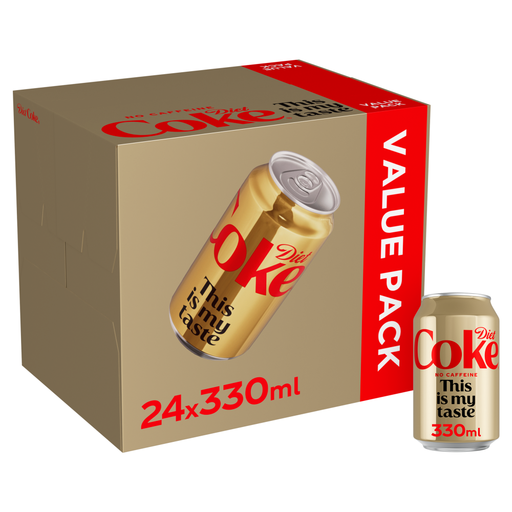
Diet Coke No Caffeine 24 × 330 ml
The no-caffeine variant is an option when cola flavour matters but caffeine avoidance is part of the decision. Check the exact pack’s carbohydrate, sugar and ingredient information for your intended serving; the drink is still carbonated.
View on Joybuy
 No image available
PEPSI Regular Cola Soft Drink 24 × 330 ml
For a deliberate carbohydrate choice, Joybuy lists 34 g carbohydrate and sugars per 330 ml can in this pack. Pepsi UK lists 15 g carbohydrate per 330 ml for Pepsi Classic, without establishing it as the same formulation, so use the exact pack label before relying on a figure. The Joybuy listing includes caffeine-containing flavourings.
View on Joybuy
 No image available
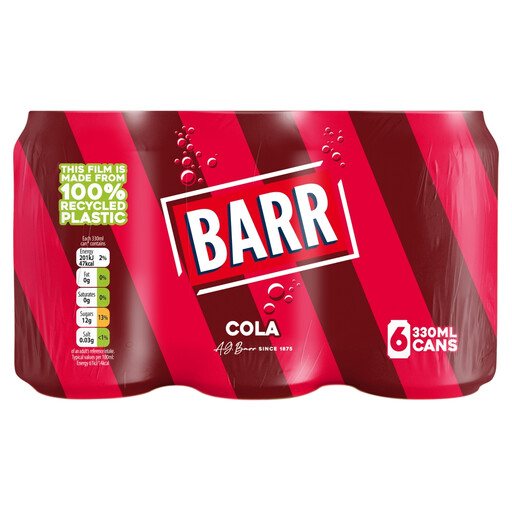
Barr Cola 6 × 330 ml
If considering this six-can pack as a carbohydrate drink, compare the exact pack’s carbohydrate per serving with the amount you intend to have. Check its ingredients for caffeine, and try the fizzy drink during ordinary training before having it near a race.
View on Joybuy
Questions about cola and 5k runs
Do I need cola as fuel for a normal 5k?
Usually not for a recreational 5k in normal weather. The American College of Sports Medicine says most fitness exercisers training for under 60–90 minutes in normal conditions are unlikely to become dehydrated or depleted of electrolytes; a review published in Nutrients reports a pre-exercise carbohydrate benefit for longer, not shorter, exercise. Longer sessions or different conditions call for a separate decision.
Which type of cola contributes carbohydrate?
A regular-sugar cola can contribute carbohydrate, but compare the exact serving: Coca-Cola GB lists 10.6 g per 100 ml of Original Taste. Pepsi UK lists 0 g per 330 ml of Pepsi Max and 0.2 g per 330 ml of Pepsi Max Caffeine Free, so those variants are flavour choices rather than carbohydrate-fuel substitutes.
Could fizzy cola make a run uncomfortable?
It could if fizzy drinks cause you gas or bloating; the NHS identifies them as a possible contributor. Try the intended drink, amount and timing during ordinary training rather than for the first time before a race.
Does zero-sugar cola also have no caffeine?
Not necessarily. Pepsi Max and Sainsbury's Cola Zero list caffeine-containing flavourings. If caffeine avoidance matters, look for a specifically caffeine-free variant, such as Pepsi Max Caffeine Free or Coca-Cola Zero Sugar Caffeine Free, and check the exact pack.
What should I read on the pack before buying?
Check carbohydrate and sugars for the serving you would drink, then read the ingredients for caffeine-containing flavourings. Use the exact pack rather than a generic brand figure: Pepsi UK’s Pepsi Classic page and a Joybuy PEPSI Regular multipack listing state different carbohydrate amounts per 330 ml.


