Night-shift workers avoiding caffeine
If caffeine matters to your choice during or after a shift, check for an explicit caffeine-free label. Zero sugar alone does not tell you whether a cola contains caffeine.


For a shared 2-litre bottle during a night shift, look for a variant labelled both zero sugar and caffeine-free if you want to avoid both: Tesco lists Coca-Cola Zero Sugar Zero Caffeine in that format. Pepsi UK lists Pepsi Max as zero sugar but containing caffeine; regular cola and fruit-flavoured options can contain sugar, so compare the exact bottle’s per-100ml label and the number of servings you plan to pour.
If caffeine matters to your choice during or after a shift, check for an explicit caffeine-free label. Zero sugar alone does not tell you whether a cola contains caffeine.
A 2-litre bottle may cover several snack breaks or several people. Compare sugars per 100ml, then consider how much each person is likely to pour.
Cola, orange and Dr Pepper variants differ in their listed sugar, caffeine and sweeteners. Check the particular flavour and variant rather than relying on the brand name.
Start with caffeine and sugar, then check the ingredients and bottle quantity against the way the drinks will be shared.
| Priority | What to check | Your needs |
|---|---|---|
| Caffeine | Look for an explicit caffeine-free claim and read the ingredients. Pepsi UK lists caffeine in Pepsi Max despite its 0g sugars per 100ml; Pepsi Max Caffeine-Free is a separate variant. | I want a fizzy drink during or after a shift without overlooking caffeine in a zero-sugar cola. |
| Sugar and servings | Compare sugars per 100ml on the exact variant. For a 2-litre bottle, multiply that figure by 20 to calculate the sugar in the whole bottle, then consider the intended servings. | Several people may share the bottle, so I want to know what is in each drink as well as the full 2 litres. |
| Sweeteners and label statements | Read the ingredient list and any phenylalanine statement. Pepsi UK lists aspartame, acesulfame K and a source-of-phenylalanine statement for Pepsi Max and Pepsi Max Caffeine-Free. | If ingredients or label statements affect my choice, I need to check the precise variant rather than the words ‘zero sugar’ alone. |
| Flavour and format | Confirm the flavour, whether the bottle is 2 litres, and whether the listing is a single bottle or multipack. Check sugar and caffeine separately for fruit-flavoured drinks. | I might prefer orange to cola, or need enough bottles for several shifts; the flavour name alone will not settle the label or quantity checks. |
| Drinks throughout the shift | Plan what you will drink alongside snacks, not just which fizzy drink to buy. NHS guidance identifies water as a choice for hydration and advises checking drink labels. | I want the snack drink to fit alongside the water I plan to have during the shift. |
Pepsi UK lists Pepsi Max as containing caffeine, while Pepsi Max Caffeine-Free is a distinct product. A sugar claim cannot answer a caffeine question.
When avoiding caffeine, choose a variant explicitly labelled caffeine-free and check its ingredients.
Coca-Cola Great Britain lists 10.6g sugars per 100ml for Original Taste. At that stated concentration, 2 litres contains 212g sugars in total, although a shared bottle is not one serving.
Multiply the per-100ml figure by 20 for the bottle total, then decide how many servings the bottle will cover.
Pepsi UK lists sweeteners and a source-of-phenylalanine statement for both Pepsi Max and Pepsi Max Caffeine-Free, but their caffeine labels differ.
Read the ingredients and label statements on the exact bottle you intend to buy.
These examples help distinguish particular variants; a brand name does not establish the sugar, caffeine or bottle size of every product it sells.
Compare Original Taste with the separately named Zero Sugar Zero Caffeine variant if you want a cola for a shared bottle.
Pepsi Max and Pepsi Max Caffeine-Free are different choices for shoppers comparing zero-sugar colas.
An orange or other fruit-flavoured option may suit someone who does not want cola, provided the exact variant meets their label and format needs.
Regular and Zero variants offer another flavour choice, but neither should be assumed caffeine-free.
Tesco provides a retailer listing for a specifically named 2-litre cola with both zero-sugar and zero-caffeine labelling.
This supplied comparison orders product routes by the night-shift questions of sugar and caffeine, rather than by sales or an independent product test. The regular-cola row also needs a separate bottle-size check before it can serve as a 2-litre option.
| Rank | Drink | Main details | Why it appears here | Platform |
|---|---|---|---|---|
| 1 | Coca-Cola Zero Sugar Zero Caffeine 2L | 2-litre bottle; labelled zero sugar and zero caffeine. | Tesco’s listing identifies both label claims in the requested bottle size, making it the first route to check when avoiding both sugar and caffeine. | Tesco |
| 2 | PEPSI Max 2L | 2-litre cola; 0g sugars per 100ml; contains caffeine. | Pepsi UK identifies the sugar and caffeine difference. Joybuy’s listed PEPSI Max 2L page says the item is no longer available, so check its current status before planning a purchase. | Joybuy |
| 3 | Coca-Cola Original Taste | 10.6g sugars per 100ml; contains caffeine flavouring. Check the bottle size. | Coca-Cola Great Britain’s product information makes this a regular-cola comparison for someone prioritising that variant’s flavour; its sugar and caffeine differ from the zero-sugar, zero-caffeine route. | External product route |
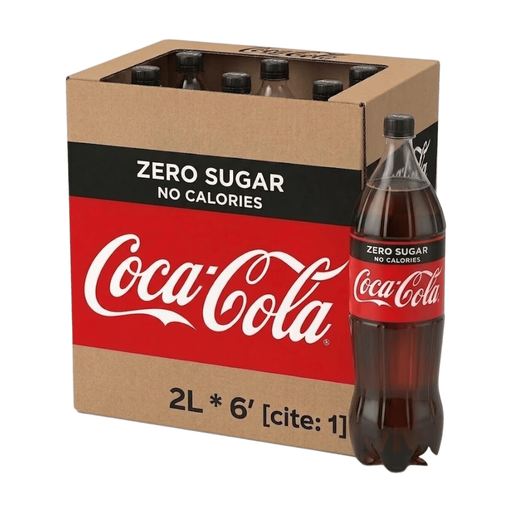
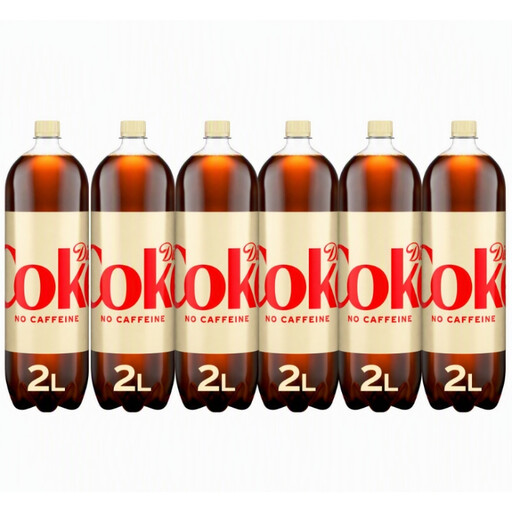
These Joybuy options are six-packs of 2-litre zero-sugar colas for sharing. Check caffeine information on the actual bottles if avoiding it is important to your night-shift choice.
 No image available
Six 2-litre bottles provide a multipack for shared snacks or several shifts. The product information lists 0g sugars per 100ml and caffeine; it also lists aspartame and a source of phenylalanine. Check that the quantity suits your storage space.
 No image available
This six-pack contains 2-litre bottles, and its nutrition information lists 0g sugars per 100ml. Although the product name says Caffeine Free, its description contains conflicting caffeine information: check the actual bottle label before relying on it to avoid caffeine. The product information also lists aspartame and a source of phenylalanine.
No. Pepsi UK lists 0g sugars per 100ml for Pepsi Max but includes caffeine in its ingredients. If avoiding caffeine matters during your shift, look for an explicitly caffeine-free variant and check its label.
At Coca-Cola Great Britain’s stated 10.6g sugars per 100ml for Original Taste, 2 litres contains 212g sugars in total. That is a calculation for the entire bottle, not for an individual serving; check how much will be poured and shared.
Plan for water as well as any fizzy drink you want with snacks. NHS guidance identifies water as a choice for hydration and advises checking nutrition labels when choosing drinks.
Pepsi UK lists aspartame in Pepsi Max and Pepsi Max Caffeine-Free and states that both contain a source of phenylalanine. Ingredients differ between products, so read the statement on the exact bottle.
The Department for Education’s school-food guidance concerns food and drink provided to pupils in England’s state-funded schools, not an ordinary adult workplace snack purchase. If the drinks are being procured for a school, check the rules for the relevant UK nation and the specific use.