People wanting cola after training
If you are choosing a drink after sweating, separate replacing lost fluid from buying cola for its taste. The NHS identifies water as the preferred way to replace lost fluids.


Choose water to replace fluid lost through exercise: the NHS identifies it as the preferred choice for that purpose. If you also want a large cola bottle to share, treat it as a separate soft-drink purchase and check the exact capacity, sugar content and caffeine information; a zero-sugar name alone does not establish that a cola is caffeine-free.
If you are choosing a drink after sweating, separate replacing lost fluid from buying cola for its taste. The NHS identifies water as the preferred way to replace lost fluids.
A bottle for several people calls for a check of its stated capacity and formulation. A large Coca-Cola bottle is not necessarily 2 litres: Coca-Cola GB has referenced Original Taste in 1.75L and Diet Coke in 2L bottles.
Read the nutrition panel and ingredients for the exact variant. Pepsi Max is labelled zero sugar but lists caffeine among its flavourings, while Pepsi Max No Caffeine is a separate variant.
Decide what you need for hydration first, then compare cola labels and bottle sizes if you still want one to share.
| Priority | What to check | Your needs |
|---|---|---|
| Replacing lost fluid | For fluid lost through physical activity, choose water rather than relying on cola; this follows NHS hydration guidance. If you have dehydration symptoms, NHS guidance advises avoiding caffeinated drinks. | I want a drink for the fluid I lost while exercising, not just a soft drink I enjoy. |
| Sugar content | Compare sugars per 100ml on the exact variant. Coca-Cola GB lists 10.6g for Original Taste; Pepsi UK lists 4.5g for regular Pepsi and identifies Pepsi Max as zero sugar. | If the bottle will be shared over several servings, I want to know which formulation I am buying rather than assuming every regular or zero-sugar cola is alike. |
| Caffeine | Check the variant name and ingredients independently of the sugar claim. Pepsi UK lists caffeine in Pepsi Max flavourings and offers a separate Pepsi Max No Caffeine variant. | When I want to avoid caffeine, “zero sugar” on its own does not answer my question. |
| Bottle capacity | Confirm the capacity on the exact listing or label. Coca-Cola GB has referenced Original Taste in a 1.75L bottle and Diet Coke in a 2L bottle. | I am planning to share a 2-litre bottle, so the stated size matters more than a general “family bottle” description. |
Cola and water serve different purposes here: the NHS identifies water as the preferred way to replace lost fluids and advises avoiding caffeinated drinks when treating dehydration.
Choose a drink for hydration first; buy cola separately if you want it for taste or sharing.
Pepsi Max is labelled zero sugar, but Pepsi UK lists caffeine among its flavourings. Pepsi Max No Caffeine is a different variant.
If caffeine matters to your choice, check the exact variant and its ingredients.
Coca-Cola GB has referenced a 1.75L Original Taste bottle alongside a 2L Diet Coke bottle.
Read the capacity on the product listing or bottle before planning how much you need for sharing.
Manufacturer figures differ by formulation: Coca-Cola GB lists Original Taste at 10.6g sugars per 100ml, while Pepsi UK lists regular Pepsi at 4.5g per 100ml.
Compare the nutrition panel for the specific bottle you intend to buy.
Coca-Cola GB identifies regular and zero-sugar cola lines, with bottle capacities that vary by product line.
Pepsi UK identifies regular Pepsi, zero-sugar Pepsi Max and a separate Pepsi Max No Caffeine variant.
These 2-litre six-packs are cola options to consider for sharing after exercise. Neither replaces the water you choose for fluid lost during activity.
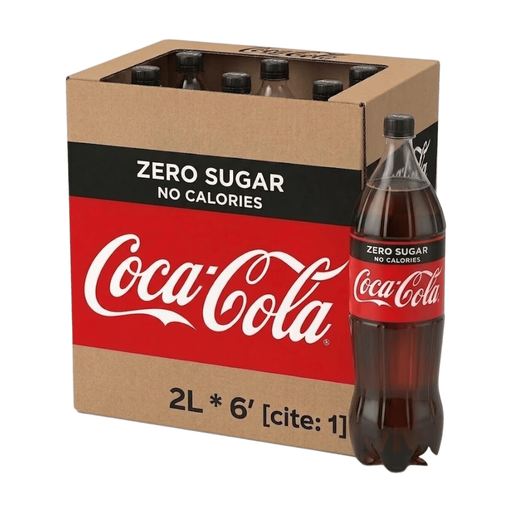 No image available
The six-bottle pack suits a plan to share cola after choosing water for hydration.
This variant contains caffeine. The product information also flags a source of phenylalanine and states that it is unsuitable for people with PKU.
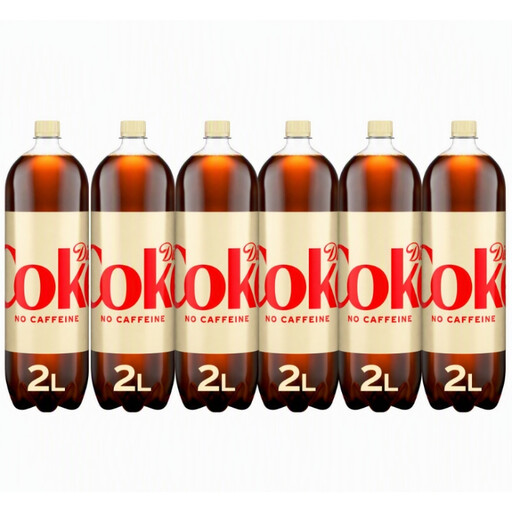 No image available
This six-bottle pack is another option for sharing cola after addressing hydration separately.
The product information gives conflicting caffeine statements, so check the bottle’s ingredients and caution text before relying on the caffeine-free name. It also identifies a source of phenylalanine.
Choose water to replace fluid lost through exercise; the NHS identifies it as the preferred choice. A cola bottle can be a separate purchase for taste or sharing, rather than the drink you rely on for that purpose.
Compare the exact variant’s nutrition panel, particularly sugars per 100ml. Coca-Cola GB lists Original Taste at 10.6g and Pepsi UK lists regular Pepsi at 4.5g, while Pepsi Max is identified as zero sugar. Check caffeine separately: zero sugar does not mean caffeine-free.
Yes. Pepsi UK lists caffeine among Pepsi Max flavourings and identifies Pepsi Max No Caffeine as a separate variant. Read the ingredients for the bottle you are buying, especially if avoiding caffeine is important to you.
No. Coca-Cola GB has referenced Original Taste in a 1.75L bottle and Diet Coke in a 2L bottle. Confirm the capacity on the exact listing or bottle rather than relying on “large” or “family bottle”.