Brunch hosts serving mixed preferences
If several guests will share the drinks, consider whether to offer both regular and zero-sugar cola and whether a sharing bottle or individual cans suit your serving plan.


Choose regular cola for guests who want a sugar-sweetened recipe, a zero-sugar variant when sugar content is the deciding factor, and an explicitly caffeine-free variant when caffeine matters too. For mixed preferences, offer clearly labelled alternatives and check the sugar per serving, sweeteners and pack size before buying.
If several guests will share the drinks, consider whether to offer both regular and zero-sugar cola and whether a sharing bottle or individual cans suit your serving plan.
Compare the exact variant’s nutrition per 100ml and per glass. A zero-sugar label does not tell you whether the drink contains caffeine or sweeteners.
Look for an explicitly caffeine-free variant rather than assuming that diet or zero-sugar cola meets that requirement.
Start with the drink requirements of the people you are serving, then choose a pack format that fits the number of portions you expect to pour or open.
| Priority | What to check | Your needs |
|---|---|---|
| Sugar per serving | Compare sugars per 100ml and at the glass or can size you plan to serve. The Coca-Cola Company lists 10.6g sugars per 100ml for Original Taste; PepsiCo lists 0g per 100ml for Pepsi Max. | I want to know what a poured glass contains, rather than choosing from the words “regular” or “zero” alone. |
| Caffeine | Check the exact variant name and ingredient list. PepsiCo lists caffeine in Pepsi Max, while its Pepsi Max No Caffeine ingredient list does not include it. | If someone is avoiding caffeine, I need a drink identified as caffeine-free, not just sugar-free. |
| Sweeteners and ingredients | Read the ingredient list as well as the nutrition panel. PepsiCo lists aspartame and acesulfame K in Pepsi Max and Pepsi Max No Caffeine; both carry a source-of-phenylalanine statement. | Someone at the table may need to check particular sweeteners, so I want the exact can or bottle clearly identified. |
| Portions and storage | Compare bottle volume with your planned glass size, or count the cans. Sainsbury’s describes its 2L Cola bottle as eight 250ml servings and advises refrigeration and use within three days after opening. | For a shared table, I may prefer glasses from a bottle; separate cans make it easier to offer different variants without opening several bottles. |
PepsiCo lists both sugar and sweeteners in regular Pepsi. Its Pepsi Max contains caffeine, as does the Sainsbury’s Diet Cola ingredient list.
Check the nutrition panel and ingredients of the precise variant; choose an explicitly caffeine-free product if that distinction matters.
The amount of sugar served changes with the portion poured. Asda lists 27g sugars for a 250ml glass of Coca-Cola Original Taste.
Compare drinks at the same serving size and decide whether guests would also want a zero-sugar option.
PepsiCo lists aspartame and acesulfame K in Pepsi Max and Pepsi Max No Caffeine, with a source-of-phenylalanine statement on both.
If an ingredient matters to a guest, check the label on the product you serve and keep the variants distinguishable.
A product listing is useful for comparing options before ordering, but the label on the can or bottle identifies the ingredients and nutrition of the item in hand.
Recheck the purchased product’s ingredients, allergen information, nutrition and date marking before serving.
These examples illustrate differences between specific recipes; a brand name alone does not establish the sugar, caffeine or sweetener content of every variant.
Original Taste is a sugar-sweetened option; Coca-Cola also has zero-sugar variants.
The checked range includes regular Pepsi, Pepsi Max and Pepsi Max No Caffeine.
Tesco Classic Cola is an own-label 2L sharing-bottle option.
The checked own-label range includes regular Cola and Diet Cola in 2L bottles.
These can multipacks offer individual portions for brunch, spanning caffeine-free, regular, zero-sugar and cherry-flavoured choices. Check each variant’s label against your guests’ requirements.
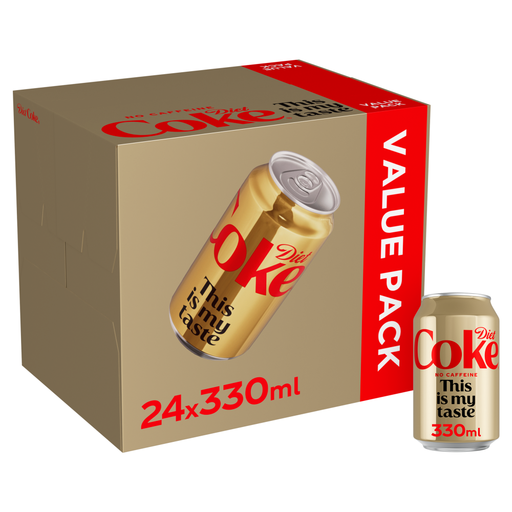 No image available
Individual portions for a brunch where caffeine avoidance matters. Check the pack’s sugar and sweetener declarations against guests’ requirements.
 No image available
Individual caffeine-free cola portions. PepsiCo lists 0g sugars per 100ml for the No Caffeine variant; it contains aspartame and acesulfame K and carries a source-of-phenylalanine statement.
 No image available
Individual cans for guests who want the sugar-sweetened Original Taste recipe. Joybuy lists 35g sugars per 330ml can; The Coca-Cola Company lists caffeine flavouring among the ingredients.
 No image available
A 24-can zero-sugar variant for individually served drinks. Check caffeine, sweeteners and the source-of-phenylalanine statement on the purchased pack if these matter to a guest.
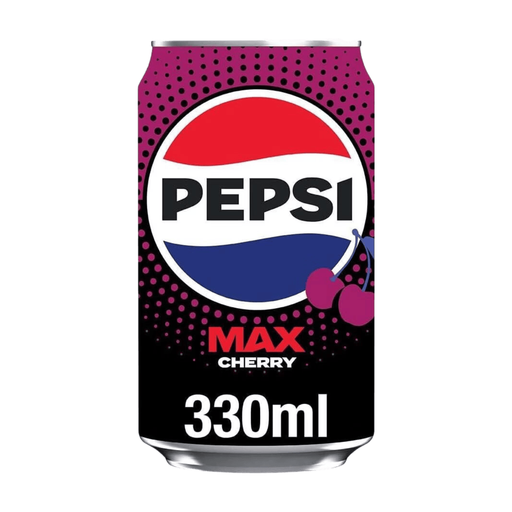 No image available
A cherry-flavoured option in an eight-can pack when fewer individual portions suit the table. Check caffeine and sweetener information on the exact pack before serving.
Not necessarily. PepsiCo lists caffeine in Pepsi Max but identifies Pepsi Max No Caffeine separately; Sainsbury’s Diet Cola also lists caffeine-containing flavourings. Check the exact variant.
A 2L bottle provides eight 250ml glasses if you pour that amount each time. Tesco and Sainsbury’s use this serving size for their checked 2L colas; actual pours and guest preferences may differ.
Follow its label. Sainsbury’s advises refrigerating its checked 2L Cola after opening and using it within three days; Tesco gives a three-day use period for its checked Classic Cola.
No; check the precise product. Tesco identifies its Classic Cola as suitable for vegans, and PepsiCo says its regular Pepsi and Pepsi Max ranges are suitable for vegans. Confirm the label of the drink you purchase when this matters.