What should you check before choosing?
Regular cola
Consider it: When a carbonated drink you have already tried in training fits a planned carbohydrate top-up.
Trade-off: You still need to plan fluids separately and account for the drink alongside other fuel.
Zero-sugar cola
Consider it: When you want a cola drink but are not relying on it for carbohydrate.
Trade-off: The cited zero-sugar cans cannot contribute to a carbohydrate-fuel plan.
Planned fuel and hydration
Consider it: When a long session calls for a deliberate approach to both carbohydrate and fluids rather than a cola can alone.
Trade-off: Products, quantities and carrying arrangements still need trying during training; World Athletics notes that fluid needs vary.
Start with carbohydrate per can and session duration, then check fluids, ingredients and whether the pack size is practical.
| Priority | What to check | Your needs |
|---|
| Carbohydrate |
Read carbohydrate per can and account for other fuel. World Athletics advises 30–60g per hour for 1–2.5-hour endurance exercise and up to 90g per hour beyond 2.5 hours; neither range specifies a number of cola cans. |
I want to know what one can contributes to my planned intake. ASDA Groceries lists 35g per 330ml Coca-Cola Original Taste can, Joybuy lists 34g for Pepsi Regular, and Tesco Groceries lists 14.8g available carbohydrate for Tesco Classic Cola. |
| Fluids and electrolytes |
Plan fluid access and intake for the conditions rather than using carbohydrate content as a hydration measure. Check the current salt label; World Athletics describes fluid needs as highly variable. |
For a long or hot run, I need a fluid plan that does not depend on cola alone. ASDA Groceries lists 0g salt in a 330ml Coca-Cola Original Taste can. |
| Sugar and ingredients |
Check carbohydrate, sugars, caffeine-containing ingredients and sweeteners on the exact pack. ASDA Groceries lists 0g carbohydrate and sugars for Coca-Cola Zero Sugar; Joybuy lists the same figures for Pepsi Max. |
If I am choosing cola for carbohydrate, a zero-sugar can will not do that job. If I want a cola drink without carbohydrate, I would still check its ingredients and try the exact drink before using it during a run. |
| Pack and serving size |
Confirm the number of cans, volume per can and nutrition per can, not just per 100ml. Consider where a larger case will be stored and how a serving would fit into training. |
I want a quantity I can use and store, with can-level figures that make my planned intake straightforward to work out. |
Regular-cola multipacks on Joybuy
These regular-sugar Coca-Cola and Pepsi cases are options for comparing can-level carbohydrate as part of a practised long-run plan. They are not complete fuel or hydration plans, and the larger Coca-Cola bundle needs more storage space.
 No image available
Coca-Cola Original Taste 24 x 330ml
For a practised carbohydrate top-up, the listed 35g per 330ml can can be counted alongside other fuel. This 24-can case contains carbonated cola with caffeine; check the current label and plan fluids separately.
View on Joybuy
 No image available
Pepsi Regular Cola 24 x 330ml
For a planned carbohydrate top-up, Joybuy lists 34g per 330ml can in this 24-can case. The drink is carbonated and contains caffeine-containing flavourings; check the current salt label and plan fluids separately.
View on Joybuy
 No image available
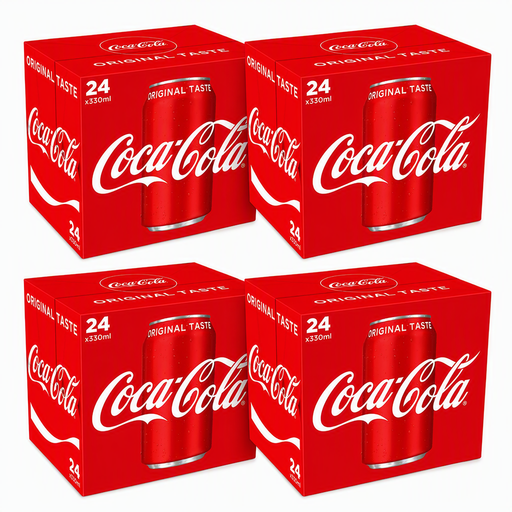
Coca-Cola Original Taste 4 x 24 x 330ml
Each listed 330ml can provides 35g carbohydrate for a practised fuel plan. This bundle contains 96 cans, so check that the quantity and storage space suit you; the cola is carbonated and contains caffeine, and fluids need separate planning.
View on Joybuy
Common questions
Can a can of regular cola replace marathon fuel?
No single can establishes a complete fuel plan, though regular cola can contribute carbohydrate if you have tried it during training. ASDA Groceries lists 35g per 330ml Coca-Cola Original Taste can and Joybuy lists 34g per Pepsi Regular can; World Athletics advises 30–60g carbohydrate per hour for 1–2.5-hour endurance exercise and up to 90g per hour beyond 2.5 hours. Account for other fuel and plan fluids separately.
Should I choose regular or zero-sugar cola for a long run?
Choose regular cola only if its carbohydrate fits a plan you have tried in training; choose zero-sugar cola when you are not relying on the drink for carbohydrate. ASDA Groceries lists 0g carbohydrate per 330ml Coca-Cola Zero Sugar can, and Joybuy lists 0g for Pepsi Max. Neither choice replaces a fluid plan.
Does cola replace electrolytes lost through sweat?
Do not assume it does. ASDA Groceries lists 0g salt per 330ml Coca-Cola Original Taste can, while the Australian Institute of Sport describes electrolyte products as designed to replace fluid and electrolytes, particularly sodium and potassium. World Athletics notes that fluid needs vary, so consider those needs separately from cola’s carbohydrate content.
What should I check on a cola multipack label?
Check the pack count, can volume, carbohydrate and sugars per can, plus the ingredients if caffeine or sweeteners matter to your choice. Compare the current physical pack with the serving you intend to use, and try the exact drink during training before relying on it during an event.


