Late-session players avoiding caffeine
If caffeine is something you want to avoid later in the day, look for a cola explicitly labelled caffeine-free. Coca-Cola and Pepsi each describe a zero-sugar, caffeine-free variant.


Choose a regular cola if you want a sugar-containing version of the drink, but compare the exact pack: regular formulations can differ in sugar and energy per 100ml. If you want 0g declared sugar, consider a zero-sugar cola; for a late gaming session when you also want to avoid caffeine, choose a variant explicitly labelled caffeine-free rather than assuming zero sugar means no caffeine.
The time of the session, preferred flavour and serving size can change which cola is worth considering.
If caffeine is something you want to avoid later in the day, look for a cola explicitly labelled caffeine-free. Coca-Cola and Pepsi each describe a zero-sugar, caffeine-free variant.
If you want cola with snacks but prefer a product labelled 0g sugar per 100ml, compare the zero-sugar variants with the regular drink you would otherwise choose. Check caffeine separately.
If you prefer a sugar-containing cola, check the particular product and serving size. Coca-Cola Original Taste and Pepsi have different sugar figures on their UK product pages, so the category name alone will not tell you what is in your drink.
Decide whether sugar or caffeine changes your choice, then compare flavour descriptions and the amount you intend to pour or open.
Consider it: When you prefer a sugar-containing cola and will check the nutrition panel for the exact product.
Bear in mind: Coca-Cola GB lists 10.6g sugar and 42 kcal per 100ml for Original Taste; Pepsi UK lists 4.5g sugar and 18 kcal per 100ml for Pepsi.
Consider it: When you want a cola labelled 0g sugar per 100ml and caffeine is acceptable to you.
Bear in mind: Coca-Cola Zero Sugar and Pepsi Max list caffeine in their ingredients, according to their UK product pages.
Consider it: When you want a cola-style drink without caffeine for a late session.
Bear in mind: Choose the specifically named caffeine-free variant, such as Coca-Cola Zero Sugar Caffeine Free or Pepsi Max No Caffeine, rather than the standard zero-sugar version.
| Priority | What to check | Your needs |
|---|---|---|
| Sugar and energy | Compare sugar and kcal on the same per-100ml basis. Then check the labelled serving and total pack volume; Coca-Cola GB and Pepsi UK publish different figures for their regular colas. | I want to know what is in the amount I will actually drink, rather than treating every regular or zero-sugar cola as equivalent. |
| Caffeine | Read the exact variant name and ingredients. Coca-Cola Zero Sugar and Pepsi Max list caffeine; their separately named caffeine-free alternatives are different products. | For a late session, I would rather pick a drink explicitly labelled caffeine-free than rely on a zero-sugar label. |
| Ingredients | Check the sweeteners and any phenylalanine statement on the particular pack if those declarations matter to you. Do not read “zero sugar” as “unsweetened”. | I want to see the full ingredient information before choosing between cola formulations. |
| Flavour | Compare descriptions for the exact product line and variant. Coca-Cola says Diet Coke has a different flavour blend from Coca-Cola Zero Sugar; that is the brand’s description, not an independent taste comparison. | If I am changing from my usual cola, the flavour description matters as well as the sugar figure. |
Coca-Cola Zero Sugar and Pepsi Max list caffeine, so their standard versions may not fit a session where you want to avoid it.
Look for “caffeine-free” or “no caffeine” in the exact variant name, and check the pack’s ingredients.
Coca-Cola GB lists 10.6g sugar per 100ml for Original Taste, while Pepsi UK lists 4.5g per 100ml for Pepsi. Different pack volumes also change how much drink a pack contains.
Compare sugar and energy per 100ml first, then check the labelled serving and total volume.
Department for Education guidance concerns food and drink provided in state-funded schools in England. Separate Department of Health and Social Care guidance on HFSS promotion and placement addresses businesses operating in and selling to England; it does not classify every cola variant.
For a drink with snacks at home, use the product label to make your selection. School catering or retail-promotion decisions require a check of the exact product, setting, nation and applicable rules.
The figures below describe named UK products, not every cola made by either brand.
Coca-Cola GB describes Original Taste, Zero Sugar and Zero Sugar Caffeine Free as distinct product lines.
Pepsi UK distinguishes Pepsi, Pepsi Max and Pepsi Max No Caffeine.
These packs cover regular cola, different zero-sugar product lines and a caffeine-free option for choosing a drink alongside gaming snacks. Compare the exact pack label before deciding.
 No image available
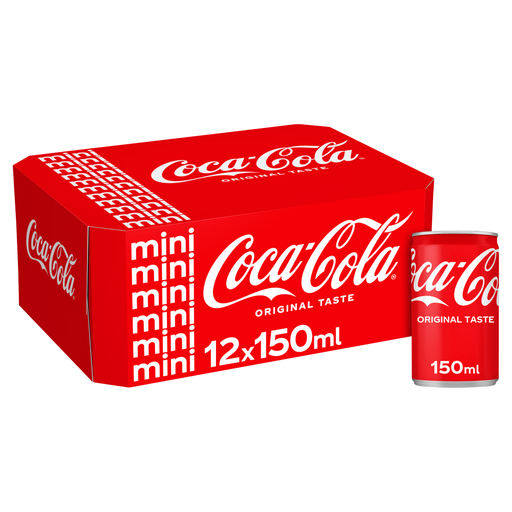
Consider this regular cola if you want a 150ml portion with snacks. The pack contains 12 × 150ml; Coca-Cola GB lists 10.6g sugar and 42 kcal per 100ml for Original Taste. Check the pack label when sugar or caffeine affects your choice.
 No image available
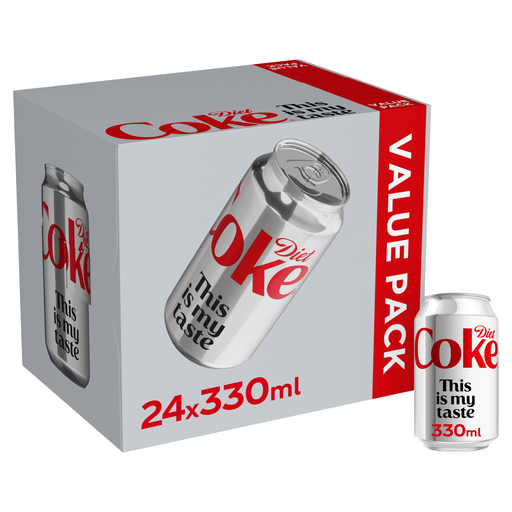
Consider Diet Coke if its distinct flavour blend appeals to you: Coca-Cola describes it as different from Coca-Cola Zero Sugar. This is a 24 × 330ml pack. Check the exact pack for sugar, caffeine and ingredient declarations.
 No image available
This named caffeine-free variant suits a gaming session where you want to avoid caffeine. The pack is 24 × 330ml; Pepsi UK describes Pepsi Max No Caffeine as having no sugar or caffeine. Check the exact pack’s ingredients and declarations if sweeteners or phenylalanine matter to you.
 No image available
Consider this 24 × 330ml pack when you want Pepsi Max and caffeine is acceptable. Pepsi UK lists 0g sugar for Pepsi Max, but its ingredients include caffeine. Check the exact pack’s ingredient declarations before choosing it over the caffeine-free variant.
 No image available
Consider this 24 × 330ml pack if you want Coca-Cola Zero Sugar and do not need a caffeine-free drink. Coca-Cola GB lists 0g sugar for this product line and includes caffeine flavouring in its ingredients. Check the exact pack’s other ingredient declarations if they matter to you.
No. Coca-Cola GB and Pepsi UK list caffeine in Coca-Cola Zero Sugar and Pepsi Max respectively. Both brands also name separate caffeine-free, zero-sugar variants, so check the exact product title and ingredients.
No. Coca-Cola GB lists 10.6g sugar per 100ml for Coca-Cola Original Taste, while Pepsi UK lists 4.5g per 100ml for Pepsi. Compare the particular pack’s nutrition panel on the same per-100ml basis, then check its serving volume.
No. Department for Education school-food guidance concerns food and drink provided in state-funded schools in England; separate Department of Health and Social Care HFSS promotion-and-placement guidance addresses businesses operating in and selling to England. Those scopes do not establish the HFSS classification of a particular cola or turn a home snack choice into a school-catering decision.
Check the retailer’s current product listing and the availability shown for your location. Sainsbury’s says its grocery delivery service uses a local store allocated by postcode, so an item’s availability may depend on where the order is placed.