Students taking a can with lunch
A sealed 330ml can is a defined portion to take before or between lectures. Decide whether you want one can for the occasion or a multipack to keep for later lunches.


For a lecture lunch, a 330ml can gives you a defined portion to take with you; choose the cola by checking sugar and caffeine separately. Coca-Cola Original Taste is a regular-sugar option, Pepsi Max is a zero-sugar option that contains caffeine, and Coca-Cola Zero Sugar Caffeine Free and Pepsi Max No Caffeine are options when you want to avoid both. Zero-sugar does not mean free of sweeteners, so check the ingredients if they matter to you.
A sealed 330ml can is a defined portion to take before or between lectures. Decide whether you want one can for the occasion or a multipack to keep for later lunches.
Pepsi Max and Coca-Cola Zero Sugar variants offer a different route from regular Coca-Cola Original Taste, which Coca-Cola GB lists at 10.6g sugars per 100ml. Check the exact variant rather than relying on the brand name.
Coca-Cola Zero Sugar Caffeine Free and Pepsi Max No Caffeine are explicitly caffeine-free variants. Standard Pepsi Max lists flavourings including caffeine, despite having no sugar.
Start with the sugar and caffeine labels, then compare ingredients and pack format for the lunch you have in mind.
| Priority | What to check | Your needs |
|---|---|---|
| Sugar | Compare sugars per 100ml and per can. Coca-Cola GB lists 10.6g sugars per 100ml for Original Taste; Pepsi UK lists 0g per 330ml can for Pepsi Max. | I want to know how much sugar is in the can I would drink with lunch, rather than assuming all colas have the same formulation. |
| Caffeine | Look for an explicit caffeine-free variant and check the ingredients. Pepsi Max No Caffeine and Coca-Cola Zero Sugar Caffeine Free are distinct from standard Pepsi Max, whose ingredients include caffeine. | If I do not want caffeine during an afternoon lecture, a zero-sugar label alone is not enough to make my choice. |
| Flavour and ingredients | Check whether the drink uses sugar or sweeteners and read any on-pack phenylalanine statement relevant to you. Coca-Cola GB describes Zero Sugar as closer in flavour to Original Taste than Diet Coke; that is the brand’s own description. | I may prefer a particular cola flavour or need to check the sweeteners before switching from a regular-sugar drink. |
| Pack format | Check can volume and the number of cans. A 330ml can is a defined serving; a listing for 18 or 24 cans is a multipack, not a single-can purchase. | One can is enough to take to lunch, but I may want several individually sealed cans for later occasions. |
Standard Pepsi Max has 0g sugars per 330ml can, but Pepsi UK lists caffeine in its flavourings. Pepsi Max No Caffeine is a separate variant.
When avoiding caffeine, look for the exact caffeine-free name and check the ingredients on the can.
Pepsi UK lists sweeteners in Pepsi Max and Pepsi Max No Caffeine; Coca-Cola GB also lists them in Coca-Cola Zero Sugar Caffeine Free.
Read the ingredients and any phenylalanine statement if those details affect your choice.
Coca-Cola GB lists 10.6g sugars per 100ml for Original Taste. The NHS notes that too much sugary food and drink is often a factor in tooth decay.
If cola is a regular lunch choice, compare the sugar information per can as well as per 100ml.
Its Original Taste, Zero Sugar and Zero Sugar Caffeine Free variants illustrate why the exact name matters when choosing for lunch.
Pepsi Max and Pepsi Max No Caffeine are separate zero-sugar options for different caffeine preferences.
Tesco Classic Cola is an own-label example to consider alongside named-brand regular and zero-sugar colas.
These listings contain 330ml cans in multipacks. They include regular-sugar, zero-sugar and explicitly caffeine-free variants, so check the exact product before choosing a can to take to lunch.
 No image available
The No Caffeine variant is an option when avoiding caffeine at a lecture lunch. This is a 24-can multipack rather than a single-can purchase; check the can’s ingredients and nutrition panel for other requirements.
 No image available
For a lunch cola without sugar or caffeine, Pepsi UK identifies this variant as having 0g sugars and no caffeine. The listing is for 24 cans; the product contains sweeteners, so check the pack’s ingredient and warning statements if relevant.
 No image available
Pepsi UK lists 0g sugars per 330ml can for standard Pepsi Max, but its ingredients include caffeine and sweeteners. This 24-can multipack suits taking one can to lunch on separate occasions; choose an explicitly caffeine-free variant if caffeine is the concern.
 No image available
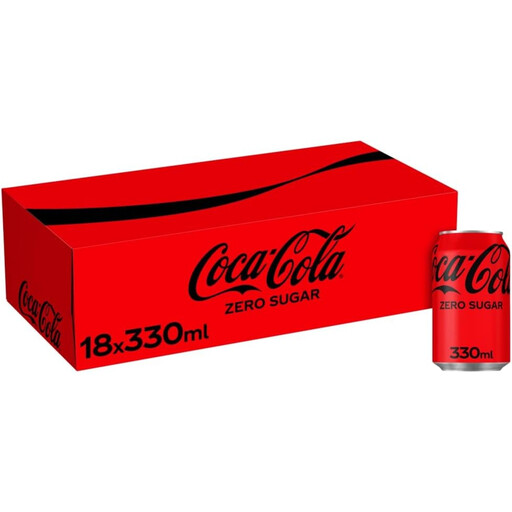
This is the Zero Sugar variant in an 18-can pack, with one 330ml can to take to lunch at a time. Coca-Cola GB describes Zero Sugar as sugar free; if avoiding caffeine, check for the separately named Caffeine Free variant rather than assuming this pack is caffeine free.
 No image available
Choose this regular-sugar variant if that is the cola formulation you want with lunch. Coca-Cola GB lists 10.6g sugars per 100ml and caffeine flavouring; the product information lists 35g sugars per 330ml can. This listing contains 24 cans, not one.
Choose a variant explicitly labelled caffeine free, such as Coca-Cola Zero Sugar Caffeine Free or Pepsi Max No Caffeine. Standard Pepsi Max lists caffeine among its flavourings, so a zero-sugar label is not enough to answer the caffeine question.
The Pepsi Max, Pepsi Max No Caffeine and Coca-Cola Zero Sugar Caffeine Free products described by their manufacturers all list sweeteners. Check the exact pack’s ingredients and phenylalanine statement if either matters to you.
Compare the sugar content per can as well as per 100ml: Coca-Cola GB lists 10.6g sugars per 100ml for Original Taste, while Pepsi UK lists 0g per 330ml can for Pepsi Max. The NHS notes that too much sugary food and drink is often a factor in tooth decay.