Hosts serving guests with different preferences
A small selection can give guests a choice between regular cola, zero-sugar cola and an explicitly caffeine-free variant. One label does not answer all three questions.


For a mixed New Year’s Eve party, consider a regular cola for guests who prefer it and a zero-sugar option for those checking sugar per serving. Zero sugar does not necessarily mean caffeine-free: check the exact variant and its sweeteners, then choose bottles for shared pouring or cans for individual portions.
A small selection can give guests a choice between regular cola, zero-sugar cola and an explicitly caffeine-free variant. One label does not answer all three questions.
Compare the nutrition panels at the same volume, then check how much each guest is likely to pour. A 250ml glass and a 330ml can are different serving sizes.
Choose a variant expressly labelled caffeine-free and check its ingredients. Standard Coca-Cola Zero Sugar and Pepsi Max list caffeine on their brand product pages.
Decide which drinks guests would choose, then compare exact labels and pack sizes. Supermarket own-label is another recipe to check, rather than an automatic substitute for a named-brand cola.
| Priority | What to check | Your needs |
|---|---|---|
| Sugar per serving | Compare sugars per 100ml and at the portion you plan to serve. ASDA Groceries lists 27g sugars per 250ml glass for Coca-Cola Original Taste 2L and 11g per 250ml for ASDA Classic Cola 2L; Coca-Cola GB lists 0g per 100ml for Coca-Cola Zero Sugar. | I want guests to be able to choose regular cola or a clearly identified zero-sugar option. |
| Caffeine | Read the exact variant name and ingredients. Coca-Cola GB and Pepsi UK list caffeine in standard Coca-Cola Zero Sugar and Pepsi Max; ASDA Groceries identifies Coca-Cola Zero Sugar Zero Caffeine as a caffeine-free variant. | Someone avoiding caffeine should have an option that is expressly labelled caffeine-free, not just zero-sugar. |
| Sweeteners and labels | Check the sweetener list and any phenylalanine statement on the product served. Coca-Cola GB and Pepsi UK identify aspartame and a source-of-phenylalanine statement for their standard zero-sugar colas. | I need to keep the packaging available so guests with relevant ingredient requirements can check their own drink. |
| Recipe choice | Compare an own-label product’s own nutrition and ingredient panel rather than assuming it matches a branded recipe. Sainsbury’s Cola Zero and ASDA Diet Cola each list less than 0.5g sugars per 100ml and contain caffeine. | I’m happy to consider own-label cola, but still need its sugar, caffeine and sweetener details to suit the group. |
| Serving format | Match bottle or can volume to how drinks will be served. ASDA Groceries lists eight 250ml glasses from Coca-Cola Original Taste 2L; its Coca-Cola Zero Sugar Zero Caffeine example is a 24 × 330ml can pack. Check opened-bottle storage instructions. | Shared pouring suits one plan; individual cans suit another. I need enough space to chill the format I choose. |
Coca-Cola Zero Sugar and Pepsi Max list caffeine despite listing 0g sugars per 100ml, according to their respective brand pages.
If caffeine avoidance matters, check the exact variant and choose one explicitly labelled caffeine-free.
The Coca-Cola Zero Sugar and Pepsi Max ingredient information includes sweeteners and a source-of-phenylalanine statement. Sugar content alone cannot describe those ingredients.
Keep the exact packaging available for guests who need to check sweeteners or label statements.
ASDA Groceries lists 27g sugars per 250ml for Coca-Cola Original Taste 2L and 11g per 250ml for ASDA Classic Cola 2L. Equal-sized servings need not have the same sugar content.
Compare per-100ml figures as well as the amount you expect to pour.
These product examples show why it helps to check the exact variant; a brand name alone does not establish its sugar, caffeine or serving format.
The cited product information covers Original Taste, Zero Sugar and Zero Sugar Zero Caffeine variants.
Pepsi Max provides a zero-sugar cola example, but the standard product is not caffeine-free.
Sainsbury’s Cola Zero is an own-label 2L bottle to compare when planning shared servings.
ASDA Diet Cola and ASDA Classic Cola offer two different own-label recipes in 2L bottles.
These Joybuy options include regular and zero-sugar cola, a caffeine-free variant and can or bottle packs for different serving plans. Check the precise product label and pack size before choosing for the party.
 No image available
The 24 individual cans suit a plan for guests to take their own portions. Coca-Cola GB lists 0g sugars per 100ml for Coca-Cola Zero Sugar, but the standard variant contains caffeine and sweeteners; check the exact pack’s ingredient and phenylalanine statements.
 No image available
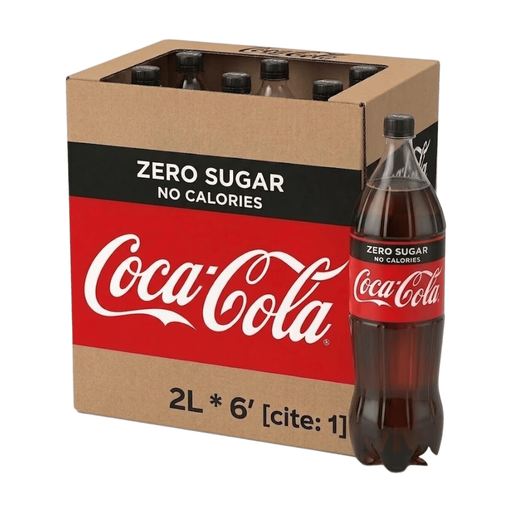
Six 2L bottles allow shared pouring if there is room to store and chill them. Coca-Cola GB lists 0g sugars per 100ml for Coca-Cola Zero Sugar; the standard variant contains caffeine and sweeteners, so check the exact bottles’ labels for ingredient requirements.
 No image available
The explicitly caffeine-free variant gives guests an individual-can option when caffeine avoidance matters. The pack contains 24 × 330ml cans; check its own sugar, sweetener and phenylalanine information rather than using the label for standard Pepsi Max.
 No image available
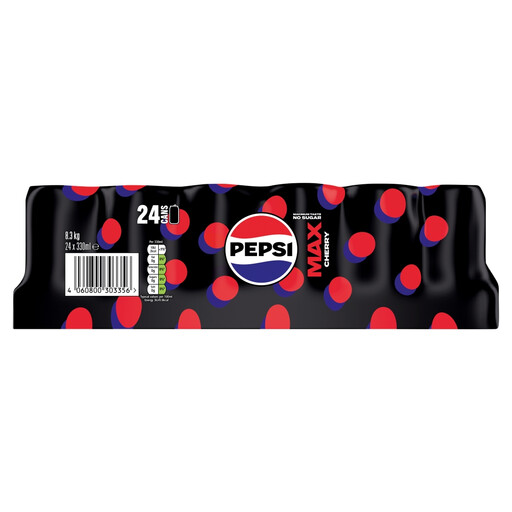
Cherry flavour offers a different choice from standard cola in a 24 × 330ml can pack. Check this variant’s own nutrition and ingredients if guests are selecting by sugar, caffeine or sweeteners.
 No image available
These 24 individual cans offer the regular Original Taste variant for guests who prefer it. Check the cans’ nutrition panel for sugar per 100ml and per can rather than applying a serving figure from a different pack.
No. Pepsi UK and Coca-Cola GB list caffeine in standard Pepsi Max and Coca-Cola Zero Sugar. Choose a variant explicitly labelled caffeine-free when that is the requirement, and check the exact product.
The Pepsi Max and Coca-Cola Zero Sugar product information lists aspartame and states that the drinks contain a source of phenylalanine. Keep the exact packaging available for guests with relevant ingredient requirements.
Choose bottles if guests will pour shared drinks, or cans if individual portions suit the serving plan. ASDA Groceries lists eight 250ml glasses for Coca-Cola Original Taste 2L and a 24 × 330ml format for Coca-Cola Zero Sugar Zero Caffeine; account for how much space each choice needs to chill.
Follow the instructions on the bottle you buy. Sainsbury’s says to refrigerate its Cola Zero 2L after opening and use it within three days; ASDA gives the same period in its own-label cola listings.
The Department for Education’s school-food guidance concerns food and drink provided in state-funded schools in England, not drinks served at a private party. England’s separate food-promotion and placement regulations, described by the Department of Health and Social Care and the Department for Culture, Media and Sport, address specified less healthy products in retail settings; they should not be treated as a rule about a host serving cola at home.