Riders planning longer sessions
For indoor rides lasting over 90 minutes, British Cycling gives 30–60g carbohydrate per hour as a rule of thumb. If you use cola for some of that carbohydrate, plan your other drinks separately.


A 2-litre bottle of regular cola can be a measured source of carbohydrate on a long ride, but it should not be your whole fluid and electrolyte plan. Check the exact formula and portion size: zero-sugar cola with 0g carbohydrate cannot serve as carbohydrate fuel, while regular colas vary substantially in carbohydrate per 100ml.
For indoor rides lasting over 90 minutes, British Cycling gives 30–60g carbohydrate per hour as a rule of thumb. If you use cola for some of that carbohydrate, plan your other drinks separately.
A 2-litre bottle can be portioned before a ride, but the amount of carbohydrate in each portion depends on the exact cola. Check the label rather than treating all regular or reduced-sugar formulas alike.
A zero-sugar formula may suit a flavour preference without providing ride carbohydrate. For example, Coca-Cola GB lists 0g carbohydrate per 100ml for Coca-Cola Zero Sugar Zero Caffeine; any carbohydrate needed during the ride must come from something else.
Decide how you will carry fluids and carbohydrate before choosing a cola formula or measuring a portion.
Consider when: You want to plan water, an electrolyte drink and carbohydrate independently for a prolonged ride.
Trade-off: This means carrying or obtaining more than one item.
Consider when: You want cola to provide some carbohydrate and have a separate plan for fluids and electrolytes.
Trade-off: You need to measure the portion against the exact bottle label; regular formulas differ.
Consider when: You want cola flavour without counting the drink towards carbohydrate intake.
Trade-off: A formula labelled 0g carbohydrate requires a separate carbohydrate source if your ride calls for one.
| Priority | What to check | Your needs |
|---|---|---|
| Ride carbohydrate | Check carbohydrate per 100ml and work out the amount in your planned portion. British Cycling gives 30–60g per hour as a rule of thumb for indoor rides over 90 minutes. | For a longer session, I want to know how much carbohydrate my chosen portion actually provides, alongside anything else I eat or drink. |
| Fluids and electrolytes | Plan drinking water and any electrolyte drink separately. Coca-Cola GB lists 0g salt per 100ml for Original Taste; British Cycling describes Team Sky riders using both water and an electrolyte drink. | I do not want a sweet fizzy drink to be my only plan for drinking during a prolonged ride. |
| Exact formula | Compare the labels: Coca-Cola GB lists 10.6g carbohydrate per 100ml for Original Taste, while Pepsi UK and ASDA Groceries each list 4.6g for their named regular colas. Check sugar-free status and the caffeine declaration where relevant. | If I switch brands or choose zero-sugar cola, I need to recalculate rather than reuse a portion worked out for another formula. |
| Portion size | Measure what you intend to take from the 2-litre bottle. Tesco lists its 2-litre Coca-Cola bottle as eight 250ml servings, with 27g sugar per serving. | A family-size bottle is more than one riding portion; I would rather decant a planned amount than drink without keeping track. |
Coca-Cola GB lists 0g carbohydrate per 100ml for Coca-Cola Zero Sugar Zero Caffeine. That formula cannot contribute to a carbohydrate target.
If you choose a zero-sugar drink, obtain any carbohydrate needed for the ride from another food or drink.
Coca-Cola Original Taste lists 0g salt per 100ml, so its carbohydrate content does not make it equivalent to the separate water and electrolyte drink described in British Cycling’s prolonged-ride example.
Plan fluids and electrolytes separately if you decide to take regular cola as a carbohydrate source.
Tesco lists eight 250ml servings in a 2-litre Coca-Cola bottle, with 27g sugar in each serving. An unmeasured amount makes it harder to keep track of intake.
Decant the amount you intend to use and calculate carbohydrate from that bottle’s label.
Coca-Cola GB lists 10.6g carbohydrate per 100ml for Original Taste; Pepsi UK and ASDA Groceries each list 4.6g per 100ml for their named regular colas. The same volume therefore supplies different amounts of carbohydrate.
Check carbohydrate per 100ml on the product you are buying before deciding how much to carry.
These figures apply to the named UK formulas, not every drink sold under each brand.
Coca-Cola GB lists 10.6g carbohydrate and 10.6g sugars per 100ml for Original Taste; Tesco lists a 2-litre bottle.
Pepsi UK lists 4.6g carbohydrate and 4.5g sugars per 100ml for Pepsi Classic.
ASDA Groceries lists Classic Cola in a 2-litre bottle, with 4.6g carbohydrate and 4.5g sugars per 100ml.
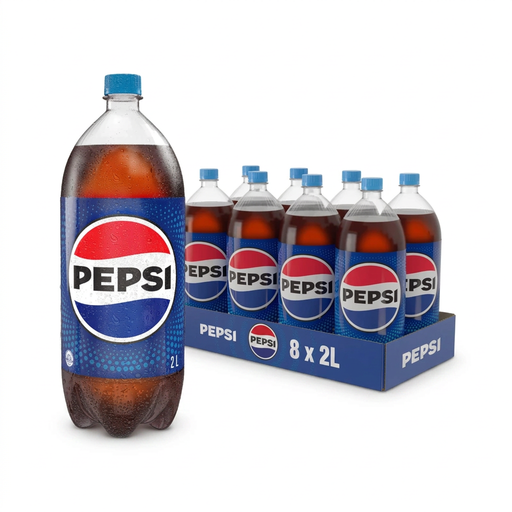
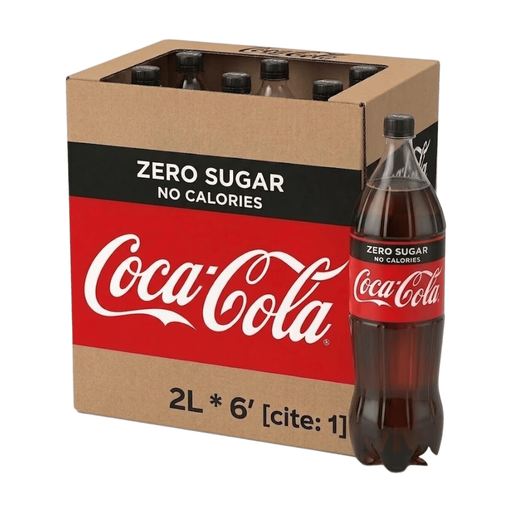
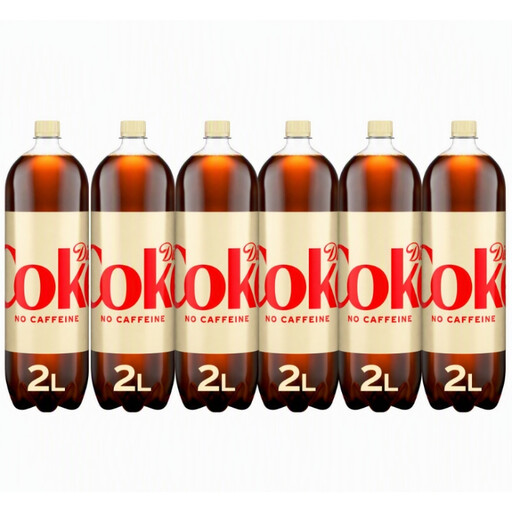
These multipacks include a regular cola to consider as measured supplementary carbohydrate and two zero-carbohydrate options to consider for flavour. Choose the formula before deciding whether a bottle belongs in your ride-fuelling plan.
 No image available
For measured supplementary carbohydrate when water and electrolytes are planned separately. The listed formula has 4.6g carbohydrate per 100ml; calculate your portion from the bottle label rather than using amounts for another cola.
 No image available
A cola-flavour option rather than a carbohydrate source: this product lists 0g carbohydrate and 0g sugars per 100ml. If your ride calls for carbohydrate, plan another source; do not treat this drink as an electrolyte replacement.
 No image available
A diet-cola option for flavour, not ride carbohydrate: it lists 0g carbohydrate and 0g sugars per 100ml. If caffeine content matters to you, check the pack label before buying rather than relying on the Caffeine Free name.
Do not rely on regular cola as your whole fluid and electrolyte plan. It can provide carbohydrate, but Coca-Cola GB lists 0g salt per 100ml for Original Taste, while British Cycling describes Team Sky riders using both water and an electrolyte drink during prolonged riding.
Coca-Cola GB lists 10.6g carbohydrate per 100ml for Original Taste, which works out to 26.5g in 250ml; Tesco lists 27g sugar per 250ml serving of its 2-litre bottle. For context, British Cycling gives 30–60g carbohydrate per hour as a rule of thumb for indoor rides over 90 minutes. Count other food and drink too, and plan fluids separately.
A formula listing 0g carbohydrate does not: Coca-Cola GB gives that value per 100ml for Coca-Cola Zero Sugar Zero Caffeine. If you choose it for flavour and need carbohydrate during your ride, take another source.
Not if you are calculating carbohydrate. Coca-Cola GB lists 10.6g per 100ml for Original Taste, whereas Pepsi UK and ASDA Groceries each list 4.6g per 100ml for their named regular colas. Use the label on the exact bottle to work out your portion.