Late-evening hosts
If the film ends close to bedtime, check for an explicit caffeine-free label. Zero sugar alone does not tell you whether a cola contains caffeine.


For a film that finishes close to bedtime, an explicitly caffeine-free cola is the clearer choice if avoiding caffeine matters. If the group wants no sugar but does not need to avoid caffeine, standard zero-sugar cola offers another option; choose regular cola when that recipe is what guests prefer. Check the exact pack for sugars, caffeine, sweeteners and after-opening storage instructions.
If the film ends close to bedtime, check for an explicit caffeine-free label. Zero sugar alone does not tell you whether a cola contains caffeine.
Compare sugars per 100ml across the exact variants on offer. A regular cola and its zero-sugar counterpart can have different nutrition and ingredient labels, even when they share a brand.
Consider whether guests want regular or zero-sugar cola, and whether anyone needs to avoid caffeine. Individual cans make it easier to offer separate variants; for a bottle, check how much the group expects to drink and how leftovers must be stored.
Start with the group’s flavour and caffeine preferences, then compare sugar labels and a pack format that suits the number of guests.
| Priority | What to check | Your needs |
|---|---|---|
| Flavour | Ask whether guests want a regular, zero-sugar or flavoured cola. Do not assume a different recipe will taste the same to everyone. | I would rather offer a cola the group wants to drink than choose a large pack on the strength of its label alone. |
| Sugars | Compare sugars per 100ml on the nutrition panels. Ocado’s UK Pepsi Regular listing states 4.5g per 100ml, while Coca-Cola GB lists 0g per 100ml for Coca-Cola Zero Sugar; those figures describe those variants, not every regular or zero-sugar cola. | If reducing sugar is important to me, I want to distinguish the exact recipes before choosing between regular and zero-sugar cans. |
| Caffeine | Look for an explicit caffeine-free label rather than relying on “zero sugar”. Pepsi UK identifies Pepsi Max Caffeine Free as containing no caffeine, while its standard Pepsi Max ingredient list includes caffeine. | For a film close to bedtime, I want a caffeine-free option for anyone avoiding caffeine. NHS Borders advises that caffeinated drinks can make people more awake and disrupt sleep. |
| Pack format | Check the bottle volume or can count against the number of guests. For a bottle, read the after-opening instructions: Sainsbury’s says to refrigerate its Cola Zero 2L after opening and use it within three days. | Individual cans would let us open different variants as needed; a sharing bottle suits us if we expect to use it and can store any remainder as directed. |
Coca-Cola GB lists caffeine flavouring in Coca-Cola Zero Sugar, and Pepsi UK lists caffeine in standard Pepsi Max. The sugar label does not settle a late-evening caffeine decision.
Choose a variant explicitly labelled caffeine-free when caffeine avoidance matters, and check the exact pack’s ingredients and warnings.
Ocado’s UK Pepsi Regular listing states 4.5g sugars per 100ml, whereas Coca-Cola GB lists 0g per 100ml for Coca-Cola Zero Sugar. The comparison depends on the variants and the same per-100ml measure.
Read the nutrition panel before deciding which recipe fits the group’s preferences.
A bottle may leave some cola after the film. Sainsbury’s instructs shoppers to refrigerate its Cola Zero 2L after opening and use it within three days.
Estimate how much the group will drink, then choose a bottle or individual cans accordingly. Follow the storage instructions on the pack you buy.
Ocado notes that the composition of the Pepsi Regular product it lists can vary in the EU. A familiar product name is not a substitute for the label on the pack in hand.
Check sugars, caffeine and any relevant ingredient warnings on the exact pack, particularly when comparing differently packaged variants.
Coca-Cola Original Taste and Coca-Cola Zero Sugar give shoppers two distinct recipe choices within the brand.
Pepsi Regular, Pepsi Max and Pepsi Max Caffeine Free address different sugar and caffeine preferences.
Sainsbury's Cola Zero offers an own-label 2L bottle for a group open to a different cola recipe.
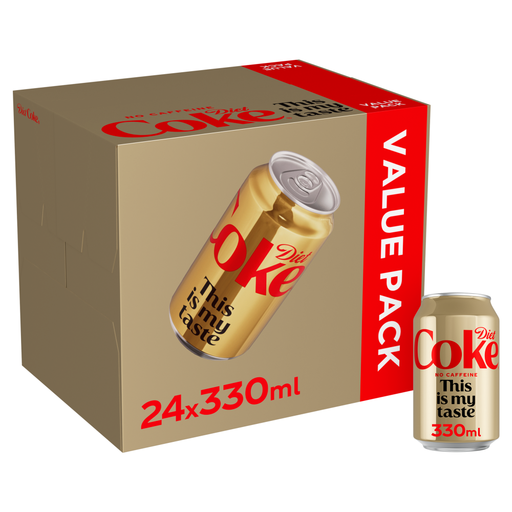
These cans cover No Caffeine and Caffeine Free variants alongside Original Taste and cherry-flavoured cola. Compare the exact pack when sugar, caffeine or ingredient warnings affect your choice.
 No image available
The No Caffeine variant is worth considering when guests want to avoid caffeine during a late film. The pack contains 24 individual 330ml cans; check its nutrition panel and ingredient warnings for other requirements.
 No image available
Pepsi UK identifies this variant as containing no sugar and no caffeine, a combination to consider for guests avoiding both. The pack contains 24 individual 330ml cans; check the ingredient warnings on the exact pack.
 No image available
For guests choosing a Coca-Cola zero-sugar variant, Coca-Cola GB lists 0g sugars per 100ml for Coca-Cola Zero Sugar. This pack contains 24 individual 330ml cans. Its ingredients include caffeine flavouring, so it does not meet a caffeine-free requirement.
 No image available
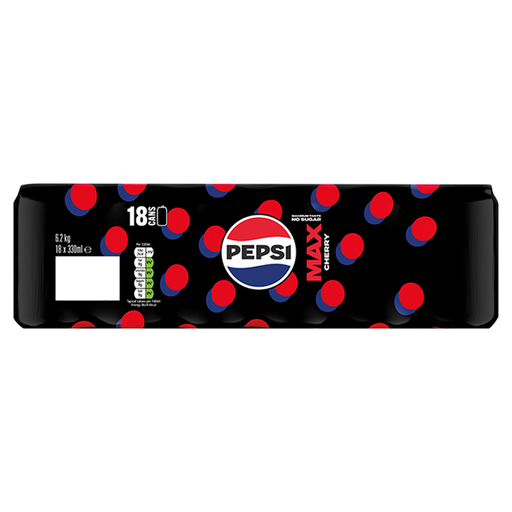
Choose the cherry variant if that flavour appeals to the group rather than assuming it will suit everyone who wants cola. The pack contains 18 individual 330ml cans; check its nutrition and ingredient labels if sugar or caffeine matters.
 No image available
This Original Taste pack is an option when guests specifically want regular Coca-Cola rather than a zero-sugar variant. It contains 24 individual 330ml cans; compare the exact pack’s sugar and caffeine information before serving it to guests with those preferences.
No. Coca-Cola GB lists caffeine flavouring in Coca-Cola Zero Sugar, and Pepsi UK lists caffeine in standard Pepsi Max. If caffeine avoidance matters, choose a variant explicitly labelled caffeine-free and check the exact pack.
Offer a caffeine-free choice if anyone wants to avoid caffeine late in the evening. NHS Borders advises that caffeinated drinks can make people more awake and disrupt sleep; a zero-sugar label alone does not establish that a cola is caffeine-free.
Compare sugars per 100ml on the exact packs, then check caffeine and sweeteners separately. Ocado’s UK Pepsi Regular listing states 4.5g sugars per 100ml, while Coca-Cola GB lists 0g per 100ml for Coca-Cola Zero Sugar; neither figure describes every cola in its category.
Follow the instructions on that bottle. Sainsbury’s says to refrigerate its Cola Zero 2L after opening and use it within three days, so consider the group’s expected servings before choosing a large bottle.