If you want cola alongside a pre-workout snack without adding the sugar in regular cola, compare zero-sugar cans and check whether the exact variant contains caffeine. Treat the drink as separate from the food: the British Dietetic Association describes a low-fat, high-carbohydrate snack or light meal 2 to 3 hours before exercise, while the NHS identifies water as a straightforward hydration choice.
Who is this choice for?
A cola multipack is a drink-format decision, not a substitute for deciding what to eat before exercise.
Adults pairing a can with food
A 330ml can can sit alongside a separately chosen snack or light meal. The British Dietetic Association describes a low-fat, high-carbohydrate snack or light meal 2 to 3 hours before exercise; the cola is not that food.
Shoppers keeping track of caffeine
If coffee, tea, energy drinks or pre-workout products are also part of the day, check the exact cola label before adding another source of caffeine. An explicitly caffeine-free variant is a different choice from a cola labelled only zero sugar.
Households choosing a case size
Retailer listings show 6-, 8- and 24-can formats. Consider how many cans you can store and expect to use before the best-before date rather than choosing by case size alone.
What should you check before choosing?
Decide what food and drink you want for the occasion, then compare the cola’s sugar, caffeine and pack format on the exact label.
| Priority | What to check | Your needs |
|---|
| Food alongside the drink |
Plan the food separately. The British Dietetic Association describes a low-fat, high-carbohydrate snack or light meal 2 to 3 hours before exercise. |
I want a can alongside something to eat, rather than treating cola as the snack. |
| Hydration |
Consider what else you will drink. The NHS identifies water as a straightforward hydration choice and notes that other drinks can also count towards fluid intake. |
I want my choice of cola to fit alongside, rather than define, my wider drink plan. |
| Sugar per can |
Read the nutrition panel for the exact variant and serving. Coca-Cola GB lists 10.6g sugars per 100ml for Original Taste; Pepsi UK lists 0g per 330ml Pepsi Max can, and an Asda listing gives 0g per 330ml Coca-Cola Zero Sugar can. |
If I do not want the sugar in regular cola, I can compare zero-sugar variants without assuming every product bearing the same brand has the same formulation. |
| Caffeine |
Check whether the exact can contains caffeine and read any stated amount per serving. Include other caffeinated drinks and products when considering the day’s intake. |
After coffee or another caffeinated product, I may prefer a cola explicitly labelled caffeine-free; zero sugar alone does not tell me that. |
| Pack format |
Compare can volume, number of cans, storage space and best-before date. Tesco lists an 8 x 330ml Xero Cola pack, Sainsbury’s lists a 6 x 330ml Cola Zero pack, and an Asda listing shows Coca-Cola Zero Sugar in 24 x 330ml cans. |
A smaller pack may fit my storage or rate of use better than a 24-can case, even when the individual cans are the same size. |
Common buying mistakes
-
Using cola as the whole snack
Cola does not provide the snack or light meal described in the British Dietetic Association’s pre-exercise guidance. The drink choice also does not settle what else you will drink.
Choose the food separately, and consider water as part of your drink plan.
-
Overlooking caffeine from elsewhere
A caffeine-containing cola adds to caffeine from other drinks or pre-workout products. A zero-sugar label does not establish that the cola is caffeine-free.
Read the exact can label and account for other caffeine sources; if you want to avoid caffeine in the cola, look for an explicit caffeine-free label.
-
Treating regular and zero-sugar cola as equivalent
Coca-Cola GB lists 10.6g sugars per 100ml for Original Taste, whereas Pepsi UK lists 0g per 330ml Pepsi Max can and an Asda listing gives 0g per 330ml Coca-Cola Zero Sugar can.
Compare the nutrition panels for the precise flavours and variants you are considering.
-
Choosing a case without checking its size
Listings for 6, 8 and 24 cans represent substantially different quantities, even when each can holds 330ml. A larger case also needs more storage space.
Check the can count, where the case will go and whether you expect to use it before the best-before date.
Brand and own-label references
These examples distinguish particular formulations and pack formats; a brand name alone does not establish the sugar or caffeine content of every variant.
Coca-Cola
Compare Original Taste with Zero Sugar by the exact can label, rather than assuming they have the same sugar content.
- Coca-Cola GB lists 10.6g sugars per 100ml for Original Taste. An Asda listing gives 0g per 330ml can for Coca-Cola Zero Sugar in a 24-can pack.
- The Asda Zero Sugar listing includes caffeine flavouring; the sugar figure does not mean the drink is caffeine-free.
Pepsi
Pepsi Max is a zero-sugar formulation to compare by its own label, not a description of every Pepsi cola.
- Pepsi UK lists 0g sugars per 330ml Pepsi Max can.
- For caffeine decisions, check the precise Pepsi variant and its label rather than relying on the Pepsi Max sugar figure.
RC Cola
RC Cola International describes an RC Double Caffeine product, which makes the exact formulation particularly important to check.
- Do not treat that product description as the specification for a UK multipack of cans; check the actual pack and label before comparing it with other colas here.
Tesco
Tesco Xero Cola offers an 8 x 330ml own-label can format for shoppers considering fewer cans than a 24-pack.
- Tesco Groceries lists the 8 x 330ml pack.
- Check its product label for the nutrition and caffeine details needed to compare it with another zero-sugar cola.
Sainsbury's
Sainsbury's Cola Zero is listed as a smaller, 6 x 330ml own-label can pack.
- Sainsbury's lists less than 0.5g sugars per can for this pack.
- Its listed ingredients include caffeine, so check the label if caffeine is part of your decision.
Asda
Asda’s own-label Cola Zero example is a 2-litre bottle, a different format from the multipack cans considered here.
- Asda lists less than 0.5g sugars per 250ml for that bottle.
- Its ingredients include caffeine, and the bottle should not be mistaken for an own-label can multipack.
Cola multipacks on Joybuy
These 24 x 330ml cases offer caffeine-free and other diet-labelled cola variants to consider alongside a separately chosen snack. Check each exact pack label for the sugar and caffeine details that matter to you.
 No image available
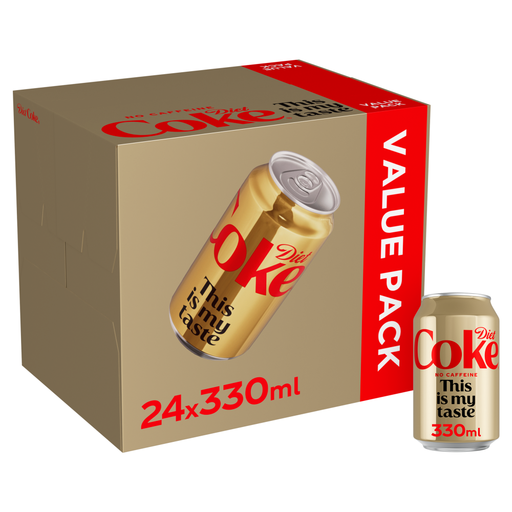
Diet Coke No Caffeine 24 x 330ml
A caffeine-free cola option to have alongside, rather than instead of, a snack. The case contains 24 cans of 330ml; check the exact label for its sugar information if that is also part of your choice.
View on Joybuy
 No image available
Pepsi Max Caffeine Free 24 x 330ml
Consider this caffeine-free variant if you want a can of cola alongside food without adding caffeine from the drink. It comes in a case of 24 x 330ml cans; read this variant’s nutrition label rather than assuming it matches another Pepsi Max product.
View on Joybuy
 No image available
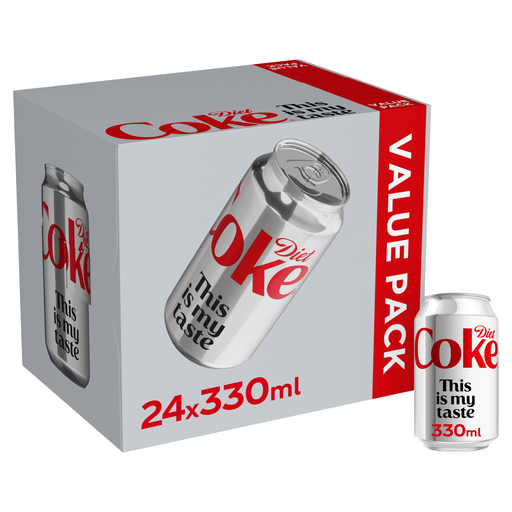
Coca-Cola Diet Coke 24 x 330ml
This Diet Coke case provides individual cans to have alongside a separately planned snack. Check the sugar and caffeine information on the exact 330ml can, particularly if you also use other caffeinated products.
View on Joybuy
 No image available
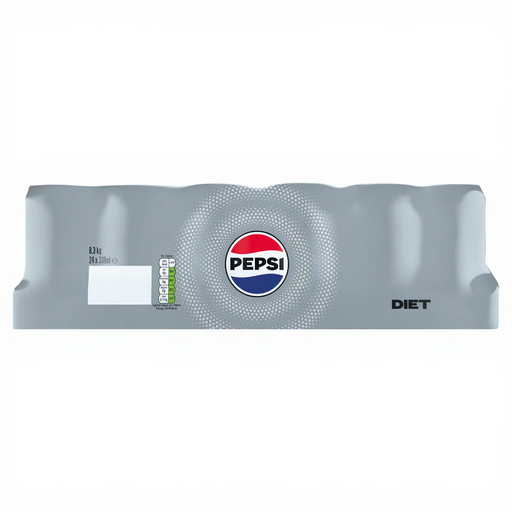
Pepsi Diet 24 x 330ml
Choose the 24-can format if that quantity fits your storage and use alongside separately chosen food. Read this Diet Pepsi variant’s nutrition and caffeine information before comparing it with regular Pepsi or another diet cola.
View on Joybuy
 No image available
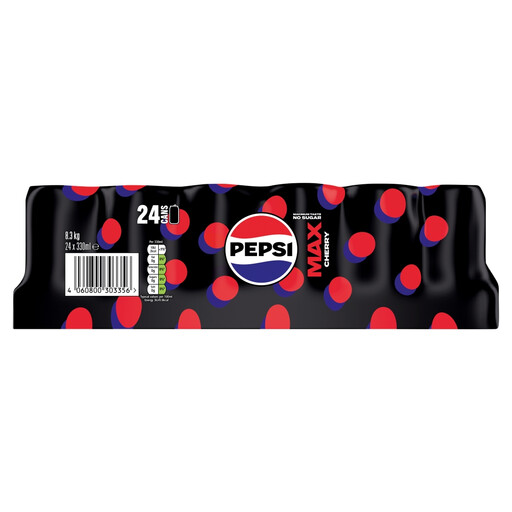
Pepsi Max Cherry 24 x 330ml
The cherry variant is a distinct flavour choice for a can alongside food. This case contains 24 x 330ml cans; check this variant’s sugar and caffeine information rather than relying on figures for standard Pepsi Max.
View on Joybuy
Questions about cola and pre-workout snacks
Can cola be the pre-workout snack on its own?
Treat cola as a drink alongside food, not as the snack. The British Dietetic Association describes a low-fat, high-carbohydrate snack or light meal 2 to 3 hours before exercise; the NHS identifies water as a straightforward hydration choice.
What changes when I choose zero-sugar instead of regular cola?
The sugar contribution can change substantially, but the choice does not establish an exercise-performance benefit. Coca-Cola GB lists 10.6g sugars per 100ml for Original Taste, while Pepsi UK lists 0g per 330ml Pepsi Max can and an Asda listing gives 0g per 330ml Coca-Cola Zero Sugar can. Check the exact variant you intend to drink.
How do I account for caffeine in a can of cola?
Check the exact can label and consider it alongside caffeine from coffee, tea, energy drinks or pre-workout products consumed that day. Do not use a brand name or a zero-sugar claim to assume a caffeine amount.
Does zero sugar mean the cola is caffeine-free?
No. Sainsbury's lists caffeine among the ingredients of its Cola Zero cans, and Asda does the same for its Cola Zero bottle. Look for an explicit caffeine-free statement on the precise variant if you do not want caffeine from the cola.


