Recreational 5k runners planning ahead
If you can eat before a short run, UK Sports Institute guidance suggests a carbohydrate-based breakfast rather than assuming you need a sports drink. You can sip water during the run if needed.


For a typical 5k, do not buy a cola multipack as your planned fuel or hydration: UK Sports Institute guidance points to eating beforehand when possible and sipping water if needed. If you want cola for another occasion, choose between regular, zero-sugar and explicitly caffeine-free cans according to the sugar and caffeine you intend to have; none is a substitute for a pre-run food plan.
The important distinction is whether you are planning what to eat and drink for the run or buying cola to enjoy separately.
If you can eat before a short run, UK Sports Institute guidance suggests a carbohydrate-based breakfast rather than assuming you need a sports drink. You can sip water during the run if needed.
A multipack may suit a preference for individual cans at home. Decide on the regular, zero-sugar or caffeine-free variant separately from your plans for eating and drinking around the run.
If caffeine matters to you, check for an explicitly caffeine-free variant. NHS guidance also advises pregnant people not to have more than 200 mg of caffeine a day from all sources.
Settle the run-fuelling and fluid questions first; then compare cola labels for drinks you want at another time.
| Priority | What to check | Your needs |
|---|---|---|
| Food before running | Consider when you can eat and which carbohydrate-containing food you tolerate. UK Sports Institute guidance suggests breakfast when time allows and a banana if breakfast was missed; it notes that eating times vary between people. | I want a workable plan for a short run, rather than buying cola on the assumption that I need a fizzy drink for fuel. |
| Fluids | Plan access to water. UK Sports Institute says you can sip it during a short run if needed; the NHS identifies water as the best way to replace fluids after sweating from physical activity. | After a sweaty run, I want to replace fluid without relying on regular cola as my hydration plan. |
| Sugars per can | Compare the nutrition panel for the exact variant. Tesco lists 35 g sugars and 139 kcal per 330 ml can of Coca-Cola Original Taste, versus 0 g sugars per 330 ml can of Coca-Cola Zero Sugar and Pepsi Max. | If I want cola outside the run, I can choose whether I want regular cola or a zero-sugar version. A zero-sugar can does not provide carbohydrate fuel for my 5k. |
| Caffeine | Look for explicit “No Caffeine” or “Caffeine Free” wording and check the ingredients. Tesco lists caffeine-related ingredients for standard Coca-Cola Zero Sugar and Pepsi Max; a zero-sugar label alone does not establish that a drink is caffeine-free. | I would choose a clearly labelled caffeine-free variant if I am avoiding caffeine, rather than assuming every zero-sugar cola meets that need. |
| Pack format | Check the number of cans and volume per can before comparing multipacks. Tesco lists several 24 × 330 ml variants, while American Fizz lists an imported RC Cola pack of 12 × 355 ml. | I want to know how many cans I am buying and their size, especially when comparing a specialist pack with a 24-can option. |
UK Sports Institute guidance for a short run discusses food beforehand and water if needed. The NHS recommends water to replace fluid after sweating and advises against having high-sugar drinks too often.
Make a food and water plan for the run first. Choose regular cola separately if you want its taste and sugar content.
Tesco lists caffeine-related ingredients for standard Coca-Cola Zero Sugar and Pepsi Max. A zero-sugar label therefore does not answer the caffeine question for those products.
Choose a variant explicitly labelled caffeine-free or no caffeine, and check the current can label before drinking it.
American Fizz lists an imported RC Cola pack of 12 × 355 ml cans, whereas the Tesco cola variants discussed here are 24 × 330 ml packs. The can count and size differ.
Check the pack quantity, can volume, country of manufacture and nutrition panel for the particular product you intend to buy.
Brand names alone do not settle the choice: compare the labelled variant and pack format.
Tesco lists 24 × 330 ml multipacks of Coca-Cola Original Taste and Coca-Cola Zero Sugar, as well as a separate Diet Coke No Caffeine variant.
Tesco lists Pepsi Max No Sugar in a 24 × 330 ml pack and separately lists a Pepsi Max No Caffeine No Sugar 24-can variant.
RC Cola International describes a carbonated-drinks range. American Fizz lists an imported RC Cola pack containing 12 × 355 ml cans.
These individual-can multipacks cover caffeine-free, standard zero-sugar and regular cola choices for times away from the 5k; choose your run food and water separately.
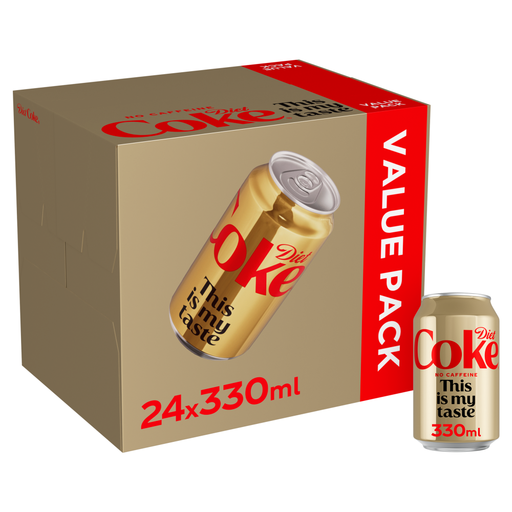 No image available
A 24-can option for enjoying cola away from the run when avoiding caffeine. Check the current can label for sugars and ingredients; the caffeine-free name does not make it a 5k fuelling drink.
 No image available
A caffeine-free Pepsi Max multipack for drinking separately from your run. It contains 24 cans of 330 ml; check the current nutrition and ingredient labels for the exact variant.
 No image available
For a zero-sugar cola preference away from the run, rather than carbohydrate fuel for it. Tesco lists 0 g sugars per 330 ml can of this standard Pepsi Max variant and caffeine-related ingredients; choose a separately labelled caffeine-free version if needed.
 No image available
For someone intentionally choosing regular cola to drink away from running, not as a default hydration plan. Tesco lists 35 g sugars and 139 kcal per 330 ml can, with caffeine-related ingredients; the NHS advises against having high-sugar drinks too often.
 No image available
For a zero-sugar cola preference away from the run, not for carbohydrate fuel. Tesco lists 0 g sugars per 330 ml can and caffeine flavouring for standard Coca-Cola Zero Sugar, so check the variant if avoiding caffeine.
Do not make cola your planned fuel for a typical short run. UK Sports Institute guidance suggests a carbohydrate-based breakfast when time allows, or a banana if breakfast was missed; it says a carbohydrate sports drink is probably unnecessary after such a breakfast and that you can sip water if needed.
The standard Coca-Cola Zero Sugar and Pepsi Max 24-can variants listed by Tesco each contain 0 g sugars per 330 ml can, so do not choose them to provide sugar for the run. They may instead fit a preference for cola at another time, provided their caffeine content suits you.
Look for an explicitly labelled no-caffeine or caffeine-free variant and check the can’s ingredients. Tesco lists a Pepsi Max No Caffeine No Sugar 24 × 330 ml pack, while its standard Pepsi Max and Coca-Cola Zero Sugar listings contain caffeine-related ingredients.
The NHS identifies water as the best way to replace fluids lost through physical activity. Regular cola contributes fluid, but the NHS also advises against having high-sugar drinks too often; choose it for taste rather than as your post-run hydration plan.
No: a caffeine-free cola only addresses caffeine from that drink. NHS guidance advises pregnant people not to have more than 200 mg of caffeine a day, so consider intake from other drinks and foods too, and check that the cola variant is explicitly labelled caffeine-free.