
24/7 Customer Support

Free returns

Same-day & Next-day Delivery

Quality Guaranteed

Unlock Your Welcome Offers: FREE Delivery | Up to 80% OFF | Free 30-day JoyPlus trial
Download the APP
Buying cola multipacks can look straightforward, but pack size, caffeine content and sweetener choices can make a noticeable difference to the suitability and overall value of your purchase. A smaller pack may cost less at checkout but run out quickly, while a large case may be inconvenient if you have limited cupboard space or do not drink cola regularly.
This guide explains what to check before buying, including regular cola, zero sugar cola, diet cola multipacks and caffeine-free options.
Many sugar-free soft drinks still contain caffeine. Coca-Cola Zero Sugar, Diet Coke and Pepsi Max generally include caffeine unless the product is specifically labelled as caffeine-free. If you are buying drinks for evening use, children or anyone avoiding caffeine, check the ingredients list rather than relying on the words “diet” or “zero”.
For a caffeine-free option, look for a product such as Diet Coke No Caffeine or Pepsi Max Caffeine Free.
An 8-pack, 12-pack, 18-pack and 24-pack may all contain standard 330ml cola cans, but the price per can can vary. Large bottles also need a different comparison: six 2-litre bottles contain considerably more drink than a case of cans, but they are less convenient for individual servings and lose carbonation after opening.
To compare fairly, divide the total price by the number of cans or total litres. Also consider waste: buying bulk soft drinks only saves money if the household will use them before the best-before date and the packaging can be stored safely.
Regular cola contains sugar, while zero sugar and diet versions use sweeteners. The exact blend varies between products. Some cans also contain a source of phenylalanine due to aspartame. Always read the current packaging, particularly if you have a relevant dietary requirement or intolerance.
330ml cans are practical for lunch, office fridges, student accommodation and parties because each can is ready to serve and does not need to be shared. They are also easy to distribute at barbecues or family gatherings.
Large 2-litre bottles can suit households that pour drinks with meals, but opened bottles should be refrigerated and consumed promptly to help retain carbonation. Check that your fridge door or cupboard has enough space before ordering a multi-bottle case.
Regular canned cola contains sugar and energy. For example, the listed Coke Regular 12-pack provides 10.6g of sugar and 42kcal per 100ml. Zero sugar and diet cola multipacks listed here provide zero sugar, with approximately 1–2 calories per 330ml can, depending on the product.
Sugar-free does not mean caffeine-free. Check for caffeine in the ingredients and compare the nutrition panel per serving rather than only per 100ml.
Caffeine content is important when choosing soft drinks for evening meals or a mixed-age household. The Pepsi Max Caffeine Free 24 X 330ml and Diet Coke No Caffeine 24 X 330ml listings are formulated without caffeine, while several standard zero sugar and diet cola products contain it.
Many products in this range are suitable for vegans or vegetarians, but the formulation can differ. Products containing aspartame carry a source of phenylalanine, so the label should always be checked before consumption.
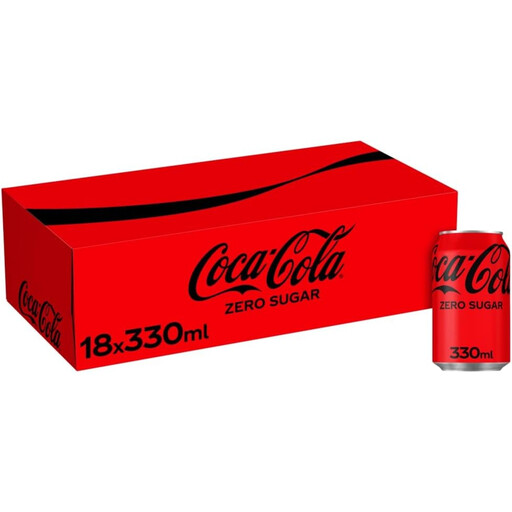
Why This Fits Their Persona: An 18-can format gives regular drinkers a substantial cupboard supply without moving to large bottles.
The pack size makes it easier to calculate the cost per can, while the product listing clearly states zero sugar and zero calories.
18 individual 330ml cans; zero sugar; listed as suitable for vegans and vegetarians.
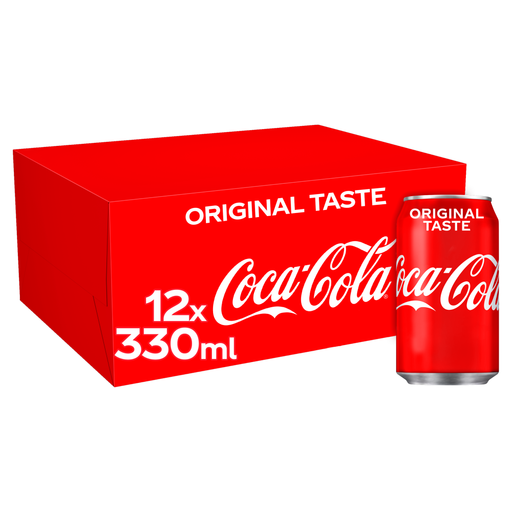
Why This Fits Their Persona: Suits shoppers who specifically want the traditional sugared cola flavour in single-serve cans for meals and social occasions.
The nutrition panel makes the sugar and calorie content visible, avoiding confusion between regular cola and sugar-free soft drinks.
12 x 330ml cans; ready to serve; suitable for vegetarians and vegans according to the listing.

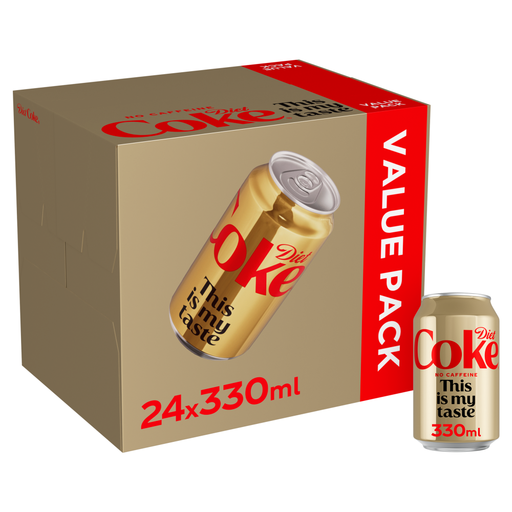
Why This Fits Their Persona: A 24-can case is practical for offices, parties, shared households and shoppers who want caffeine-free cola available throughout the day.
The product is explicitly labelled caffeine-free, avoiding the common mistake of treating every zero sugar cola as a caffeine-free drink.
24 x 330ml cans; zero sugar; approximately 2 calories per can; listed as suitable for vegetarians.
Why This Fits Their Persona: Designed for shoppers who want diet cola multipacks without caffeine, including households that serve soft drinks later in the day.
Its name and ingredient information identify the absence of caffeine, while the nutrition panel shows zero sugar and zero calories.
24 x 330ml cans; caffeine-free formulation; suitable for vegans and vegetarians according to the listing.
If you prefer Coca-Cola Zero Sugar cans, several pack formats are available, including 4 x 250ml, 8 x 330ml, 12 x 330ml, 18 x 330ml and larger two-case bundles. Diet Coke is also available in 8-, 12-, 18- and 24-can formats. Choosing between them depends on fridge capacity, serving habits and how frequently your household buys canned cola drinks.
For parties, compare the number of individual servings rather than relying only on the outer pack size. Cans reduce the need for cups and help guests serve themselves, while 2-litre bottles can be more suitable when drinks are poured with meals.
We have compiled a complete, real-time list of products that fully satisfy these strict selection criteria and UK safety regulations.
They can offer a lower cost per can, but this depends on the listed price and any delivery or promotional charges. Divide the total price by the number of cans before ordering. A larger pack is only economical if it will be consumed within its storage period.
Keep unopened cans in a cool, dry place away from direct sunlight and heat. Do not use cans that are leaking, swollen or badly damaged. Check the best-before information on the packaging and chill before serving.
Look specifically for “caffeine-free” or “no caffeine” on the product name and ingredients. The Pepsi Max Caffeine Free 24 X 330ml and Diet Coke No Caffeine 24 X 330ml listings are designed for this requirement. Regular diet cola and zero sugar cola may still contain caffeine, so always check the latest label before consumption.