Choose the drink before the case size: regular-sugar cans suit a household that wants that particular recipe, zero-sugar cans offer another option when reducing sugar is the priority, and caffeine avoidance calls for a product explicitly labelled caffeine-free. Check the exact can’s ingredients and nutrition information, then match the flavour, can size and pack count to what the household will use.
Who these packs suit
Households choosing how much sugar to keep in the fridge
Individual cans make it straightforward to check the sugar figure for one serving. Compare the exact labels before choosing a case: regular and zero-sugar versions of a drink can differ substantially.
Cola drinkers who need to avoid caffeine
Choose a variant explicitly labelled caffeine-free. A zero-sugar label alone does not tell you whether a cola contains caffeine.
Weekly shoppers buying for different flavour preferences
Consider who will drink each flavour before committing to a large case. A smaller, flavour-specific pack may be more practical when only a few people want that drink.
What to check before choosing
Settle the flavour, sugar and caffeine requirements first; then check the label and choose a pack count that fits likely use.
| Priority | What to check | Your needs |
|---|
| Sugar per can |
Compare sugars for the same can volume on the exact nutrition panels. Joybuy lists 35 g per 330 ml for Coca-Cola Original Taste and 0 g per 330 ml for Coca-Cola Zero Sugar; those figures do not apply to other colas. |
I want to know how much sugar is in one can before deciding whether this is a drink to stock regularly. The NHS advises keeping both the amount and frequency of sugary foods and drinks as low as possible. |
| Caffeine |
Look for explicit caffeine-free wording and check the selected variant. Pepsi UK describes Pepsi Max Caffeine-Free as containing zero caffeine; standard Pepsi Max and Coca-Cola Zero Sugar product information lists caffeine. |
If someone in the household avoids caffeine, I need the caffeine-free version, not just a can marked zero sugar. |
| Pack quantity |
Check the number of cans and millilitres per can to establish the total volume. Match the quantity to storage space and expected use. |
A 24-can case makes sense for us only if enough people will drink that flavour; otherwise I would consider a smaller pack. |
| Ingredients |
Read the ingredients and any phenylalanine statement on the exact pack. Sweeteners and flavourings can differ between zero-sugar cola and fruit-flavour drinks. |
I need to check a particular ingredient rather than assume every drink labelled zero sugar uses the same recipe. |
| Flavour |
Choose between cola, orange, lemon-lime and other flavours before settling on a case size. Tesco Groceries lists flavour-specific packs in different can counts. |
When shopping for several people, I would rather choose flavours they will drink than rely on one large case to suit everyone. |
Common multipack mistakes
-
Choosing the largest case before the drink type
A large case keeps that drink readily available at home. For regular-sugar drinks, the amount per can and likely frequency of use both matter; the NHS advises keeping the amount and frequency of sugary foods and drinks as low as possible.
Choose the recipe first, check its per-can label, and then pick a quantity the household is likely to use.
-
Assuming zero sugar means no caffeine
Standard Pepsi Max and Coca-Cola Zero Sugar product information lists caffeine, while Pepsi describes Pepsi Max Caffeine-Free as a separate caffeine-free variant.
When caffeine avoidance matters, look for explicit caffeine-free wording on the selected pack.
-
Treating all zero-sugar flavours as interchangeable
Cola and fruit-flavour drinks can have different sweeteners, flavourings and nutrition figures. Joybuy’s Fanta Orange Zero Sugar listing, for example, states 0.4 g sugars per 100 ml.
Check the ingredients and nutrition panel for the exact flavour before choosing a large pack.
Brands and drink ranges to compare
These examples show different flavour and label options; a brand name alone does not establish the ingredients of every variant.
Coca-Cola
Original Taste and Zero Sugar offer two cola recipes in 24 × 330 ml packs listed by Joybuy.
- Joybuy lists 35 g sugars per 330 ml for Original Taste and 0 g for Zero Sugar.
- Both listed variants contain caffeine; Zero Sugar is not the caffeine-free choice.
Pepsi
Pepsi UK provides product information for Classic, Max and the separately named Max Caffeine-Free.
- Pepsi UK lists 15 g sugars per 330 ml for Classic and 0 g per 330 ml for Max, and describes Max Caffeine-Free as having zero sugar and zero caffeine.
- Do not substitute standard Pepsi Max when a caffeine-free variant is required.
Fanta
Orange and other fruit-flavour packs provide an alternative to cola.
- Tesco Groceries lists Fanta Zero Orange cans in an 8 × 330 ml pack.
- Check the exact flavour’s label: Joybuy’s Fanta Orange Zero Sugar listing states 0.4 g sugars per 100 ml and names several sweeteners.
Sprite
A lemon-lime option for shoppers who do not want cola or orange flavour.
- Tesco Groceries lists Sprite Zero Sugar in an 8 × 330 ml pack.
- Check the ingredients and can count of the particular pack rather than applying one listing to every Sprite variant.
Dr Pepper
A distinct flavour with regular and Zero multipack listings.
- Tesco Groceries lists both Dr Pepper and Dr Pepper Zero as 8 × 330 ml packs.
- Select the intended variant and check its own ingredients and nutrition panel.
Tesco
Own-label lemonade and lemon-lime cans add flavour options alongside branded packs.
- Tesco Groceries lists Diet Lemonade and Lemon & Lime Zero in 6 × 330 ml packs.
- Compare the chosen drink’s label and pack quantity with the branded variant under consideration.
Joybuy multipack cans
These 24 × 330 ml cases cover regular cola, zero-sugar cola, labelled caffeine-free cola and sugar-free apple flavour. Check the particular variant before treating a sugar-free drink as caffeine-free.
 No image available
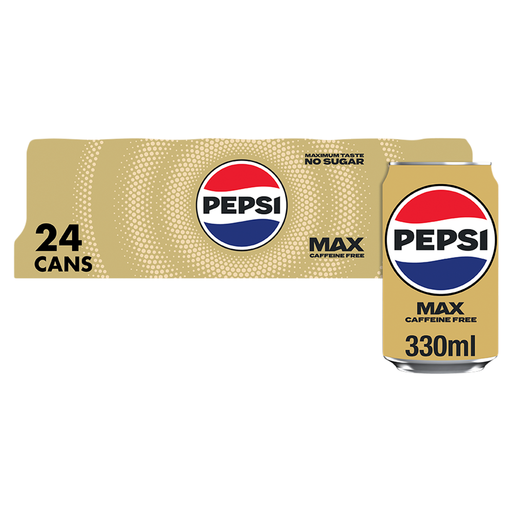
Pepsi Max Caffeine Free 24 × 330 ml
A cola option when the household wants a specifically labelled caffeine-free variant. Pepsi UK describes Pepsi Max Caffeine-Free as containing zero caffeine and zero sugar; check the selected pack’s ingredient statements.
View on Joybuy
 No image available
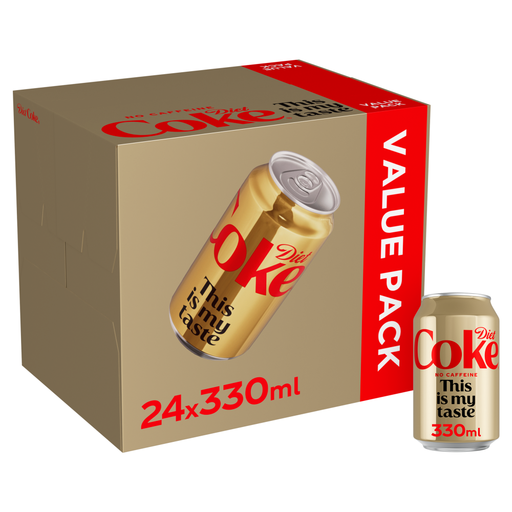
Diet Coke No Caffeine 24 × 330 ml
A 24-can Diet Coke variant labelled No Caffeine. Check the selected pack’s nutrition panel and ingredients for any other requirements in the household.
View on Joybuy
 No image available
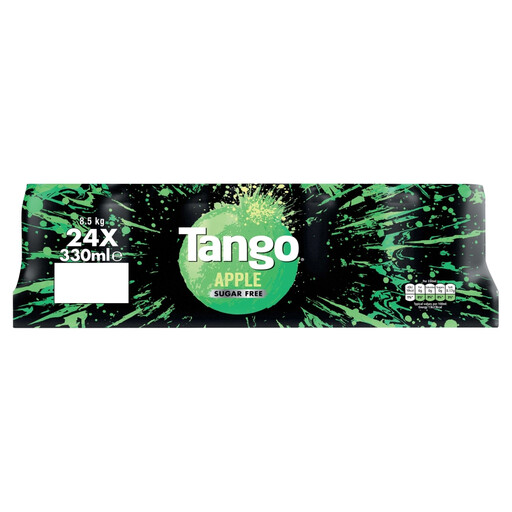
Tango Apple Sugar-Free 24 × 330 ml
An apple-flavour alternative for households that prefer fruit flavours to cola. The title identifies it as sugar-free; check the exact ingredients and caffeine information if either matters to you.
View on Joybuy
 No image available
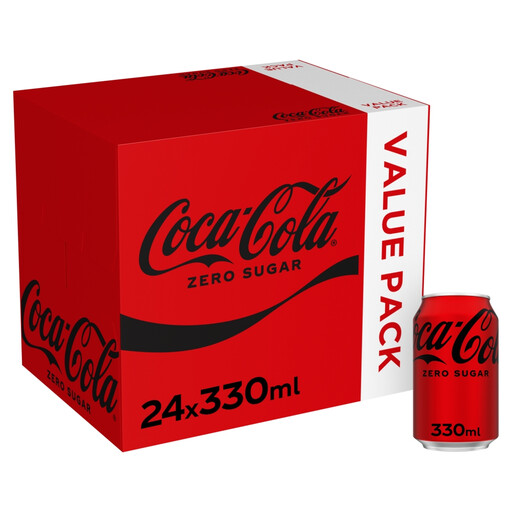
Coca-Cola Zero Sugar 24 × 330 ml
For a household choosing this cola flavour while avoiding the sugar in Original Taste. Joybuy lists 0 g sugars per 330 ml can; its ingredient information includes caffeine, so it is not a caffeine-free variant.
View on Joybuy
 No image available
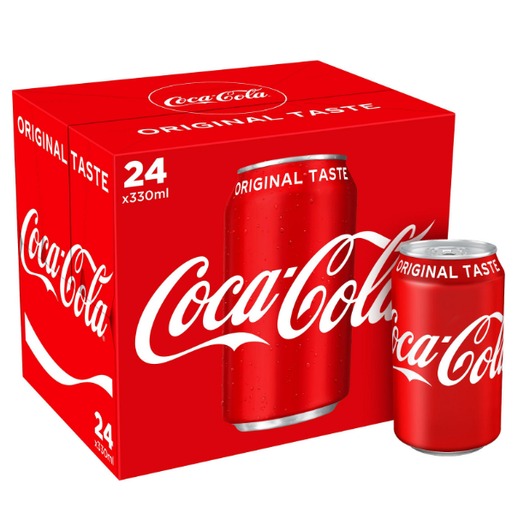
Coca-Cola Original Taste 24 × 330 ml
For households that specifically want the regular Original Taste recipe. Joybuy lists 35 g sugars per 330 ml can and caffeine in the ingredients; consider the pack count alongside how often it is likely to be drunk.
View on Joybuy
Frequently asked questions
How do I compare an 8-pack with a 24-pack?
Multiply the can count by the volume of each can to compare total drink volume, then consider how much of that flavour the household is likely to use. An 8 × 330 ml pack contains fewer servings than a 24 × 330 ml case, even though the cans are the same size.
Does zero sugar mean caffeine-free?
No. Pepsi UK describes Pepsi Max Caffeine-Free as a separate zero-caffeine, zero-sugar variant, while standard Pepsi Max and Coca-Cola Zero Sugar product information lists caffeine. Choose a pack explicitly labelled caffeine-free if that distinction matters.
Should I check ingredients on a familiar zero-sugar drink?
Yes, check the exact variant when an ingredient matters to someone in the household. Sweetener combinations vary between drinks, and some zero-sugar cola labels include a source-of-phenylalanine statement.
Will every can have a traffic-light nutrition label?
Do not rely on traffic-light colours being present. UK government front-of-pack guidance describes a scheme combining colour coding and percentage reference intakes; use the nutrition information and ingredient list on the exact product to compare drinks.
What should I do with empty drinks cans?
Recycle Now advises emptying and rinsing drinks cans. Check your local collection or recycling-point arrangements for where to put them.


