Hosts serving guests with different preferences
A regular cola, a zero-sugar cola and, where relevant, a caffeine-free option cover different recipe preferences. Check each pack rather than assuming that one variety meets all three.


For a mixed Christmas-party group, offer regular and zero-sugar cola rather than expecting one recipe to suit everyone; add a caffeine-free option if that distinction matters to your guests. Cans suit individual servings, while 2L bottles suit drinks poured into glasses but need a plan for opened leftovers. Check the exact recipe: zero sugar does not necessarily mean caffeine-free.
A regular cola, a zero-sugar cola and, where relevant, a caffeine-free option cover different recipe preferences. Check each pack rather than assuming that one variety meets all three.
Several listed colas declare 0g sugars per 100ml. Their caffeine, sweeteners and phenylalanine statements still differ, so choose by the exact product label.
A 2L bottle is an alternative to individual cans when guests will pour their drinks. Plan how to refrigerate and use any cola left after opening.
Choose the recipes your guests are likely to want, then decide whether individual cans or shared bottles fit the serving setup.
| Priority | What to check | Your needs |
|---|---|---|
| Regular or zero sugar | Compare sugars per 100ml on the exact recipe. Coca-Cola GB lists 10.6g for Original Taste; Pepsi UK lists 4.5g for its regular cola and 0g for Pepsi Max. | I would like guests to have a choice between a regular recipe and one with 0g sugars per 100ml. |
| Caffeine | Read the product name and ingredients; a zero-sugar label is not a caffeine-free claim. Pepsi UK lists caffeine in Pepsi Max, while Coca-Cola GB describes Zero Sugar Caffeine Free as without caffeine. | Some guests may want to avoid caffeine, so I need a separately labelled caffeine-free drink if that applies to this group. |
| Ingredients | Check sweeteners and any phenylalanine statement on the current pack. Pepsi Max and Coca-Cola Zero Sugar Caffeine Free list sweeteners and a source of phenylalanine on their respective brand pages. | If a guest needs to check particular ingredients, I want the exact packs available for them to read. |
| Serving format | Compare 330ml cans with 2L bottles according to how drinks will be served. Tesco Diet Cola and Sainsbury’s Cola are 2L bottle examples. | Will guests take individual cans, or will drinks be poured into glasses at a serving table? |
| Opened bottles | Check storage instructions on the bottle. Tesco and Sainsbury’s say to refrigerate their named 2L colas after opening and use them within 3 days. | If I open large bottles, I need fridge space and a realistic plan for what remains. |
Regular and zero-sugar varieties have different recipes. Coca-Cola GB lists 10.6g sugars per 100ml for Original Taste, while Pepsi UK lists 0g for Pepsi Max.
If preferences are uncertain, offer a clearly labelled zero-sugar option alongside regular cola.
Pepsi Max contains caffeine; Coca-Cola Zero Sugar Caffeine Free is a distinct product described by Coca-Cola GB as without caffeine.
Check caffeine wording on the exact pack before relying on it for a guest avoiding caffeine.
Tesco and Sainsbury’s instruct shoppers to refrigerate their named 2L colas after opening and use them within 3 days.
Choose bottles when pouring into glasses works for the party, and check that opened bottles will fit in the fridge.
Department of Health & Social Care guidance concerns promotion and placement restrictions for certain products sold by affected businesses in England. The Department for Education’s school food framework is separate and applies to food provided by schools in England.
For a school-provided event in England, ask the school or caterer to check the drinks against the applicable school food standards; do not use retail promotion guidance as a substitute.
These examples show recipe and pack-format differences; a brand name alone does not tell you the sugar or caffeine content of every variety.
The named range includes Original Taste and a distinct Zero Sugar Caffeine Free recipe, according to Coca-Cola GB.
Pepsi UK lists regular Pepsi and Pepsi Max as different cola recipes.
Tesco Diet Cola is a 2L own-label bottle for drinks served in glasses.
Sainsbury’s Cola is a regular own-label option in a 2L bottle.
Asda lists Just Essentials Diet Cola in a 2L bottle.
RC Cola International describes Original and No Sugar versions for the hospitality market.
These 24 × 330ml can packs cover regular, zero-sugar and caffeine-free choices for individually served party drinks. For drinks poured into glasses, compare the 2L bottle considerations above separately.
 No image available
Individual cans provide a cola option for guests seeking both zero sugar and no caffeine. The product information lists 0g sugars per 100ml; it also lists sweeteners and a source of phenylalanine.
 No image available
This can pack offers individually served zero-sugar cola. Pepsi UK lists 0g sugars per 100ml for Pepsi Max; it contains caffeine and sweeteners and carries a source-of-phenylalanine statement.
 No image available
These individual cans provide the regular, sugar-sweetened option in the drinks mix. Coca-Cola GB lists 10.6g sugars per 100ml for Original Taste and includes caffeine flavouring in its ingredients.
 No image available
This pack adds individually served zero-sugar cola alongside a regular recipe. The Joybuy product information lists 0g sugars per 100ml, caffeine, sweeteners and a source of phenylalanine; it is not the Caffeine Free variant.
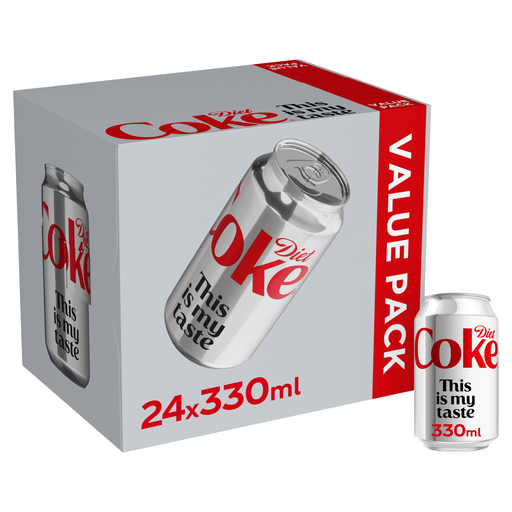 No image available
These individual cans provide another zero-sugar recipe for the party drinks mix. The product information lists 0g sugars per 100ml, along with caffeine, sweeteners and a source of phenylalanine.
No. Pepsi UK lists caffeine in Pepsi Max, whereas Coca-Cola GB describes the distinct Coca-Cola Zero Sugar Caffeine Free recipe as without caffeine. Check the exact product name and ingredients.
Check its sweeteners, caffeine declaration and any phenylalanine statement. The named Pepsi Max and Coca-Cola Zero Sugar Caffeine Free products list sweeteners and a source of phenylalanine, but differ on caffeine.
Refrigerate it and follow the instructions on the bottle you bought. Tesco Diet Cola and Sainsbury’s Cola 2L both say to use their products within 3 days of opening.
The Department of Health & Social Care’s guidance describes promotion and placement restrictions for certain products sold by affected businesses in England, not a prohibition on a household buying cola for a private party. School-provided food and drinks raise separate questions under England’s school food framework.
Ask the school or caterer to check the proposed drinks against the applicable school food standards. The Department for Education’s school food guidance applies in England; a private-party purchasing decision or retail HFSS guidance does not establish whether a school-provided drink meets those standards.