
24/7 Customer Support

Free returns

Same-day & Next-day Delivery

Quality Guaranteed

Unlock Your Welcome Offers: FREE Delivery | Up to 80% OFF | Free 30-day JoyPlus trial
Download the APP
Buying cola soft drinks multipacks looks straightforward, but pack size, sweetener content and storage requirements can significantly affect whether a purchase suits your household. A small pack may run out quickly during a gathering, while a larger case can occupy valuable cupboard space or approach its best-before date before it is finished.
This guide explains the practical details to check before buying, followed by recommendations matched to different shopping needs.
A multipack may contain 6, 8, 12, 18 or 24 cans, but the lowest shelf price is not necessarily the lowest cost per serving. Compare the total number of cans and total volume, not only the headline price.
For example, a standard 330ml can provides a familiar single-serve format, while a case of 24 cans is more suitable for an office, party or household that drinks cola regularly. Smaller packs such as 6 x 330ml can be more practical if fridge and cupboard space are limited.
Many zero sugar cola and sugar-free cola drinks still contain caffeine. Coca-Cola Zero Sugar, Pepsi Max and Diet Coke products listed here contain caffeine unless the product is specifically marked caffeine-free. Sweeteners can also vary, with ingredients such as aspartame, acesulfame K, sucralose or steviol glycosides appearing across different drinks.
If caffeine is a specific consideration, check the product name and ingredients rather than relying on front-of-pack colour or general “light” branding. Some products may also contain a source of phenylalanine because of aspartame.
Regular cola cans can contain around 34–35g of sugar per 330ml serving, depending on the product. For example, the supplied nutrition information for Coca-Cola Original Taste lists 35g of sugar per 330ml can, while Pepsi Regular lists 34g. Zero-sugar options list 0g of sugar per can, but they use approved sweeteners instead.
Neither format automatically suits every shopper. The useful comparison is whether you prefer the taste profile of regular cola or want a no-sugar option, then checking the nutrition panel and ingredients before ordering.
For UK homes, 330ml soft drinks are easy to portion and chill. Consider your intended use:
Also compare whether a listing contains one multipack or several cases. “2 x 18 x 330ml” means 36 cans in total, while “18 x 330ml” means 18 cans.
Read the nutrition table per 330ml can, not only per 100ml. Coca-Cola Zero Sugar and Pepsi Max list approximately 1 calorie per 330ml can in the supplied information, while Diet Coke lists 0.4 calories per 100ml. Regular Coca-Cola Original Taste lists 139 calories and 35g of sugar per can.
Check for:
Always check the physical label because recipes and packaging can change.
Unopened cans should generally be stored in a cool, dry place away from direct sunlight and heat. Chill before serving, and do not buy or consume cans that are leaking, swollen, severely dented or otherwise damaged. Once opened, consume promptly to retain carbonation.
Cans are widely recyclable in the UK, but local collection arrangements vary. Follow the instructions provided by your local council and the packaging.
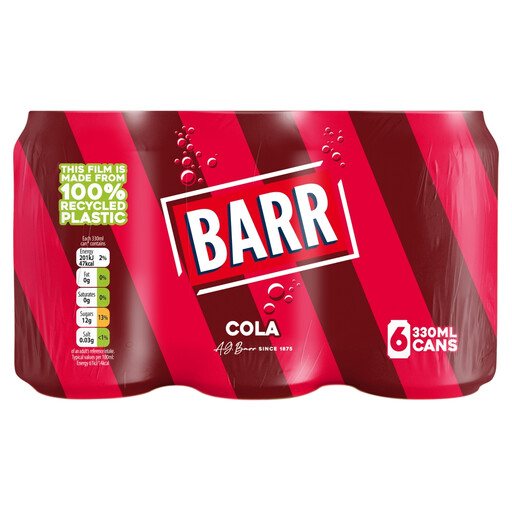
Why This Fits Their Persona: A six-can format offers a manageable way to try a regular cola without committing to a large case or using extensive storage space.
The six-can quantity reduces the risk of overbuying when consumption is occasional. Its listing also clearly identifies caffeine and sweeteners, allowing a more informed choice.
Six 330ml cans; listed nutrition provides 3.6g sugar per 100ml and 14kcal per 100ml.
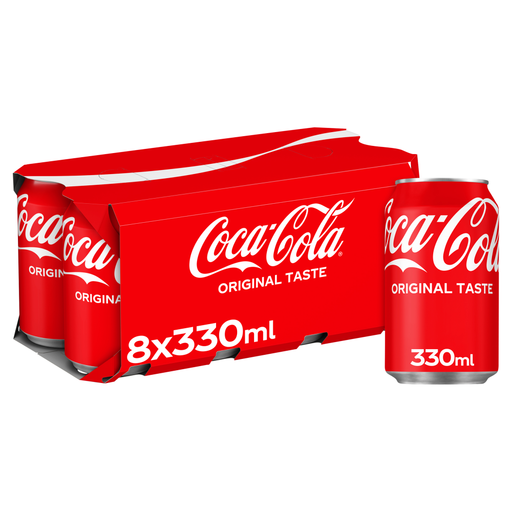
Why This Fits Their Persona: A recognised branded option for shoppers who value a familiar Coca-Cola multipack for meals, guests or movie nights.
The listing states the exact eight-can quantity, 330ml serving size and nutrition values, helping prevent confusion between single packs and larger cases.
Eight 330ml cans; listed at 139 calories and 35g sugar per can; suitable for vegetarians and vegans according to the product information.

Why This Fits Their Persona: A 24-can case is convenient for office kitchens, family households, social hosts and event organisers needing regular cola cans in volume.
The clearly stated 24 x 330ml format makes the total serving quantity easy to calculate before purchase, reducing the chance of ordering too little for a gathering.
Twenty-four 330ml cans; listed at 135 calories and 34g sugar per can; suitable for vegetarians and vegans according to the product information.
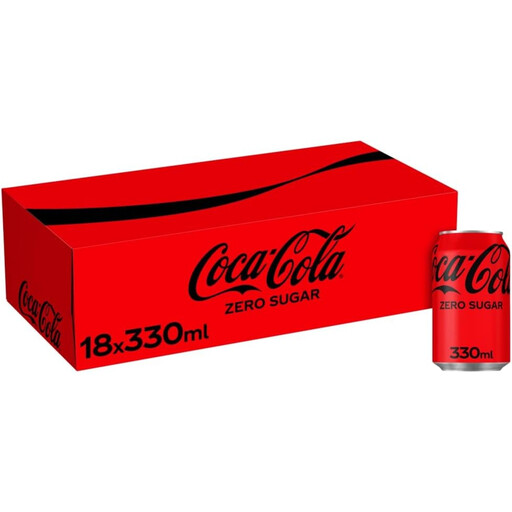
Why This Fits Their Persona: An 18-can supply suits regular household use when shoppers want the Coca-Cola taste profile without sugar.
The nutrition information specifies 0g sugar and approximately 1 calorie per 330ml can, while the ingredients identify the sweeteners and caffeine.
Eighteen 330ml cans; 0g sugar and 0g carbohydrate per can in the supplied nutrition information; suitable for vegans and vegetarians according to the listing.
We have compiled a complete, real-time list of products that fully satisfy these strict selection criteria and UK safety regulations.
Check the best-before date printed on the pack or can. Store unopened cans in a cool, dry place away from sunlight and heat. For occasional drinkers, choose a smaller multipack so the stock is more likely to be used within its recommended period.
For households, offices and events, 330ml cans provide individual portions and are easy to chill and distribute. Large bottles may create less packaging per serving, but they need refrigeration after opening and gradually lose carbonation. The right option depends on consumption speed, fridge space and whether drinks are shared.
Look for products explicitly labelled zero sugar or sugar-free, such as Coca-Cola Zero Sugar, Pepsi Max or Diet Coke. Confirm the nutrition panel, sweeteners and caffeine content before ordering. “Zero sugar” does not necessarily mean caffeine-free, and dietary suitability should always be checked against the current packaging.