What should you check?
Check sugars and caffeine separately, then read the ingredients and choose a pack that fits the number of viewers.
| Priority | What to check | Your needs |
|---|
| Sugars |
Compare the sugars figures on the same basis, such as per 100ml. Pepsi UK lists 0g per 100ml for Pepsi Max and 4.5g per 100ml for Pepsi Classic; Sainsbury’s lists 4.3g per 100ml for its Cola. |
I want to know how much sugar is in the cola I will serve, rather than relying on whether its name says regular or diet. |
| Caffeine |
Look for an explicit caffeine-free claim or check the ingredients. Pepsi UK lists caffeine in standard Pepsi Max but describes Pepsi Max No Caffeine as caffeine-free; Coca-Cola GB describes Coca-Cola Zero Sugar Caffeine Free as without caffeine. |
For a late viewing, I would choose a variant explicitly labelled caffeine-free if avoiding caffeine matters to me. |
| Ingredients |
Read the sweetener list and any phenylalanine statement on the specific pack. Pepsi UK lists a source-of-phenylalanine statement for Pepsi Max No Caffeine. |
Zero sugar does not tell me whether a drink contains sweeteners, so I need to check ingredients I wish to avoid. |
| Pack format |
Compare the stated number and volume of cans with a bottle’s volume. For opened bottles, follow the product’s storage instructions: Sainsbury’s Cola and ASDA Diet Cola listings specify refrigeration and use within 3 days. |
Separate cans suit my group if we are unlikely to finish an opened large bottle within its stated storage period. |
Brand and own-label references
These examples show why the exact variant matters more than the brand name alone; inclusion here does not imply that every variant is in the Joybuy selection below.
Coca-Cola
Its range includes a zero-sugar, caffeine-free variant alongside other cola options.
- Coca-Cola GB describes Coca-Cola Zero Sugar Caffeine Free as without sugar or caffeine.
- Check the particular variant’s ingredients and label statements if sweeteners matter to you.
Pepsi
Pepsi UK lists regular, zero-sugar and zero-sugar caffeine-free cola variants.
- Pepsi UK lists 0g sugars per 100ml for Pepsi Max and describes Pepsi Max No Caffeine as zero sugar and zero caffeine.
- Standard Pepsi Max contains caffeine; Pepsi Classic lists 4.5g sugars per 100ml.
Tesco
Tesco lists regular, diet and sugar-free own-label cola varieties.
- The range gives shoppers different labelled cola varieties to compare.
- Check the individual product label for its sugars, sweeteners and caffeine rather than assuming the varieties share a recipe.
Sainsbury’s
Sainsbury’s lists its Cola in a 2L bottle.
- The Sainsbury’s listing states 4.3g sugars per 100ml and gives instructions for storing the opened bottle.
- That nutrition figure describes the listed Cola, not every Sainsbury’s cola variant.
Asda
ASDA lists Diet Cola in a 2L bottle.
- ASDA lists less than 0.5g sugars per 100ml for this Diet Cola.
- The listing also states that it contains caffeine and advises refrigeration and use within 3 days after opening.
Cola options on Joybuy
These can packs cover caffeine-free cola and zero-sugar cola for TV-night sharing. Check the exact variant when caffeine avoidance is part of your decision.
 No image available
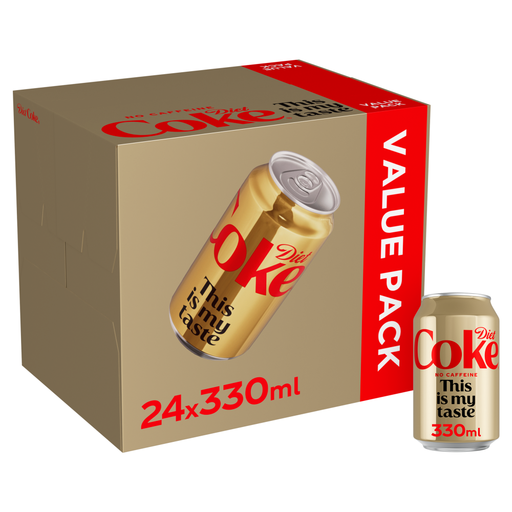
Diet Coke No Caffeine 24 × 330ml
A caffeine-free cola in separate cans for a group TV night. The pack contains 24 × 330ml cans; check the on-pack sugars, ingredients and label statements if these affect your choice.
View on Joybuy
 No image available
Pepsi Max Caffeine Free 24 × 330ml
A caffeine-free Pepsi Max variant for serving viewers individual cans. The pack contains 24 × 330ml cans; check the ingredients and phenylalanine statement if these matter to you.
View on Joybuy
 No image available
Pepsi Max 24 × 330ml
For a group that wants zero-sugar cola and is not avoiding caffeine. Pepsi UK lists 0g sugars per 100ml and caffeine in the ingredients; this pack contains 24 × 330ml cans.
View on Joybuy
 No image available
Coca-Cola Zero Sugar 24 × 330ml
A Zero Sugar cola pack for separate servings when caffeine is acceptable. It contains 24 × 330ml cans; do not confuse this variant with Coca-Cola Zero Sugar Caffeine Free.
View on Joybuy
 No image available
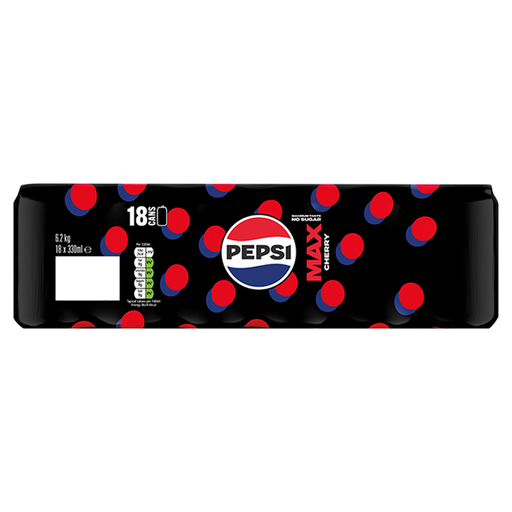
Pepsi Max Cherry 18 × 330ml
A cherry-flavoured Pepsi Max variant for viewers who are not avoiding caffeine. The pack contains 18 × 330ml cans; check its ingredients and label statements if sweeteners or phenylalanine sources matter to you.
View on Joybuy
Frequently asked questions
Which cola should I check if I want no sugar and no caffeine?
Look for a product explicitly labelled for both. Coca-Cola GB describes Coca-Cola Zero Sugar Caffeine Free as without sugar or caffeine, and Pepsi UK describes Pepsi Max No Caffeine as zero sugar and zero caffeine. Standard Pepsi Max contains caffeine.
Does zero-sugar cola contain sweeteners?
It can. Pepsi UK lists sweeteners and a source-of-phenylalanine statement for Pepsi Max No Caffeine; check the ingredients and statements on the particular pack rather than treating zero sugar as sweetener-free.
Are cans or a large bottle more suitable for TV snacks?
Choose based on how many people will drink the cola and whether you expect to finish an opened bottle promptly. The Sainsbury’s Cola and ASDA Diet Cola bottle listings advise refrigeration after opening and use within 3 days; separate cans leave the remaining drinks unopened.
Can I assume every own-label cola has the same sugar content?
No. Sainsbury’s lists 4.3g sugars per 100ml for its Cola, while ASDA lists less than 0.5g per 100ml for its Diet Cola. Compare the exact varieties on the same per-100ml basis and check their current labels.
What should I check on a pre-packed cola label?
For this choice, check the ingredients, nutrition information, net volume and any relevant caffeine or phenylalanine statements. UK government food-labelling guidance also identifies information such as the food name and date marking for pre-packed foods; use the particular pack for the product you are buying.


